
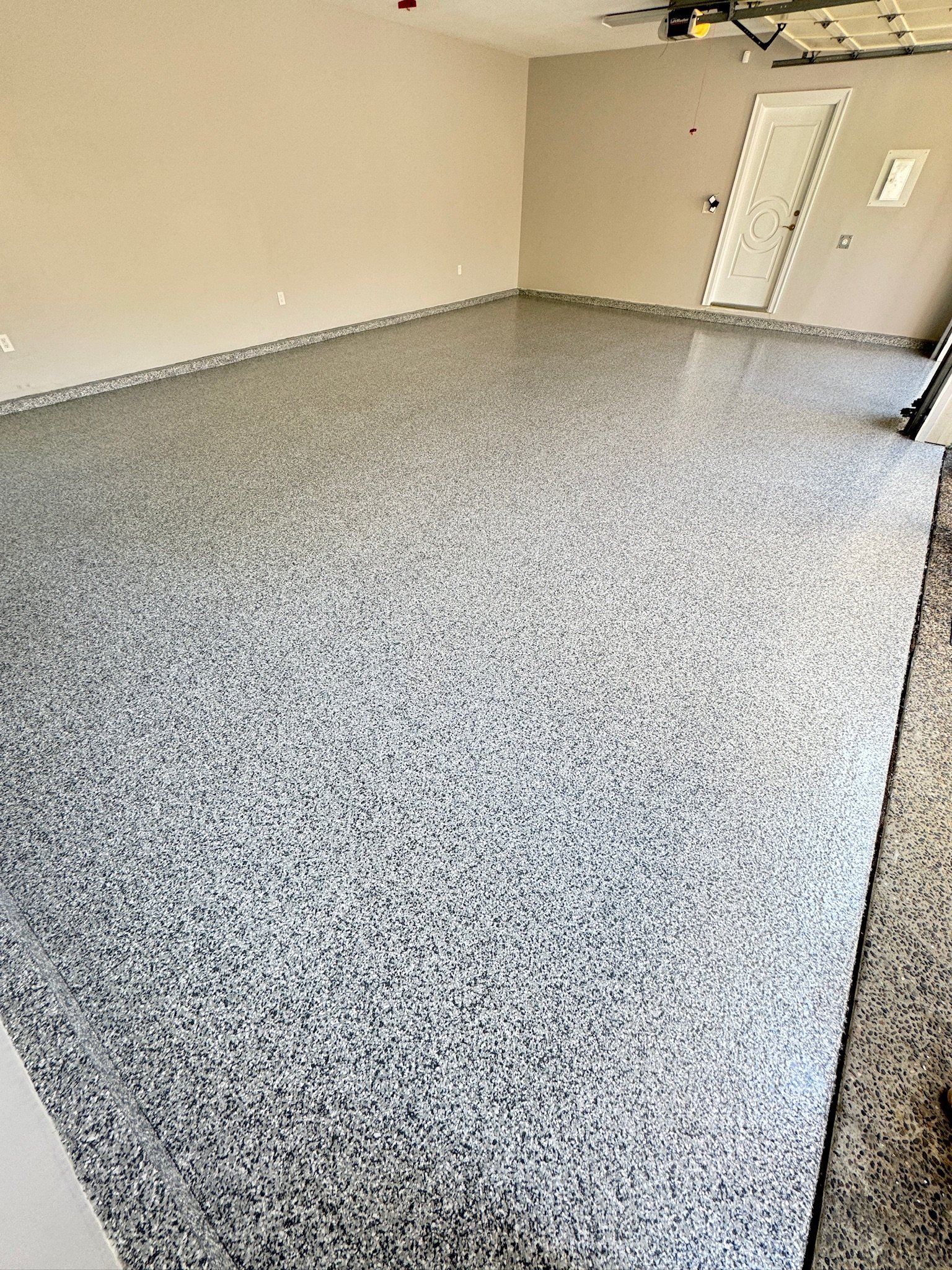
Anti-Static Flooring in British Columbia: A Practical Guide
If you run a facility that handles sensitive electronics, flammable materials, or data centers, you’ve probably heard the term “anti-static flooring.” But what does it actually mean, and is it something you need in British Columbia? This guide covers the basics of anti-static epoxy and resinous flooring, who uses it, and how it fits into the local climate and building codes of Metro Vancouver and the Fraser Valley.
TLDR: Key Takeaways
- Anti-static flooring prevents electrostatic discharge (ESD) that can damage electronics or ignite flammable dusts and vapors.
- Epoxy and resinous coatings are a common way to achieve ESD protection in commercial and industrial settings.
- BC’s humidity and seasonal changes can affect static buildup, making proper flooring selection important.
- FraserPlus Epoxy installs anti-static epoxy systems for garages, labs, clean rooms, and manufacturing facilities across the Lower Mainland.
What Is Anti-Static Flooring?
Anti-static flooring, also called ESD flooring, is a floor system designed to control static electricity. It works by providing a path for static charges to dissipate safely to ground, rather than building up on surfaces or people. This is critical in environments where a single spark can ruin a microchip or cause an explosion.
There are different levels of ESD control: conductive flooring (very low resistance), static-dissipative flooring (moderate resistance), and anti-static flooring (higher resistance but still prevents charge buildup). Most epoxy-based ESD systems fall into the static-dissipative or anti-static range.
Who Needs Anti-Static Flooring in BC?
Several industries in Metro Vancouver and the Fraser Valley benefit from ESD flooring:
- Electronics manufacturing and assembly – Facilities in Burnaby, Richmond, and Surrey that produce circuit boards or sensitive components.
- Data centers and server rooms – Static discharge can corrupt data or damage servers.
- Pharmaceutical and clean rooms – Static attracts dust, compromising sterility.
- Chemical processing and flammable storage – Sparks can ignite vapors.
- Garages with EV charging or battery storage – Some homeowners want ESD protection for electric vehicle maintenance areas.
Even if you don’t work in one of these fields, you might want anti-static flooring in a home workshop where you handle electronics or sensitive equipment.
How Does Epoxy Provide Anti-Static Properties?
Standard epoxy flooring is an insulator — it doesn’t conduct electricity. To make it anti-static, manufacturers add conductive fillers like carbon fiber, nickel-coated carbon, or copper fibers to the epoxy resin. The floor is then installed with a grounding system: copper strips or a conductive primer that connects to a building ground.
The result is a durable, chemical-resistant floor that also controls static. The coating can be applied as a thin-film or a thicker self-leveling system, depending on the substrate and traffic needs. Metallic epoxy can also be formulated with ESD properties, though it’s less common because the metallic pigments can interfere with conductivity.
Why Does BC’s Climate Matter for Static Control?
British Columbia’s coastal climate is relatively humid, especially in winter. Higher humidity naturally reduces static buildup because moisture in the air helps dissipate charges. However, during dry summer months or in heated indoor spaces, humidity can drop, increasing static risk. Buildings with forced-air heating or air conditioning can have very dry conditions year-round.
In the Fraser Valley, where agriculture and food processing are common, static can also be a problem in grain handling or dust-prone areas. Anti-static flooring is one part of a broader ESD control plan that includes wrist straps, mats, and humidity monitoring.
Is Anti-Static Flooring Required by Code in BC?
There isn’t a single BC building code that mandates anti-static flooring for all commercial spaces. However, specific industries follow standards like ANSI/ESD S20.20 or IEC 61340-5-1 for ESD control. For example, electronics manufacturers often require ESD flooring to meet customer or insurance requirements. In flammable environments, the BC Fire Code may indirectly require static control measures.
If you’re building or renovating a facility that handles sensitive materials, it’s wise to consult an ESD specialist. FraserPlus Epoxy can help you understand the options and coordinate with your electrician for proper grounding.
How Is Anti-Static Epoxy Installed?
The installation process is similar to standard epoxy, with a few extra steps:
- Surface preparation – Concrete is shot-blasted or ground to open pores.
- Conductive primer – A carbon-filled primer is applied, often with copper grounding strips embedded.
- ESD epoxy base coat – A conductive or static-dissipative epoxy is applied.
- Top coat – A clear or colored top coat protects the system.
- Testing – Resistance is measured with a megohmmeter to ensure it meets specifications.
The whole process takes several days, depending on the size and complexity. Curing time between coats is critical for proper conductivity.
How Much Does Anti-Static Flooring Cost in BC?
Anti-static epoxy flooring generally costs more than standard epoxy because of the specialized materials and grounding work. As a rough industry context, expect to pay 20-50% more than a standard epoxy coating for the same square footage. Actual costs vary based on project scope, substrate condition, and site access — contact FraserPlus Epoxy for a personalized assessment.
Can Anti-Static Flooring Be Used in Garages?
Yes, but it’s not common for standard residential garages. Most homeowners don’t need ESD protection unless they’re working on electronics, building computers, or storing lithium batteries. For a typical garage used for parking and DIY projects, a standard garage epoxy floor is sufficient. However, if you have a home lab or EV conversion shop, anti-static epoxy can be a smart upgrade.
FraserPlus Epoxy offers both standard and ESD options for garages in Surrey, Langley, and other Fraser Valley communities.
What About Polished Concrete and ESD?
Polished concrete can be made anti-static by adding conductive densifiers or topical coatings. However, it’s harder to achieve consistent ESD performance with polished concrete alone because the conductivity depends on the concrete mix and moisture content. For most applications, an epoxy-based ESD system is more reliable. FraserPlus Epoxy specializes in commercial epoxy flooring for ESD needs.
How Long Does Anti-Static Flooring Last?
With proper installation and maintenance, an anti-static epoxy floor can last 5-10 years in moderate traffic, and longer in low-traffic areas like server rooms. The ESD properties can degrade over time due to wear, chemical spills, or wax buildup. Periodic testing (every 6-12 months) is recommended to ensure the floor still meets resistance specs. If resistance drifts, a new top coat can often restore performance.
Can You Retrofit an Existing Floor with Anti-Static Epoxy?
Yes. Anti-static epoxy can be applied over existing concrete, tile, or even old epoxy — as long as the substrate is sound and properly prepared. The old coating must be removed or mechanically profiled to ensure adhesion. This is common in facilities that are upgrading from standard flooring to ESD protection. FraserPlus Epoxy can assess your current floor and recommend the best approach.
How Do You Maintain Anti-Static Epoxy Flooring?
Maintenance is similar to standard epoxy, but with a few extra precautions:
- Use only ESD-safe cleaners and waxes. Many commercial floor finishes are insulators and will ruin the anti-static properties.
- Avoid oil-based or silicone-based products that can create a non-conductive film.
- Mop regularly to remove dust, which can attract static.
- Test the floor’s resistance annually with a surface resistance meter.
FraserPlus Epoxy provides maintenance guidelines specific to your system at installation.
Does FraserPlus Epoxy Install Anti-Static Flooring in Metro Vancouver and the Fraser Valley?
Yes. FraserPlus Epoxy serves commercial and industrial clients throughout Metro Vancouver and the Fraser Valley, including Burnaby, Coquitlam, Richmond, Surrey, Langley, and beyond. We install anti-static epoxy systems for warehouses, labs, data centers, and manufacturing facilities. For a free consultation and site assessment, visit our contact page.
FAQ: Anti-Static Flooring in BC
Do I need anti-static flooring in my home garage?
Probably not, unless you work with sensitive electronics or store large lithium batteries. For typical garage use, a standard garage epoxy floor is fine. If you’re unsure, ask FraserPlus Epoxy during a site visit.
Can anti-static epoxy be used outdoors?
Not typically. Most ESD epoxy systems are designed for indoor use. UV exposure and moisture can degrade the conductive fillers. For outdoor ESD needs (like loading docks), specialized coatings exist but are less common.
How do I test if my floor is still anti-static?
You’ll need a surface resistance meter (megohmmeter) to measure resistance between two points on the floor. Readings should fall within the range specified by your system (usually 1×10⁶ to 1×10⁹ ohms). Many ESD flooring contractors offer testing as a service.
Is anti-static flooring slippery when wet?
Like any epoxy floor, it can be slippery. Anti-static epoxy can be formulated with slip-resistant additives (like aluminum oxide or silica) without affecting conductivity. If slip resistance is a concern, mention it during your consultation.
Follow FraserPlus Epoxy on Google — be the first to know about floor coatings, maintenance guides, and project ideas across Metro Vancouver.
Make us your preferred source on Google