
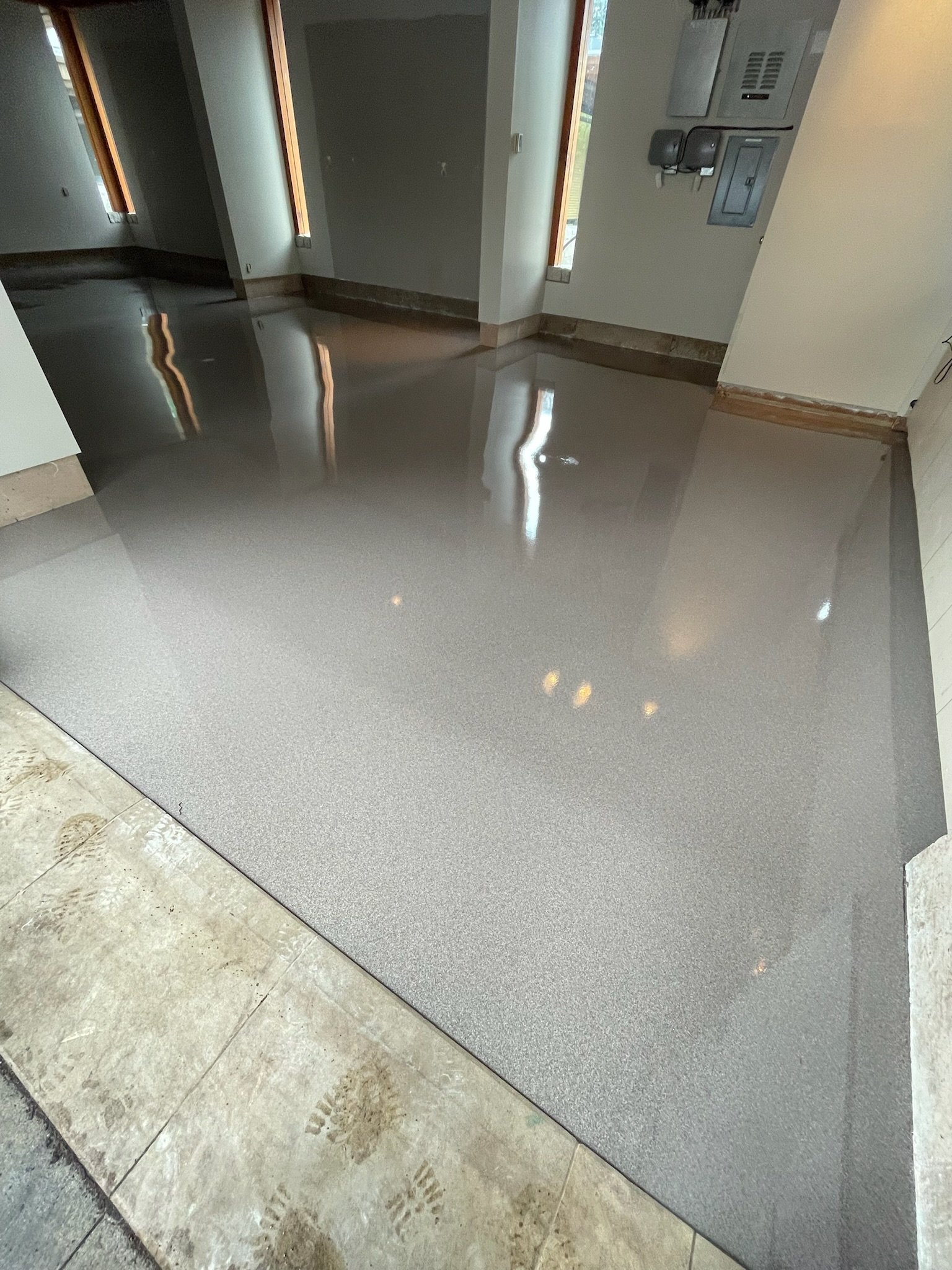
Commercial Epoxy Flooring Cost per Square Foot
Quick Summary
- Commercial epoxy flooring cost per square foot varies significantly based on system type, number of layers, and surface prep required.
- Substrate condition is often the biggest cost variable — damaged or contaminated concrete adds prep time and materials.
- BC's mild but humid climate can affect product selection, cure times, and installation windows.
- Actual costs vary by project — contact FraserPlus Epoxy for a site-specific assessment.
When business owners in Metro Vancouver and the Fraser Valley start budgeting for a new floor, "how much does commercial epoxy flooring cost per square foot?" is usually the first question they ask. It's a fair starting point — but the honest answer is that square footage is just one piece of the puzzle.
This article breaks down the real cost drivers for commercial epoxy flooring, what different system types typically involve, and what to watch for when comparing quotes.
What Drives Commercial Epoxy Flooring Costs per Square Foot?
The price of a commercial epoxy floor isn't set by square footage alone. It's shaped by how many layers the system requires, how much prep work the concrete needs, and how accessible the site is during installation.
A basic single-coat epoxy seal on clean, flat concrete costs far less than a multi-layer broadcast system or a decorative metallic pour over damaged substrate. Contractors price the whole scope — not just the floor's dimensions.
Other factors that affect the final number include:
- System thickness and layer count — more coats and a thicker build mean more material and more labor time.
- Surface preparation method — shot blasting, diamond grinding, and scarifying each carry different equipment costs.
- Crack and joint repair — concrete that needs structural repairs before coating adds materials and time.
- Moisture mitigation — high moisture vapor transmission in the slab may require a vapor-barrier primer, which is an added cost layer.
- Site access and scheduling — work that must happen overnight, on weekends, or in phases around active operations typically costs more.
- Geographic location — travel and logistics to remote Fraser Valley sites can factor into overall project cost.
What Are the Main Commercial Epoxy System Types — and How Do They Differ in Cost?
Not all commercial epoxy floors are built the same way. The system you choose — based on traffic type, chemical exposure, and aesthetic goals — has a significant impact on what you'll pay per square foot.
Single-Coat or Thin-Film Epoxy
This is the most basic option — a single layer of epoxy applied over prepared concrete. It's commonly used in light-traffic areas like storage rooms or utility spaces where durability expectations are modest.
Broadcast Flake or Chip Systems
These systems use colored vinyl flakes broadcast into a base coat, then sealed with a topcoat. They're popular in commercial spaces like retail showrooms, fitness facilities, and light industrial environments because they hide minor imperfections and offer good slip resistance.
Self-Leveling Epoxy
Thicker than a thin-film system, self-leveling epoxy fills minor surface irregularities and creates a smoother, more uniform finish. It's often specified for food-and-beverage facilities, pharmaceutical spaces, and commercial kitchens where hygiene and cleanability are priorities.
Metallic Epoxy
Metallic systems use pigmented metallic powders suspended in a clear or tinted resin to create a three-dimensional, marbled visual effect. They're a popular choice for showrooms, hotels, and office lobbies — anywhere the floor is meant to make a visual statement. You can explore metallic epoxy flooring options for more on this system type.
Urethane Cement
For environments with heavy thermal shock, high humidity, or aggressive chemical exposure — like commercial kitchens or breweries — urethane cement systems are often the specified choice. They bond differently than epoxy and can handle conditions that would cause a standard epoxy system to fail.
How Much Does Substrate Condition Affect the Cost?
Concrete surface preparation is often the most variable — and underestimated — cost line in a commercial epoxy project. No coating system bonds correctly to unprepared concrete, so prep isn't optional.
The more work the substrate needs, the more the overall project costs per square foot. Common issues that add prep time include:
- Oil, grease, or chemical contamination that requires mechanical removal or degreasing
- Old coatings or adhesive residue that must be stripped before new material is applied
- Cracks, spalls, or uneven surfaces that need repair compounds before the coating system goes down
- High moisture vapor emissions from the slab, which require testing and potentially a vapor-barrier primer
On a project where the slab is in great shape, prep is relatively straightforward. On a slab with years of grease, failed coatings, and active cracks, prep can account for a significant share of the total cost.
Does BC's Climate Affect Commercial Epoxy Flooring Costs?
Metro Vancouver and the Fraser Valley have a mild, wet climate — which is generally favorable for construction, but it does create some flooring-specific considerations.
Epoxy and resinous coatings are temperature-sensitive during application and cure. Cool temperatures slow cure times, while high ambient humidity can affect adhesion if the concrete surface is too cold relative to the dew point. In the Lower Mainland's shoulder seasons, installers often need to monitor conditions carefully and may use heating equipment to maintain proper cure conditions — and that equipment time is a real project cost.
High water table conditions in parts of the Fraser Valley also mean slabs in below-grade or slab-on-grade applications are more likely to have elevated moisture vapor transmission. If you're in Surrey, Langley, Abbotsford, or other Fraser Valley locations, make sure your contractor factors these site-specific conditions into the scope before work begins.
What Questions Should You Ask Before Getting a Quote?
If you're collecting quotes for a commercial epoxy floor, the per-square-foot number matters less than what's included in the scope. Here's what to ask:
- What surface preparation is included? — Shot blasting? Diamond grinding? How are cracks and joints handled?
- What system are you specifying, and why? — The contractor should explain why that system fits your traffic load, chemical exposure, and use case.
- Is moisture testing included? — If not, who's responsible if vapor transmission causes adhesion problems after installation?
- What's the cure timeline? — Most epoxy systems need time before heavy equipment or foot traffic returns. How will that affect your operations?
- What does the warranty cover? — Understand exactly what's included and what's excluded before signing.
- Are there site access constraints? — Overnight or phased installs cost more. Clarify this upfront so there are no surprises on the invoice.
Getting clear answers to these questions lets you compare quotes on equal terms — rather than assuming the lowest per-square-foot number is the best deal.
Is Commercial Epoxy Flooring Worth the Investment?
For most commercial applications, a properly installed epoxy or resinous floor offers a strong cost-to-performance ratio compared to alternatives like sheet vinyl, ceramic tile, or unsealed concrete. It's impact-resistant, chemical-resistant, easy to clean, and — depending on the system — can significantly extend the functional life of the underlying slab.
The key phrase is "properly installed." A low-cost epoxy job that fails early because of inadequate prep or the wrong system choice ends up costing more than getting it right the first time. Substrate preparation, system selection, and installer experience are the three factors that separate a floor that holds up from one that doesn't.
If you're planning a commercial space in Metro Vancouver or the Fraser Valley, exploring your flooring system options early — before the rest of the build schedule is locked in — gives you the most flexibility on installation timing and site access.
Actual costs vary based on project scope, substrate condition, and site access — contact FraserPlus Epoxy for a personalized assessment.
Frequently Asked Questions
Is commercial epoxy flooring cheaper than other flooring options?
It depends on the comparison. Epoxy typically has a lower installed cost than ceramic tile or hardwood in commercial settings, and it generally outperforms basic sealed concrete for durability. The system type matters — a thin-film epoxy is far less expensive than a multi-layer urethane cement system. Life-cycle cost is also worth considering: a durable epoxy floor that doesn't need replacement for many years may cost less over time than a cheaper floor that fails sooner.
How long does commercial epoxy flooring last?
Longevity depends on the system specified, how well the substrate was prepared, and how much traffic and stress the floor takes after installation. Maintenance matters too — regular cleaning and prompt repair of chips or edge damage extends service life significantly. Light-duty commercial spaces generally see longer floor life than high-traffic industrial environments with heavy equipment and chemical exposure.
Can epoxy flooring be installed in phases to manage costs?
Yes, in many cases. For large commercial facilities, phased installation — completing one section while the rest of the space stays operational — is a common approach. It adds some complexity and may affect the overall per-square-foot cost due to equipment mobilization for each phase, but it keeps the space partially functional throughout the project. Discuss your operational constraints with your contractor early in the planning process.
How do I get an accurate quote for my commercial epoxy project?
The most accurate quotes come from an on-site assessment. A contractor who walks the space can evaluate substrate condition, measure the area, identify problem spots, and recommend the right system for your use case. Online price calculators are a rough starting point at best. Contact FraserPlus Epoxy to schedule an on-site assessment for your Metro Vancouver or Fraser Valley project.
Follow FraserPlus Epoxy on Google — be the first to know about floor coatings, maintenance guides, and project ideas across Metro Vancouver.
Make us your preferred source on Google