
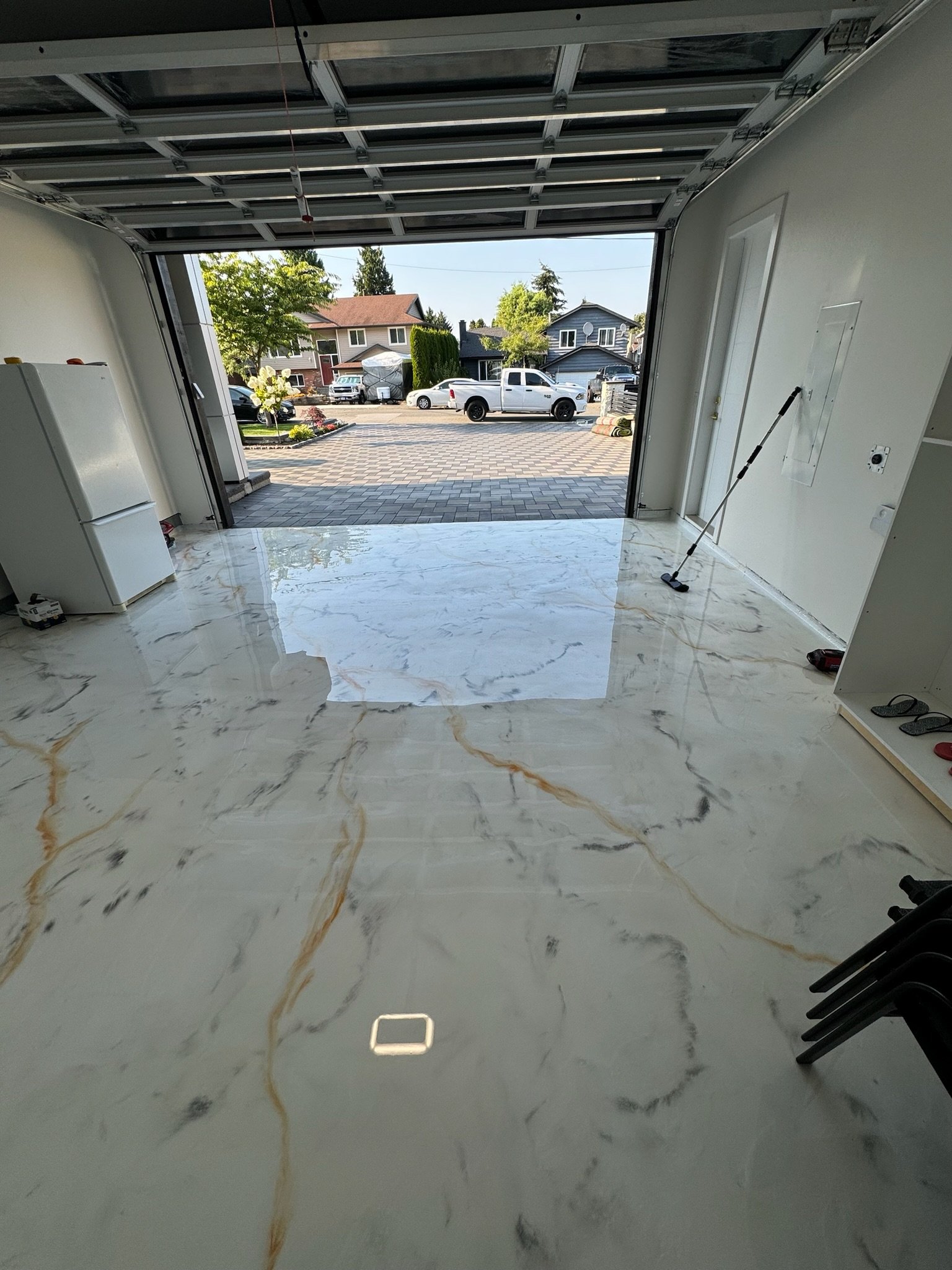
5 Questions to Ask Your Commercial Epoxy Flooring Contractor
Commercial epoxy flooring contractors near me — it's one of the first searches a business owner runs when a floor needs to hold up to real daily use. But finding the right installer takes more than picking the top result. The difference between a floor that lasts and one that fails within months comes down to preparation standards, product knowledge, and a process matched to your facility.
- Commercial epoxy is a durable, low-maintenance flooring solution suited to warehouses, retail spaces, restaurants, and industrial facilities.
- Surface preparation — not the coating — is the single most important factor in how long the floor performs.
- In Metro Vancouver and the Fraser Valley, concrete moisture levels require careful testing before any resinous system goes down.
- Actual costs vary based on project scope, substrate condition, and site access — contact FraserPlus Epoxy for a personalized assessment.
What Does a Commercial Epoxy Flooring Contractor Actually Do?
A commercial epoxy contractor prepares the concrete substrate, applies a resinous coating system, and finishes the surface to meet the functional demands of your space. The work includes grinding or shotblasting the concrete, repairing cracks and spalls, applying primer, building up the coating in layers, and sealing with a topcoat appropriate to the environment.
Each stage matters. Rushing or skipping any step — especially surface prep — creates adhesion problems that surface months later, not immediately. A contractor who walks you through their process step by step before work begins is one worth taking seriously.
The coating system is only part of what a qualified contractor brings. Knowledge of concrete behavior, product chemistry, and how different commercial environments stress a floor is what separates a durable result from an expensive redo.
Why Does the Contractor You Choose Matter So Much?
Epoxy and other resinous floor coatings are only as durable as the surface they're applied to and the skill of the person applying them. Product manufacturers set specific requirements: temperature ranges, mixing ratios, cure windows, and humidity thresholds. Getting these wrong produces structural and visible failures.
For commercial properties — warehouses, food-service kitchens, retail floors, or vehicle service bays — the floor handles heavy traffic, equipment loads, chemical exposure, or a combination of all three. A failed coating in a commercial setting means real downtime. That's a business cost, not just an aesthetic problem.
FraserPlus Epoxy works with commercial clients throughout Metro Vancouver and the Fraser Valley. Their commercial epoxy flooring services cover a range of industries and coating systems, from basic industrial finishes to chemical-resistant and decorative applications.
What Should You Ask a Commercial Epoxy Contractor Before Hiring?
A few direct questions reveal a lot about whether a contractor actually knows what they're doing.
- How do you prepare the substrate? The answer should mention mechanical grinding or shotblasting — not just pressure washing the surface.
- Do you test for moisture? Concrete in BC's climate holds moisture. Applying epoxy over a damp slab leads to delamination down the road.
- What product system are you using and why? A contractor who can name specific products and explain the choice shows real product knowledge, not just a price sheet.
- What's the return-to-service timeline? Commercial operations can't stay offline indefinitely. You need a clear, realistic schedule in writing.
- What site conditions could affect the outcome? Understanding limitations upfront prevents disputes after the job wraps.
If a contractor deflects these questions or stays vague, treat that as information. Qualified applicators are specific about their process because they stand behind it. It's also reasonable to ask whether they carry liability insurance and whether the people doing the work are experienced with commercial applications specifically.
How Is Commercial Epoxy Different From a Residential Garage Coating?
Commercial epoxy systems are typically thicker, more complex, and built to handle more demanding use than a residential garage floor. A garage coating might use a single-layer system with a broadcast aggregate for grip. A warehouse or food-processing facility might require a urethane cement base, a high-build epoxy body coat, and a polyaspartic or polyurethane topcoat — each layer serving a function in the overall system.
Scale is different too. Commercial projects often cover large areas, require phased installation to keep part of a facility running, and may involve drainage slopes, coved bases at wall edges, or specific surface profiles for safety or compliance reasons.
Chemical resistance requirements vary by industry. A retail backroom needs a different spec than a commercial kitchen or an auto body shop. Contractors who work regularly in commercial environments understand how to match the coating system to the actual use case, rather than applying a standard package to every project.
What Makes Metro Vancouver and Fraser Valley Properties Different to Work On?
Concrete in the Lower Mainland and Fraser Valley is exposed to year-round moisture, significant seasonal temperature swings, and in coastal areas, elevated ambient humidity. These conditions affect how concrete holds and releases moisture — and how well a resinous coating adheres over time.
Moisture vapour transmission is one of the most common reasons commercial epoxy floors fail. Concrete naturally releases moisture upward. If relative humidity within the slab exceeds the product's thresholds at the time of application, the bond between the epoxy and the concrete weakens. This is why professional contractors test moisture conditions before starting — not just on the surface but within the slab — especially in BC's wet climate.
Older industrial buildings in Langley, Burnaby, Surrey, and elsewhere in the region often have slabs with years of use behind them: oil contamination, previous coatings, or surface damage that needs proper attention before a new system can adhere. Local contractors with experience in the region's building stock are better positioned to anticipate these substrate challenges before they become cost surprises. FraserPlus Epoxy serves properties across Metro Vancouver and the Fraser Valley — their full services page covers which areas and project types they work with.
How Long Does a Commercial Epoxy Project Typically Take?
Timelines depend on the area being coated, the condition of the concrete, the coating system being applied, and whether the schedule needs to work around your operations.
Surface preparation alone can take a full day or more on a large commercial floor, particularly if existing coatings need to be removed, significant crack repair is required, or moisture mitigation work must be done first. Each coating layer has its own cure window before the next can go down — compressing that process creates failures.
Smaller commercial jobs — a retail storage room or a small restaurant kitchen — might complete in two to three days. Large warehouse floors done in phases can take a week or more. Any contractor should give you a realistic project timeline based on your specific floor, not a number designed to win the bid.
What Coating Systems Do Commercial Contractors Typically Work With?
Understanding the main categories of commercial floor coatings helps you have a more informed conversation with any contractor you evaluate.
- 100% solids epoxy — A thick, low-VOC system that builds significant film thickness in fewer passes. Common in industrial and food-service settings where durability and hygiene matter.
- Urethane cement — Highly resistant to thermal shock, heavy impact, and chemical exposure. Often specified for commercial kitchens and food production facilities where temperature cycling and cleaning chemicals stress the floor constantly.
- Polyaspartic coatings — Fast-curing systems that allow quicker return to service. Useful when business downtime needs to be kept to a minimum and site conditions at the time of application are right for them.
- Metallic epoxy systems — Used in retail, hospitality, and showroom environments where appearance matters alongside performance. FraserPlus Epoxy's metallic epoxy flooring work covers this category for both commercial and residential clients.
- Polished concrete — Not a coating but a mechanical densification process that seals and refines the concrete itself. Chosen in commercial settings for its low long-term maintenance requirements and durability under heavy foot traffic.
The right system depends on your industry, traffic type, chemical exposure, and aesthetic goals. A qualified contractor should make a clear recommendation with reasoning behind it — not just present the option with the lowest upfront cost.
Frequently Asked Questions
Do I need to close my business while the floor is being installed?
Not necessarily. Phased installation — working one section at a time — can keep part of a facility running during the project. Fast-cure systems like polyaspartics also reduce the window during which an area is out of service. Raise your operational constraints with the contractor before they quote so scheduling can be built around your needs from the start.
Can epoxy be applied over existing coatings or painted concrete?
In most cases, existing coatings and paints need to be removed, or the surface ground back to bare concrete, before a new resinous system will adhere properly. Applying over old coatings without full removal is one of the most common causes of premature adhesion failure in commercial floors. A site assessment will tell you what prep is actually required for your floor's specific condition.
Is commercial epoxy suitable for outdoor or covered parking areas?
Most standard epoxy systems aren't designed for direct UV exposure and will yellow or chalk over time outdoors. For exterior or semi-exposed surfaces, polyaspartic or polyurea topcoats with UV-stable formulations are generally the right specification. Let your contractor know if any portion of the area being coated receives direct sunlight.
How do I get an accurate quote for my commercial floor?
The most accurate quotes follow a site visit. Substrate condition, square footage, existing coatings, drainage requirements, and access logistics all affect the final scope and timeline. You can reach the team through the FraserPlus Epoxy contact page to arrange an on-site assessment. Actual costs vary based on project scope, substrate condition, and site access — contact FraserPlus Epoxy for a personalized assessment.
Follow FraserPlus Epoxy on Google — be the first to know about floor coatings, maintenance guides, and project ideas across Metro Vancouver.
Make us your preferred source on Google