
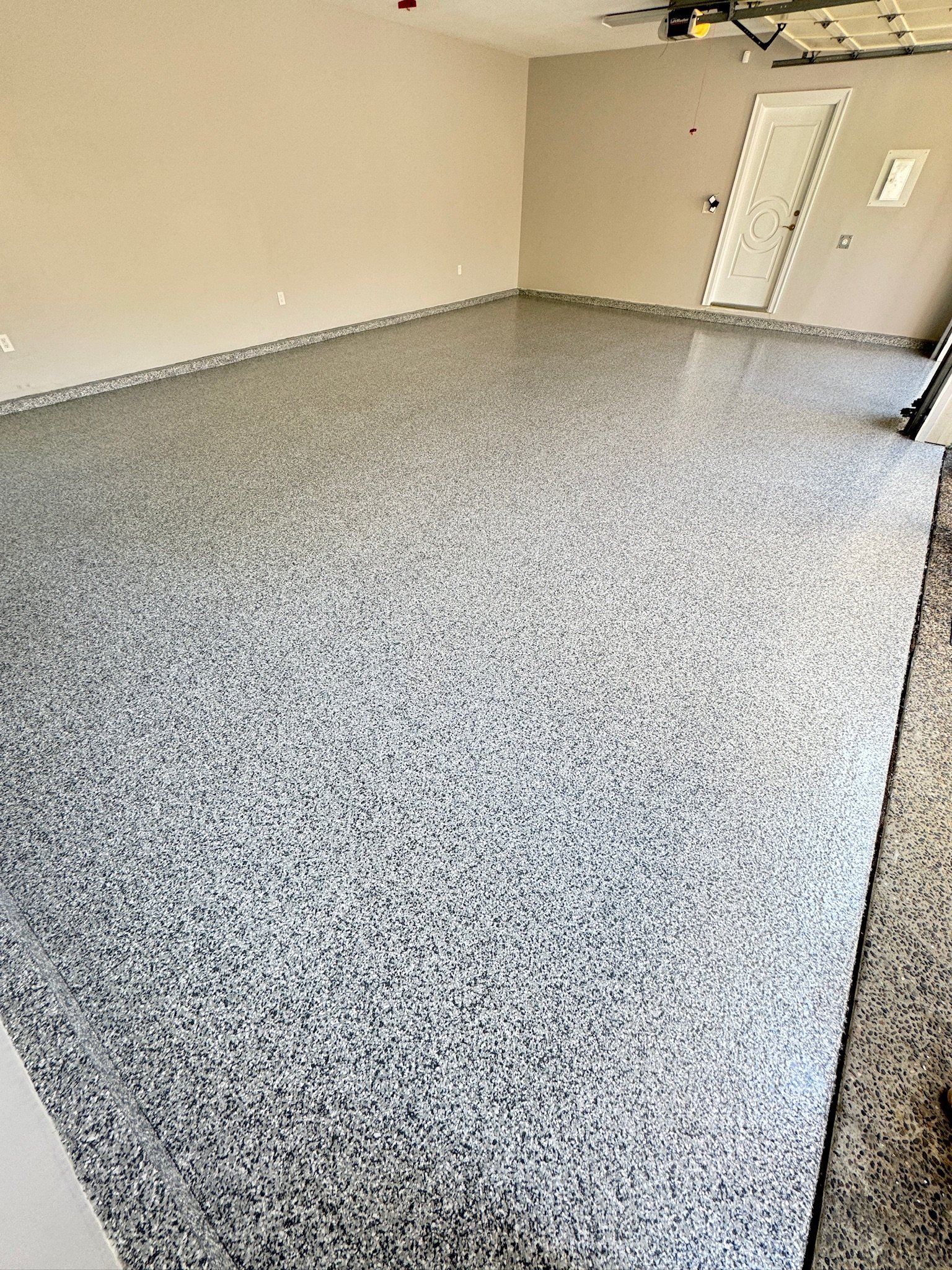
Best Epoxy Garage Floor Installers in Metro Vancouver
Searching for the best epoxy garage floor installers near you puts you in a crowded market. Metro Vancouver and the Fraser Valley have no shortage of contractors willing to roll a cheap coating onto your slab — and no shortage of garage floors that start peeling within a year. Knowing what to look for before you call anyone can save you from a costly redo.
Quick Takeaways
- Surface preparation — not the coating itself — is what determines how long an epoxy floor lasts.
- BC's climate means moisture testing is non-negotiable before any coating goes down.
- Ask for a coating system spec sheet, not just a brand name, before signing anything.
- Beware of installers who skip mechanical prep or promise to finish a full garage floor in a single day.
What Does a Professional Epoxy Installation Actually Involve?
A professional epoxy installation is a multi-stage process, not an afternoon job. It starts with mechanical surface preparation — usually diamond grinding or shot blasting — to open the concrete and give the coating a profile to bond to. Without this step, even a quality coating can delaminate.
After surface prep, a professional installer tests for moisture vapor emission. Concrete is porous, and moisture rising through a slab will cause a coating to bubble or lift if it's not addressed. In BC, where rainfall is high and many garages are partially or fully below grade, this step matters more than in drier climates.
The coating system then goes on in layers: a penetrating primer, a basecoat, any decorative broadcast material, and a protective topcoat. Each layer has its own cure window before the next can go down — which is why a proper installation typically spans more than one visit.
Why Does Surface Prep Matter So Much in Metro Vancouver and the Fraser Valley?
BC's climate creates specific challenges for epoxy flooring. High humidity, frequent rain, and temperature swings — from cold winter mornings to warm summer afternoons — mean coatings need to be applied within tight temperature and humidity windows. Applying epoxy when the concrete is too cold or the air is too wet leads to adhesion failures.
Concrete slabs in Metro Vancouver and the Fraser Valley also tend to hold more moisture than slabs in drier climates, simply because of how wet the region is year-round. A thorough moisture reading before prep — and the right primer system for the result — is what separates a floor that lasts from one that bubbles after a wet winter.
Surface prep also removes any previous sealers, oil stains, or laitance (the weak, powdery top layer of concrete) that would prevent proper bonding. Mechanical grinding or shot blasting takes time and specialized equipment, which is an early indicator of whether you're working with a professional operation or not.
What Coating Systems Should You Ask About?
Not all epoxy is the same. There's a range of coating systems, each suited to different uses:
- 100% solids epoxy: Thicker than water-borne epoxy, with higher build per coat. Common in commercial and industrial settings where heavy traffic and chemical resistance are the priority. Learn more about commercial epoxy flooring for those applications.
- Polyaspartic coatings: Faster-curing than standard epoxy — sometimes ready for vehicle traffic within 24 hours — and more UV-stable. Useful when downtime is a concern or when the floor sees direct sunlight.
- Metallic epoxy: A decorative system using metallic pigments to create a three-dimensional, liquid-metal appearance. Popular for showrooms, upscale residential garages, and retail spaces. See metallic epoxy flooring for examples of what this system looks like in practice.
- Full-flake or chip broadcast systems: Color flake is broadcast into a wet basecoat and sealed with a protective topcoat. Durable, slip-resistant, and widely used for residential garages throughout the region.
Ask any installer which system they're specifying and why — not just a brand name. A reputable installer can hand you a technical data sheet and explain why that product fits your substrate and intended use.
For most residential garages, a full-flake or metallic system with a UV-stable topcoat is a common choice. You can review the full range of garage epoxy flooring systems to get a sense of what applies to your project before reaching out.
What Questions Should You Ask Before Hiring an Epoxy Installer?
Before you commit to anyone, these questions are worth asking in every conversation:
- What's your surface preparation process? If the answer doesn't involve mechanical grinding or shot blasting, that's a red flag.
- Do you moisture-test the slab before you coat? The answer should be yes, every time, regardless of how dry the concrete looks.
- What's the total dry film thickness of the system? A thicker build generally holds up better to vehicle traffic and abrasion over time.
- What's the return-to-traffic timeline? Epoxy and polyaspartic systems differ here. Know how much downtime you're working with before the job starts.
- Do you carry liability insurance and WorkSafeBC coverage? Any legitimate contractor working in BC will have both.
- Can you share references or photos of completed work? Examples from actual Metro Vancouver or Fraser Valley jobs give you a realistic sense of what the finished product looks like.
When comparing quotes, make sure each contractor is specifying the same system — same product, same number of coats, same coverage area — so you're actually comparing like with like.
What Red Flags Should You Watch For?
A few warning signs are worth knowing before you make any calls:
- Promising a full garage floor in a single day. Multi-coat systems require cure time between layers. A one-day full installation usually means prep was skipped or the coating is far thinner than it should be.
- No mention of moisture testing. This step shouldn't be optional, especially in BC's climate.
- Very low quotes with no explanation. A significantly low price often reflects thinner coverage, fewer coats, or consumer-grade products instead of commercial coating systems.
- No written spec or product data sheet. If an installer can't tell you exactly what's going on your floor, you have no way to verify what you're actually getting.
- No discussion of installation conditions. Legitimate installers pay attention to temperature and humidity on the day. If those factors aren't mentioned at all, ask why.
How Do Epoxy Garage Floor Costs Typically Work?
Epoxy floor pricing depends on the size of the space, the condition of the existing concrete, the coating system being installed, and site-specific factors like access and how much crack or damage repair is needed. In Metro Vancouver and the Fraser Valley, those variables mean two garages of similar square footage can have meaningfully different scopes of work.
As a general pattern across the industry, basic single-coat systems cost less than full-build multi-coat systems with flake broadcasts or metallic finishes — which require more labour, more product, and more time on-site. Commercial floors that need heavier-build systems and more intensive surface preparation are priced differently from residential garages.
Actual costs vary based on project scope, substrate condition, and site access — contact FraserPlus Epoxy for a personalized assessment.
How Do You Know You're Hiring the Right Installer for Your Garage?
The best epoxy garage floor installers near you aren't necessarily the ones with the lowest quote or the most polished website. They're the ones who ask about your slab's age before quoting, want to know if there's been any oil contamination, and show up with a grinder before they show up with a bucket.
Good installers in this region understand how BC's wet climate affects the work. They schedule around humidity, test before they coat, and use products rated for the conditions. They'll hand you a spec sheet if you ask.
Whether your garage is in Langley, Surrey, Burnaby, Coquitlam, or anywhere else across Metro Vancouver and the Fraser Valley, the right installer treats your floor as a concrete substrate that needs proper engineering — not just a surface to paint over. Explore FraserPlus Epoxy's full range of flooring services or get in touch to discuss your project.
Frequently Asked Questions
How long does epoxy flooring last on a residential garage floor?
Lifespan depends on how well the surface was prepared, what coating system was installed, and how the floor is used day-to-day. A properly prepped garage floor with a quality topcoat holds up well to vehicle traffic and seasonal moisture changes — but exact longevity varies by product, installation quality, and conditions on-site.
Can epoxy be applied over existing paint or an old coating?
Generally, no — not without grinding it off first. Existing paint, old epoxy, or sealers prevent the new coating from bonding properly to the concrete. A professional installer will assess what's on the floor and grind back to bare concrete before applying any new system.
Does BC's cold and wet weather affect epoxy floors?
It affects the installation, not the finished floor. Most epoxy systems have minimum temperature and humidity requirements for both the air and the concrete surface during application. Applying outside those windows — in very cold or very humid conditions — leads to adhesion problems and curing failures. A professional will schedule work accordingly or specify a product rated for the conditions.
Is a metallic epoxy system a practical choice for a regular residential garage?
Yes. Metallic epoxy is installed in residential garages regularly. It requires the same mechanical surface prep as any other coating system and is finished with a protective topcoat. The main difference is visual — the metallic pigment creates a distinctive, layered appearance that some homeowners prefer over flake or solid-color options.
Follow FraserPlus Epoxy on Google — be the first to know about floor coatings, maintenance guides, and project ideas across Metro Vancouver.
Make us your preferred source on Google