
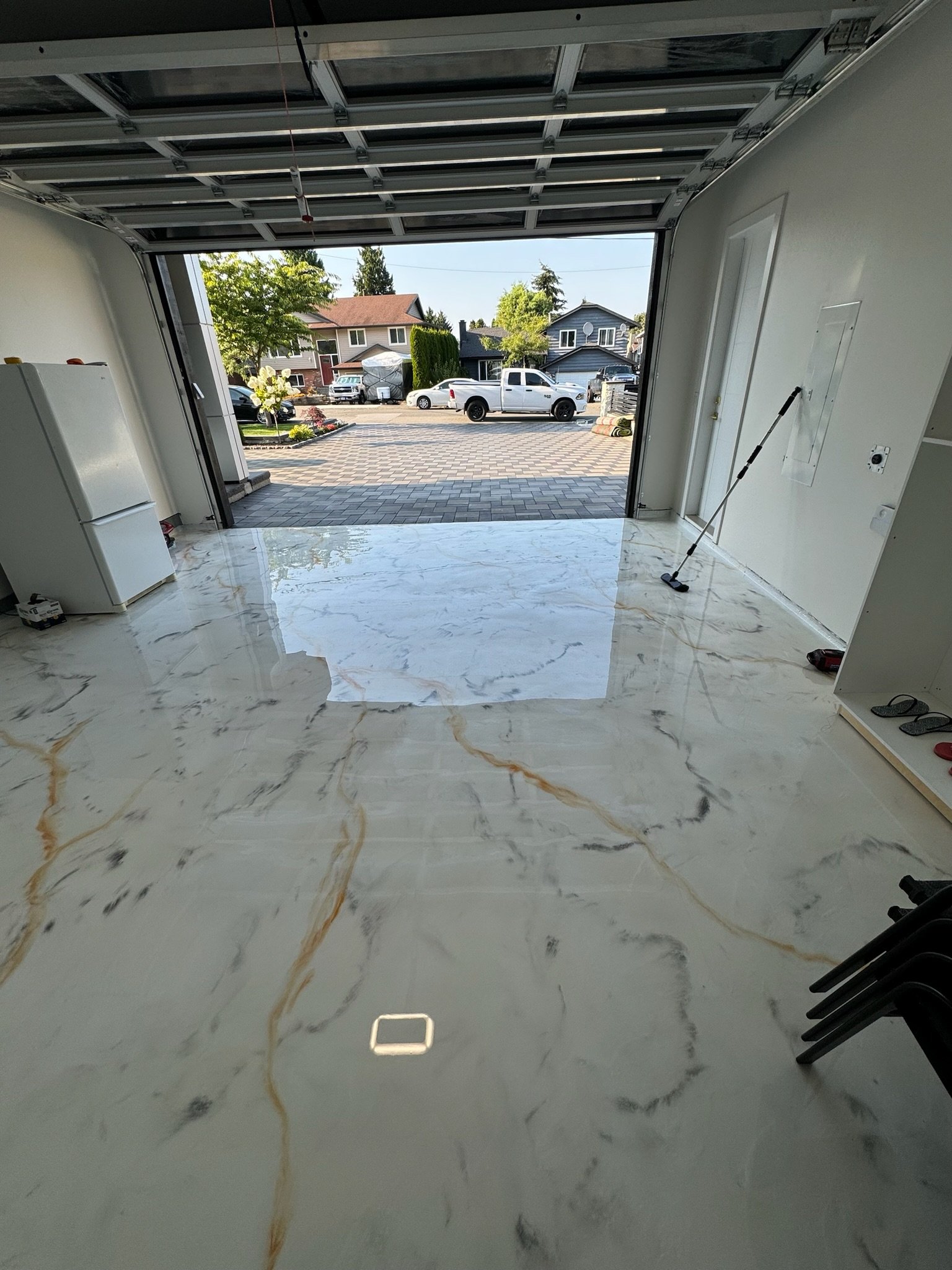
Chemical Resistant Epoxy Floor Coating: What to Know
A chemical resistant epoxy floor coating is a multi-layer epoxy or resinous system built to withstand contact with oils, solvents, acids, cleaning agents, and other substances that would stain, etch, or break down a standard epoxy or bare concrete floor. It's the coating type most often specified for garages, warehouses, workshops, and commercial or light-industrial spaces where spills are a regular part of the day.
- Chemical resistant epoxy uses a denser resin build and often a higher solids content than a standard decorative epoxy coating.
- It's suited to garages, warehouses, auto shops, workshops, and commercial or light-industrial floors across Metro Vancouver and the Fraser Valley.
- Resistance varies by chemical type and contact time — no coating resists everything indefinitely.
- Surface preparation and cure time affect chemical resistance as much as the coating product itself.
What Makes an Epoxy Coating Chemical Resistant?
Standard epoxy floor coatings resist everyday foot traffic, occasional spills, and general wear, but they can stain or soften when exposed to solvents, battery acid, brake fluid, or industrial cleaners for extended periods. A chemical resistant epoxy floor coating is formulated differently — typically with a higher percentage of solid resin and fewer solvents, applied in a thicker, denser film that limits how far a spilled substance can spread before it's wiped up.
The chemical resistance of any epoxy system also depends on how the concrete substrate was prepared. Epoxy applied over concrete that hasn't been properly ground or profiled bonds poorly, and a weak bond gives chemicals a path underneath the coating rather than across the top of it.
Which Chemicals Can a Chemical-Resistant Epoxy Floor Handle?
In general industry terms, a chemical resistant epoxy system is built to handle repeated contact with things like motor oil, transmission and brake fluid, gasoline and diesel splashes, most household and industrial cleaning solutions, and diluted acids or alkalis common in manufacturing and food-service environments.
No coating resists every substance indefinitely, though. Strong, concentrated acids, certain solvents, and prolonged exposure at high temperatures can still damage even a high-performance epoxy system if a spill isn't cleaned up. The right coating specification depends on which specific chemicals a space is actually exposed to — a mechanic's garage and a food-processing floor don't need the same formulation.
Where Are Chemical-Resistant Epoxy Floors Used in Metro Vancouver and the Fraser Valley?
Locally, chemical resistant epoxy shows up most often in auto repair and detailing shops, breweries and food-and-beverage production spaces, warehouses and distribution centres, light-manufacturing floors, and residential garages where homeowners store fuel, oil, or de-icing products. Industrial parks in cities like Surrey and throughout the Fraser Valley have a high concentration of exactly this kind of space.
Coastal BC's wet winters add another layer to the decision. A garage or shop floor here deals with tracked-in road salt, sand, and moisture for months at a time, on top of whatever chemicals the business or homeowner already works with. That combination of moisture and chemical exposure is part of why a dedicated commercial epoxy flooring system, rather than a decorative-only coating, is usually the right call for these spaces.
How Is a Chemical-Resistant System Different From a Standard Epoxy Coating?
The visible difference between a chemical resistant and a standard epoxy floor is often minimal — both can be finished in solid colors, flake broadcast systems, or a smooth topcoat. The difference is underneath the surface: chemical resistant systems generally use a novolac or high-build epoxy resin, applied in a thicker film build, sometimes with additional coats specifically to extend the barrier between the chemical and the concrete slab.
A standard epoxy coating, by comparison, is built for looks and general durability — fine for a clean garage floor with occasional car maintenance, but not necessarily specified for a space handling regular chemical contact.
Does Every Business or Homeowner Need Chemical-Resistant Epoxy?
Not necessarily. A residential garage used mainly for parking, with occasional oil changes, may do fine with a standard epoxy system. A garage or workshop that regularly handles fuel, solvents, or automotive fluids benefits from the added protection of a chemical-resistant build, since repeated exposure is exactly what standard coatings aren't designed for.
On the commercial side, the decision is usually less optional. Food-and-beverage facilities, auto shops, and manufacturing floors are the kinds of spaces where cleaning chemicals and process spills are a daily reality, which is where a purpose-built commercial epoxy flooring system earns its keep over time.
What Happens If a Chemical-Resistant Coating Isn't Installed Correctly?
Most chemical resistance failures trace back to surface preparation, not the coating product itself. If the concrete isn't mechanically ground or shot-blasted to open its pores, or if moisture in the slab isn't tested and addressed first, the epoxy can't form a full bond. Chemicals then find their way to the weak spots — pinholes, thin edges, or areas where the coating didn't cure evenly — and the floor stains, bubbles, or delaminates well before it should.
Cure time matters too. A chemical-resistant epoxy floor needs to fully cure before it's exposed to heavy chemical contact or vehicle traffic; putting a shop or garage back into service too early can undermine resistance the coating would otherwise provide.
How Much Does a Chemical-Resistant Epoxy Floor Cost?
Cost depends on several factors: how much surface preparation the existing concrete needs, the size of the space, how many coats and what type of topcoat the chemical exposure calls for, and how accessible the site is for equipment and material delivery. A small residential garage with clean, sound concrete is a very different project from a warehouse floor that needs grinding, crack repair, and multiple build coats.
Actual costs vary based on project scope, substrate condition, and site access — contact FraserPlus Epoxy for a personalized assessment.
How Do You Maintain a Chemical-Resistant Epoxy Floor?
Even a chemical-resistant coating benefits from prompt cleanup — the less time a spill sits, the less chance it has to affect the topcoat. Regular sweeping and the occasional damp mop with a pH-neutral cleaner, rather than harsh solvents, helps preserve the coating's finish and resistance over its service life.
Watch for early warning signs — dulling, discoloration, or small chips in high-traffic or high-spill areas — and address them before they spread. A localized touch-up is a much smaller job than a full recoat.
Whether it's a garage floor handling occasional oil changes or a commercial space with daily chemical exposure, matching the coating system to the actual chemicals a floor sees is what makes the difference between a floor that lasts and one that needs redoing in a few years. Contact FraserPlus Epoxy to talk through what a specific space is exposed to and which system fits it.
Frequently Asked Questions
Is chemical-resistant epoxy the same as regular garage floor epoxy?
No. Regular garage floor epoxy is built for looks and everyday durability. Chemical-resistant epoxy uses a different resin build and thicker film specifically to handle repeated contact with oils, fuels, solvents, or cleaning chemicals.
Can chemical-resistant epoxy be installed over an existing garage or shop floor?
It depends on the condition of the existing concrete and whatever is currently on it. Old coatings, sealers, or contaminated concrete generally need to be mechanically removed first so the new system can bond properly.
How long does a chemical-resistant epoxy floor last before it needs to be redone?
Service life depends heavily on how the floor is used, how well it was installed, and how quickly spills get cleaned up. Floors exposed to constant, heavy chemical contact naturally wear faster than floors with occasional exposure.
Does a chemical-resistant floor need a special topcoat?
Often, yes. Many chemical-resistant systems use a urethane or specialized topcoat over the base epoxy layers specifically to add abrasion and chemical resistance at the surface, where contact actually happens.
Follow FraserPlus Epoxy on Google — be the first to know about floor coatings, maintenance guides, and project ideas across Metro Vancouver.
Make us your preferred source on Google