
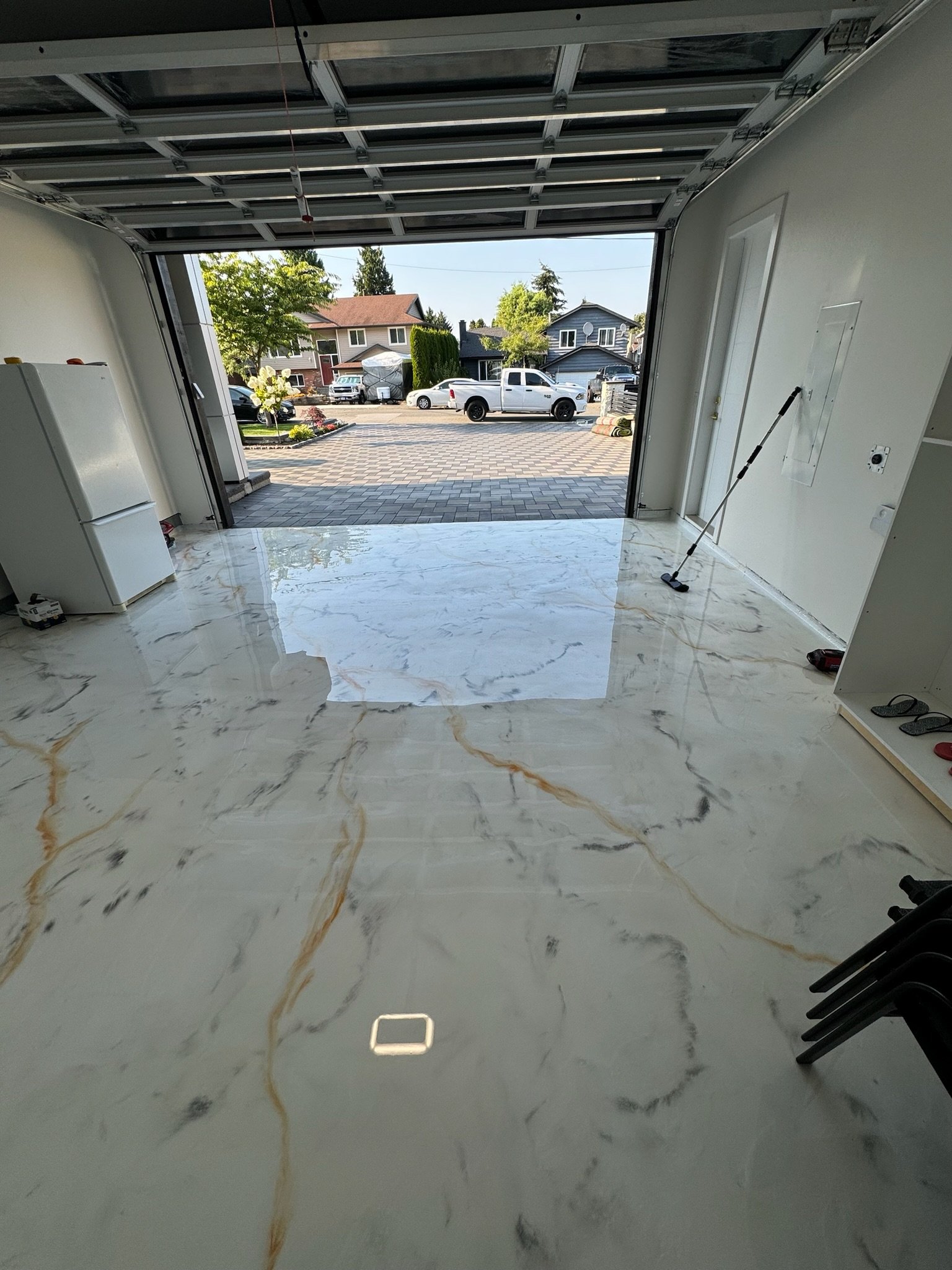
Chemical Resistant Floor Coating: What to Know
TLDR:
- Chemical resistant floor coatings use epoxy or polyurethane resins to protect concrete from spills, stains, and corrosion.
- The right system depends on what chemicals the floor will be exposed to, not just foot traffic.
- Commercial and industrial spaces typically need a different formulation than a residential garage.
- Surface prep and substrate condition matter as much as the coating product itself.
What Is a Chemical Resistant Floor Coating?
A chemical resistant floor coating is a resin-based system applied over concrete to create a barrier against liquids that would otherwise stain, etch, or break down a bare slab. Most systems use epoxy, polyurethane, or a combination of both layered together.
Bare concrete is porous. It absorbs oil, solvents, and acidic or caustic substances, which can lead to staining, surface pitting, and long-term structural wear. A properly applied coating seals that porosity and gives the surface a layer that resists those substances instead of soaking them in.
These systems are used in garage floors that see oil and automotive fluids, and in commercial and industrial spaces like warehouses, auto shops, and food or beverage facilities where spills are a daily reality.
Why Does Chemical Resistance Matter for a Concrete Floor?
Concrete isn't naturally resistant to most of the substances it comes into contact with in a garage or industrial setting. Motor oil, brake fluid, gasoline, de-icing salt, and cleaning chemicals can all soak into unsealed concrete over time.
In Metro Vancouver and the Fraser Valley, that exposure is compounded by our wet climate. Vehicles track in road salt and moisture for a good chunk of the year, and that combination can accelerate surface damage on an uncoated slab. A chemical resistant coating acts as the first line of defense against all of it.
For commercial operators, there's also a compliance angle. Food service, automotive, and manufacturing facilities often have to meet health or safety requirements around washable, non-porous flooring — a coated surface is far easier to clean and sanitize than bare concrete.
What Chemicals Can These Coatings Resist?
Resistance varies by product and formulation, but epoxy and polyurethane coatings are generally formulated to hold up against:
- Motor oil, transmission fluid, and other automotive fluids
- Gasoline and other fuels (in appropriate formulations)
- Cleaning solvents and degreasers
- Mild acids and alkalis
- Road salt and de-icing chemicals
No single coating resists everything equally well. A garage floor dealing mostly with occasional oil drips has different needs than a facility handling industrial solvents daily. That's part of why the right system should be matched to the actual use case rather than picked off a generic spec sheet.
Epoxy or Polyurethane: Which Handles Chemicals Better?
Epoxy coatings are a common choice for garages and light commercial spaces. They bond well to concrete, build a thick, durable film, and hold up to normal vehicle traffic and occasional chemical exposure.
Polyurethane coatings are generally more flexible and more UV-stable than epoxy, and certain polyurethane formulations are built specifically for higher chemical resistance in demanding industrial environments. Many commercial systems actually combine the two: an epoxy base coat for adhesion and build, topped with a polyurethane or urethane topcoat for added chemical and abrasion resistance.
Which combination makes sense depends on the specific chemicals involved, the traffic level, and whether the floor needs to meet any industry-specific standards. That's a conversation worth having before committing to a product.
How Does Surface Prep Affect Chemical Resistance?
A coating is only as good as the surface underneath it. Concrete that isn't properly profiled, cleaned, and dried before coating is far more likely to see adhesion failure — bubbling, peeling, or delamination — especially once chemicals start working at a weak bond.
Mechanical surface preparation, like diamond grinding or shot blasting, opens up the concrete's pore structure so the coating can mechanically key into the slab instead of just sitting on top of it. Moisture testing matters too: concrete that's still releasing vapor from below can cause coating failure regardless of how good the product is.
This is also where site conditions come in. A garage slab in Surrey or Langley that's been exposed to years of unsealed moisture and road salt may need more aggressive prep than a newer commercial pour in Richmond.
What Does a Chemical Resistant Coating Cost?
Pricing for chemical resistant floor coatings varies widely across the industry depending on the system specified, square footage, surface prep required, and site access. As general industry context, multi-coat epoxy or polyurethane systems with enhanced chemical resistance typically cost more per square foot than a standard single-coat residential garage system, since they often require additional surface prep and a dedicated topcoat.
Actual costs vary based on project scope, substrate condition, and site access — contact FraserPlus Epoxy for a personalized assessment.
How Long Does a Chemical Resistant Coating Last?
Longevity depends on the product, the quality of the installation, and how the floor is actually used day to day. A coating in a light-use residential garage will generally outlast one in a commercial facility dealing with constant chemical exposure and heavy equipment traffic.
Regular cleaning and prompt cleanup of spills — rather than letting chemicals sit on the surface for extended periods — also plays a role in how well any coating holds up over time, even a chemical resistant one.
Is a Chemical Resistant Coating Right for a Residential Garage?
For most homeowners, a standard garage epoxy system already handles typical exposure to motor oil, coolant, and cleaning products just fine. A dedicated high-chemical-resistance system is usually more relevant for a home garage doubling as a workshop with solvents or automotive repair work happening regularly.
Homeowners interested in a decorative option that still holds up to normal garage use might also look at metallic epoxy flooring, which combines a durable resin base with a distinctive finish.
What Should You Ask a Contractor About Chemical Resistance?
Before choosing a coating system, it helps to have clear answers to a few questions:
- What specific chemicals or substances will the floor realistically be exposed to?
- What surface prep method will be used, and why?
- Is this a single-system coating or a base-plus-topcoat combination?
- What's the expected maintenance routine to keep the coating performing well?
A contractor who asks about your actual use case before recommending a product is generally a better sign than one who quotes a one-size-fits-all system. For a closer look at options across Burnaby, Coquitlam, and the rest of the region, see the full services overview or get in touch to discuss a specific space.
FAQ
Does epoxy flooring resist all chemicals?
No single coating resists every chemical equally well. Resistance depends on the specific formulation and how it matches up against what the floor will actually be exposed to.
Can a chemical resistant coating go over an existing epoxy floor?
In some cases a topcoat can be added over an existing system, but this depends on the condition and compatibility of what's already down. A site assessment is the best way to confirm.
Is polyurethane always better than epoxy for chemical resistance?
Not necessarily — it depends on the chemicals involved. Many commercial systems use both together: an epoxy base coat with a polyurethane topcoat for added resistance.
How do I clean a chemical resistant floor coating?
Routine cleaning with a standard concrete-safe cleaner is typically sufficient. Prompt cleanup of chemical spills, rather than letting them sit, helps the coating perform as intended over time.
Follow FraserPlus Epoxy on Google — be the first to know about floor coatings, maintenance guides, and project ideas across Metro Vancouver.
Make us your preferred source on Google