
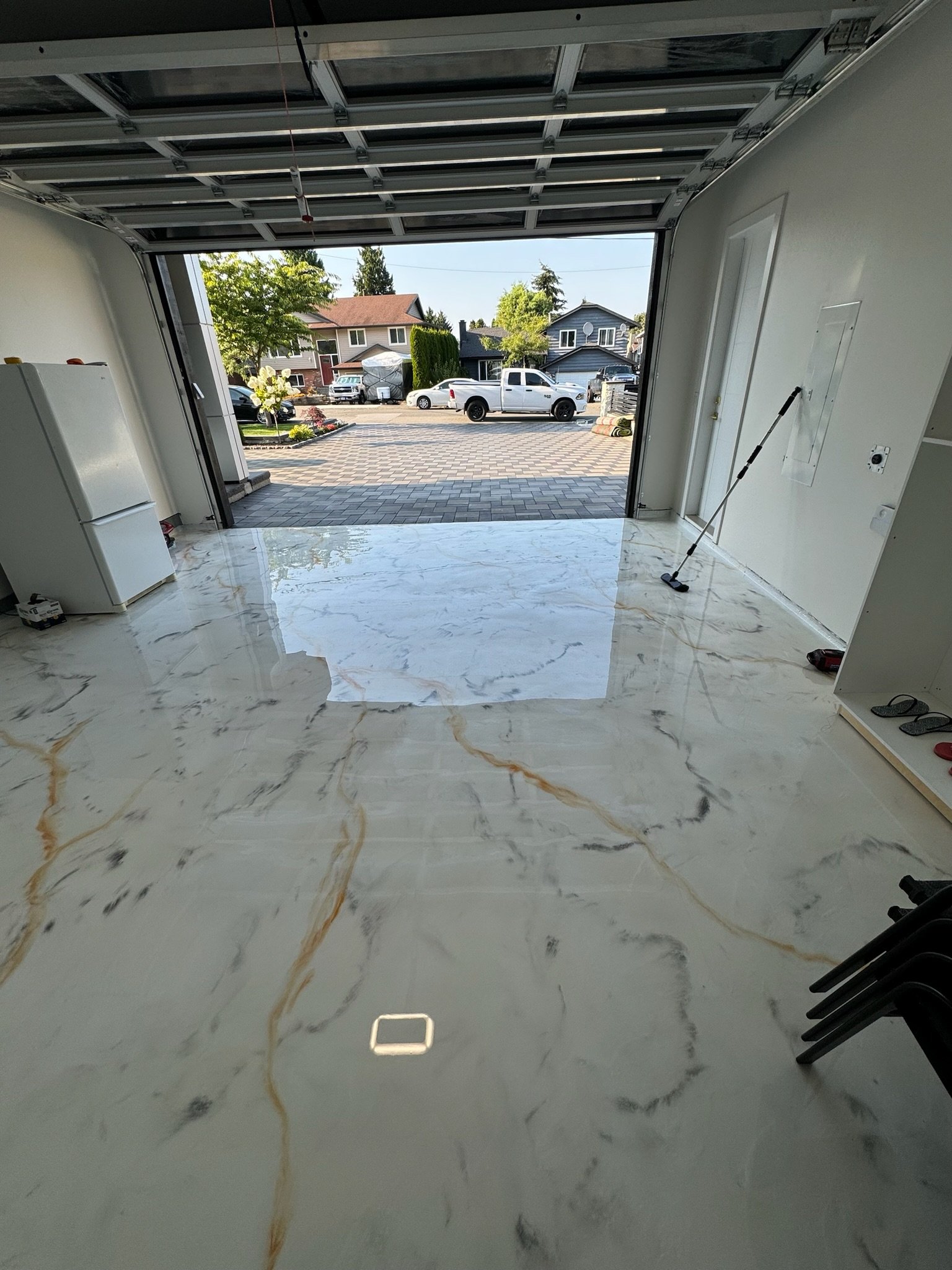
Epoxy Flooring Company Vancouver: What to Look For
If you're searching for an epoxy company, you're probably dealing with a garage floor that's chipping and staining, a warehouse floor that can't keep up with forklift traffic, or a concrete slab that's just seen better days. Finding the right contractor matters more than most people expect. A poorly prepared epoxy floor can fail within months, while a properly installed one can hold up for years.
This article covers what separates a qualified epoxy and concrete coating contractor from someone spreading a hardware-store kit, plus what to expect from the process in Metro Vancouver and the Fraser Valley.
What Should You Look For in a Local Epoxy Company?
- Surface preparation matters more than the coating product itself. Ask how the contractor tests concrete moisture and profiles the slab before any coating goes down.
- A contractor worth hiring should walk your site in person before quoting, not price a job off photos alone.
- Ask for a written scope of work that lists the prep method, number of coats, and cure times.
- Confirm the crew has handled both garage floors and larger commercial floors, since the prep standards and equipment differ between the two.
- Ask what happens if moisture testing turns up a problem. A contractor with a real plan for that answer has done this before.
What Does an Epoxy Flooring Company Actually Do?
An epoxy flooring contractor does more than pour a coating over concrete. The job starts with an assessment of the existing slab: its age, any cracks or previous coatings, and how much moisture is moving through it. From there, the crew grinds or shot-blasts the surface to open the concrete's pores so the coating can bond mechanically instead of just sitting on top.
Once the surface is ready, the contractor applies a primer coat, then one or more layers of epoxy or a hybrid system such as polyaspartic or polyurea, depending on the space's traffic and chemical exposure. Many jobs finish with a clear topcoat for UV stability and abrasion resistance. Each layer needs a specific cure window before the next goes on, which is part of why a rushed installation tends to fail early.
How Is Concrete Prepared Before Epoxy Goes Down?
Preparation is the single biggest factor in how long an epoxy floor lasts. Concrete is porous, and over time it absorbs oil, dust, sealers, and moisture. If a coating goes over any of that without proper prep, it won't bond, and the floor will peel or bubble.
Mechanical prep, usually diamond grinding or shot-blasting, removes the top layer of concrete and any contamination sitting in it. This also opens the surface profile so the epoxy has something to grip. A contractor should also run a moisture test, since a slab on grade near the coast can hold more moisture than it looks like it does, and trapped moisture under a coating is one of the most common causes of failure.
Cracks and control joints get filled or addressed before coating, and any oil staining in a garage or shop needs to be treated so it doesn't bleed through the new floor.
What's the Difference Between Epoxy, Polyaspartic, and Polished Concrete?
Epoxy is a two-part resin system known for chemical resistance and a hard, durable finish, which is part of why it shows up so often in garages, warehouses, and industrial floors. It typically needs a longer cure time than newer coating systems, and installation timing depends on ambient temperature and humidity.
Polyaspartic and polyurea coatings are related resin technologies that cure much faster than standard epoxy and tend to hold up better against UV exposure, which matters for a garage with a window or a floor near a bay door. Many contractors combine an epoxy base coat with a polyaspartic topcoat to get the benefits of both.
Polished concrete is a different approach entirely. Instead of adding a coating, the existing slab is mechanically ground and honed to a smooth, often glossy finish, then treated with a densifier. It suits spaces that want a concrete look with less maintenance than a raw slab, though it doesn't offer the same chemical resistance or color and flake options as an epoxy system.
You can compare garage epoxy flooring, metallic epoxy flooring, and polished concrete options on our services page to see which fits your space.
How Much Does Epoxy Flooring Cost?
Cost depends on the size of the space, the condition of the existing concrete, how much prep work is needed, and which coating system you choose. A garage with minor staining and no cracks costs less to prepare than a commercial floor with years of oil contamination or moisture issues. Metallic epoxy and decorative flake systems generally involve more labor than a solid-color coating, which affects price as well.
Actual costs vary based on project scope, substrate condition, and site access — contact FraserPlus Epoxy for a personalized assessment. A general estimate won't mean much until someone has actually looked at your floor.
Why Does Metro Vancouver's Climate Matter for Epoxy Flooring?
Coastal BC's humidity and rainfall play a real role in how epoxy performs. Concrete slabs in this region can carry more residual moisture than slabs in a drier climate, which is exactly why moisture testing before coating matters here more than it might elsewhere. A coating applied over a slab with elevated moisture vapor transmission is more likely to blister or delaminate.
Temperature swings matter too. Garages that see cold winter mornings and warmer afternoons put stress on a coating as the concrete expands and contracts. A coating system chosen and installed with that in mind tends to hold up better over multiple BC winters than one applied without accounting for it.
Local building code and site conditions can also affect scheduling and ventilation requirements during installation, which is one more reason to work with a contractor familiar with the region rather than a general contractor from out of the area.
Residential vs. Commercial Epoxy: What Changes?
A residential garage floor typically deals with vehicle traffic, occasional chemical spills like oil or antifreeze, and foot traffic. The coating needs to look good and resist staining, but it isn't usually subjected to constant heavy loads.
A commercial or industrial floor is a different job. Warehouses, auto shops, and manufacturing spaces deal with forklift traffic, heavier point loads, and in some cases harsher chemical exposure. These floors often need a thicker system, additional layers, or a different resin blend entirely to hold up under daily use. Downtime also matters more for a business, so scheduling and cure time become part of the planning conversation in a way they aren't for a weekend garage project.
If your project falls into the commercial category, our commercial epoxy flooring page walks through what that process typically involves.
What Questions Should You Ask Before Hiring an Epoxy Contractor?
Start with the basics: how do they prepare the concrete, and will they test for moisture before quoting a firm price? Ask what happens if they find a problem mid-project, like a crack that opens up during grinding. A contractor with a clear answer has likely run into it before.
Ask about the specific products they use and why, rather than accepting a generic answer like "commercial grade." Ask how long the space needs to stay clear before it can handle foot traffic and vehicle weight, since cure times vary by product and by weather. And ask whether they'll put the scope of work in writing, including what is and isn't included.
If you're in Surrey, Burnaby, Langley, Coquitlam, or Richmond, or elsewhere in the Fraser Valley, it also helps to ask whether the contractor regularly works in your area, since local site conditions and scheduling can vary.
Ready to talk through your project? Get in touch with FraserPlus Epoxy and we can walk through what your specific floor needs.
Frequently Asked Questions
How long does an epoxy floor take to install?
Timelines depend on the size of the space, the coating system, and how much prep the concrete needs. Multi-coat systems require cure time between layers, and full cure to handle heavy weight can take longer than the floor looks ready for foot traffic.
Can epoxy be applied over an existing coating?
Sometimes, but it depends on the condition and adhesion of the existing coating. In many cases the old coating needs to be mechanically removed first so the new system bonds properly to the concrete itself.
Does epoxy flooring work in a cold garage?
Epoxy and related resin systems have temperature requirements for installation and cure. A contractor familiar with BC winters will plan around ambient temperature and humidity rather than coating a floor in conditions outside the product's range.
Is polished concrete a good alternative to epoxy?
It depends on what you need from the floor. Polished concrete offers a lower-maintenance, concrete-look finish, while epoxy offers more color, pattern, and chemical-resistance options. A contractor can walk through both against your specific use case.
Follow FraserPlus Epoxy on Google — be the first to know about floor coatings, maintenance guides, and project ideas across Metro Vancouver.
Make us your preferred source on Google