
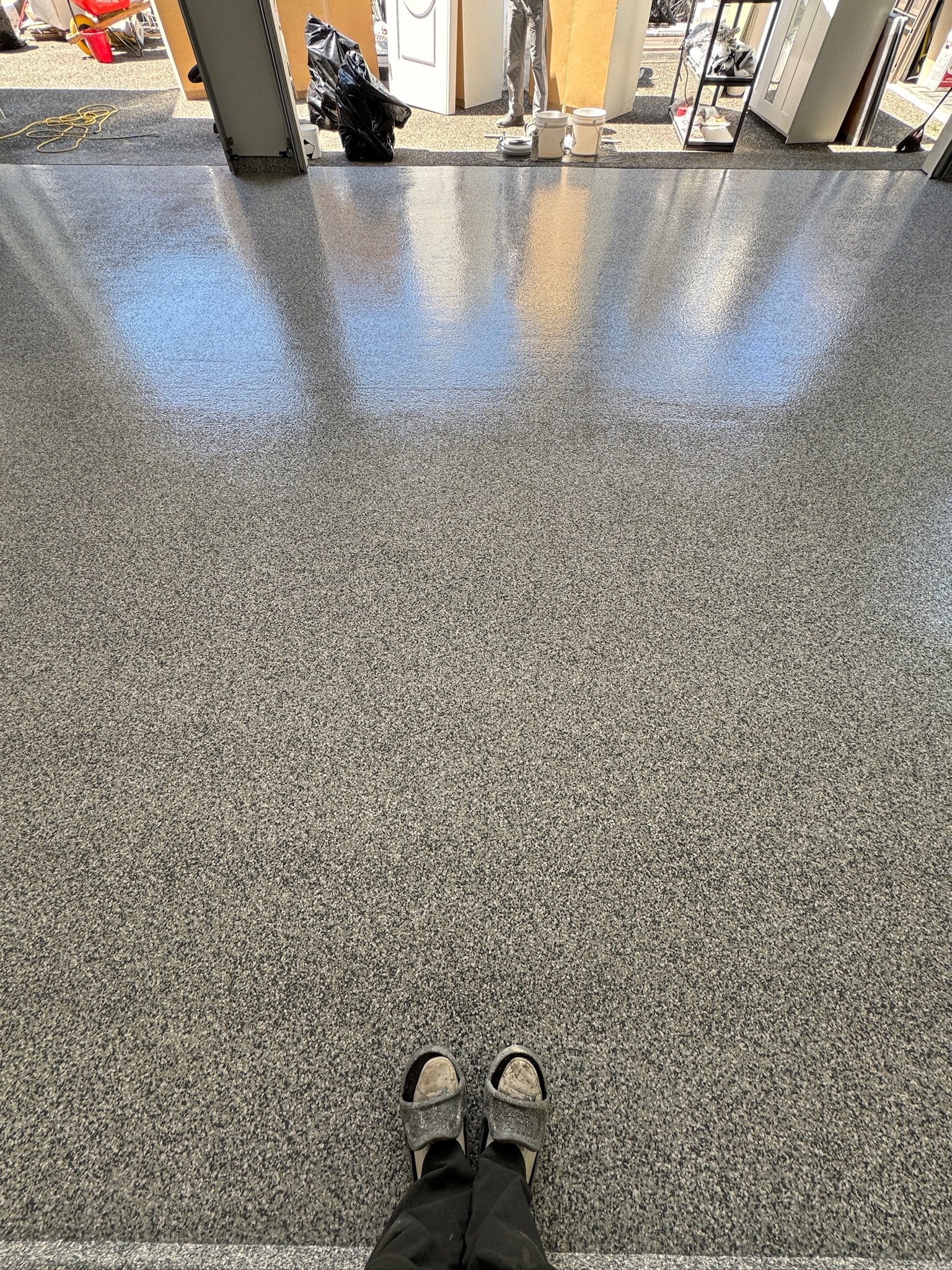
5 Questions to Ask a Commercial Epoxy Flooring Contractor
- Commercial epoxy flooring contractors handle surface prep, moisture testing, coating selection, and cure scheduling — steps that go well beyond a residential garage job.
- A solid written estimate spells out the prep method, the coating system, the number of coats, cure time, and any downtime your business needs to plan around.
- Metro Vancouver and Fraser Valley humidity and seasonal temperature swings can affect cure times and whether a slab needs moisture testing before coating.
- Ask for an in-person site walk-through before you accept a quote — a phone or email estimate often misses substrate issues that surface once work starts.
What Does a Commercial Epoxy Flooring Contractor Actually Do?
A commercial job is a different scope than a homeowner's garage floor. Contractors working in warehouses, retail spaces, restaurants, or industrial units are usually dealing with larger square footage, tighter timelines, and floors that see forklift traffic, chemical spills, or constant foot traffic during business hours.
The work generally starts with mechanical surface prep — grinding or shot-blasting the concrete to open the pores so the coating can bond properly. From there, a contractor tests for moisture, applies a primer if the substrate calls for it, then builds up the coating system in layers: a base coat, sometimes a broadcast or flake layer for texture and slip resistance, and a topcoat for durability and chemical resistance.
Because commercial sites are occupied buildings, contractors also have to plan around ventilation, dust containment, and worker or customer safety while the floor cures. You can see how FraserPlus Epoxy approaches this scope on the commercial epoxy flooring page.
How Do You Vet a Commercial Epoxy Flooring Contractor Before Hiring?
Start by asking to see examples of commercial work specifically — not just residential garages. Commercial floors carry different loads, different chemical exposure, and different foot traffic patterns, so a contractor's residential portfolio doesn't tell you much about how they'll handle your facility.
Ask how they test for slab moisture and what they do if a test comes back high. Ask what ventilation and dust containment plan they use if your building stays occupied during the work. And ask for a written project schedule, not a verbal estimate of "a few days" — commercial cure times depend on the product system and site conditions, and a vague timeline usually means the contractor hasn't scoped the job closely.
Scheduling matters as much as the coating system itself. Ask whether the contractor plans to work in phases so part of your facility can stay operational, or whether the job requires a full shutdown. For businesses that can't close for an extended period, ask about after-hours or weekend scheduling and how that affects the overall timeline.
It's also reasonable to ask about liability insurance coverage and how they handle unexpected issues, like cracks or contamination discovered once the old flooring or coating is removed.
What Should a Commercial Epoxy Flooring Estimate Include?
A clear, written estimate should cover the prep method, the specific coating system being proposed (straight epoxy, epoxy with a flake or quartz broadcast, or a polyaspartic/urethane topcoat), the number of coats, and the expected cure schedule before the space can return to normal use.
Surface repair is often part of prep work, not a separate line item you find out about later. Cracks, control joints, and old adhesive or coating residue usually need to be addressed before a new system goes down, and a thorough contractor will flag this during the site walk-through rather than after the job has started.
It should also address site protection: how dust and fumes will be contained, whether work happens during business hours or off-hours, and what happens if the crew finds a moisture or substrate issue mid-project that wasn't visible during the walk-through.
Costs for commercial epoxy work vary widely depending on square footage, substrate condition, and the coating system chosen. Actual costs vary based on project scope, substrate condition, and site access — contact FraserPlus Epoxy for a personalized assessment.
How Does Metro Vancouver's Climate Affect Commercial Epoxy Projects?
Coastal humidity and wet winters are part of working with concrete in this region. Slabs at or below grade can hold moisture that pushes up through the concrete over time, which is one reason many contractors test moisture levels before committing to a coating system — a coating applied over a wet slab is more likely to blister or fail early.
Temperature swings between seasons also affect cure times. Epoxy and related coatings cure through a chemical reaction that's sensitive to ambient temperature and humidity, so a project scheduled for a cold, damp week may need a longer cure window than the same job done in a dry, temperature-controlled space.
If you're planning a project in Surrey or elsewhere in the Fraser Valley, it's worth asking your contractor how they plan around seasonal conditions and whether the space needs supplemental heating or dehumidification during the cure period.
Garage Epoxy vs. Commercial Epoxy: What's Different?
The underlying chemistry is similar, but the systems are built for different demands. A garage epoxy flooring project typically deals with occasional vehicle traffic, tire marks, and the odd chemical spill from a workbench.
A commercial floor might see forklifts, pallet jacks, constant foot traffic, or exposure to cleaning chemicals and food-service spills, depending on the business. That usually calls for a thicker system, additional coats, or a topcoat chosen for chemical and abrasion resistance rather than appearance alone.
That said, appearance still matters for customer-facing spaces like showrooms or retail floors — a metallic epoxy finish can give a durable commercial floor a distinctive look without sacrificing performance.
What Questions Should You Ask Before Signing a Contract?
- What does the warranty cover, and is it in writing?
- What's the full project timeline, including cure time before we can use the space again?
- How do you handle unexpected substrate issues found during prep?
- How will you protect our staff, customers, or inventory during the work?
- Can we see photos or references from a commercial project similar to ours?
A contractor who answers these clearly, in writing, before the work starts is generally easier to work with once the job is underway.
Frequently Asked Questions
How long does commercial epoxy flooring take to cure before we can reopen the space?
Cure schedules differ by product system and by site conditions like temperature and humidity, so there's no single answer. Ask your contractor for a written cure timeline specific to the products they're using on your job before you plan a shutdown or reopening date.
Can commercial epoxy flooring be installed while our business stays open?
Sometimes, depending on the layout and how the work is phased. Some contractors section off areas and work overnight or in stages so part of the space can stay in use. This depends heavily on ventilation, dust containment, and the specific coating system, so it's worth discussing directly with your contractor.
What's the difference between epoxy and polyaspartic coatings for commercial floors?
In general, epoxy coatings have a longer working time, which can help with self-leveling on larger floors, while polyaspartic topcoats tend to cure faster and hold up well to UV exposure. Many commercial systems combine both — an epoxy base coat with a polyaspartic topcoat.
Do commercial epoxy floors need a moisture test before installation?
Many contractors test slab moisture before installing a coating, particularly on slabs at or below grade or in older buildings. This helps determine whether extra prep or a moisture-mitigating primer is needed before the coating goes down.
If you're comparing quotes for a commercial project anywhere in Metro Vancouver or the Fraser Valley, the FraserPlus Epoxy services page has an overview of available systems, or you can go straight to the contact us page to describe your space and get a site visit scheduled.
Follow FraserPlus Epoxy on Google — be the first to know about floor coatings, maintenance guides, and project ideas across Metro Vancouver.
Make us your preferred source on Google