
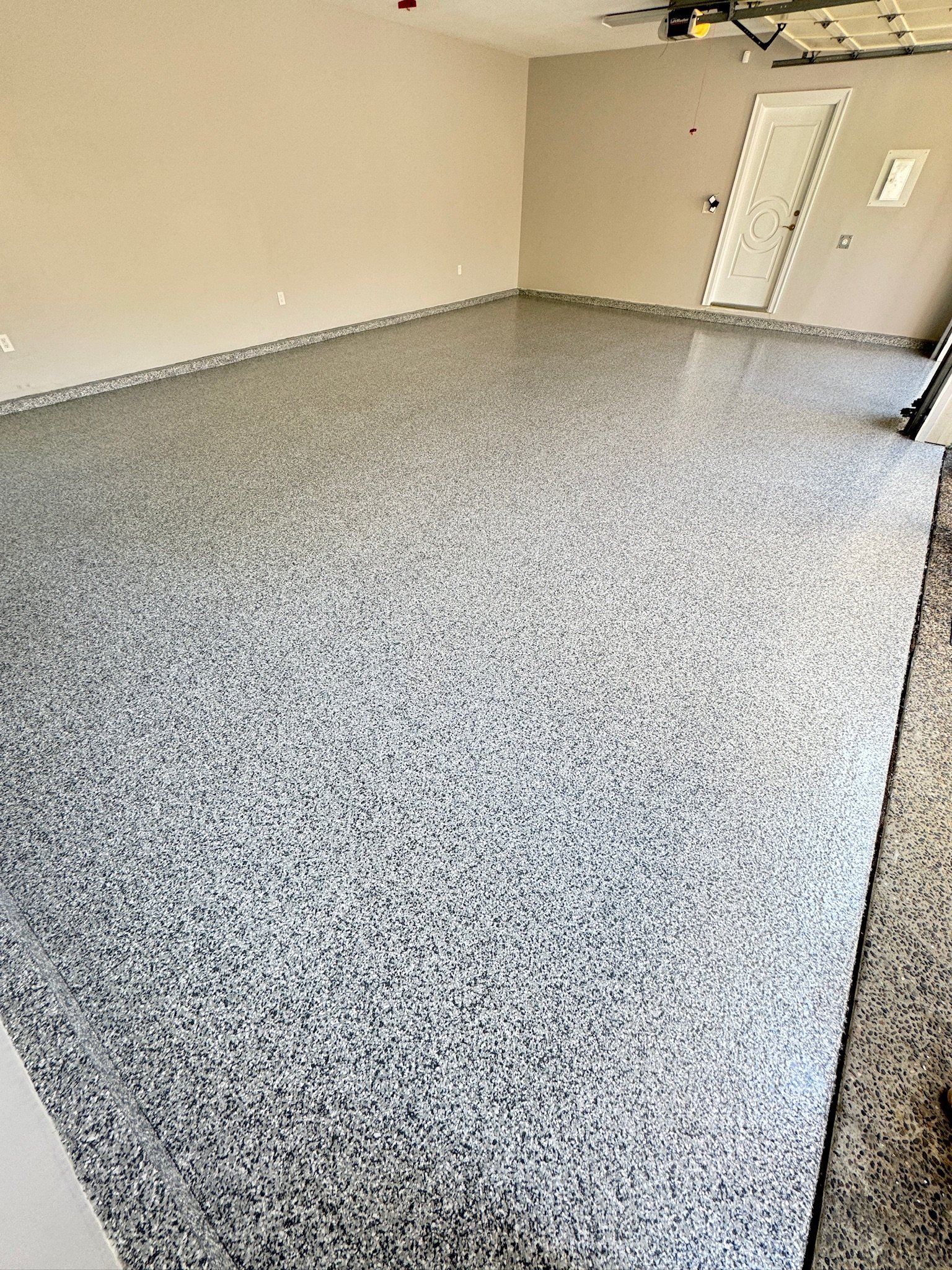
7 Questions to Ask a Commercial Epoxy Flooring Contractor
- Ask any commercial epoxy flooring contractor for project photos, a written scope of work, and a documented surface prep process before you sign anything.
- Surface preparation, not the coating itself, is the biggest factor in how long a commercial epoxy floor lasts.
- Get separate written quotes for prep, materials, and downtime so you can compare contractors on equal terms.
- Ask how a contractor handles moisture testing on concrete slabs, a real risk for commercial floors in this region's climate.
What Should You Look for When Choosing a Commercial Epoxy Flooring Contractor?
A commercial epoxy floor is a bigger investment than a garage floor, and it usually has to perform under forklift traffic, chemical exposure, or heavy foot traffic every day. Start by asking for a written scope of work that spells out surface prep, the specific coating system, cure times, and who's responsible for site protection during the job. It's also worth asking whether the contractor visits the site before quoting, since an accurate scope depends on seeing the slab, not just square footage on paper.
Ask to see examples of completed commercial work, not just residential garages - the two jobs use different prep standards and coating thicknesses. A contractor who works across commercial epoxy flooring and residential applications should be able to explain why the specs differ.
Get warranty terms in writing. A verbal promise about durability isn't a substitute for a documented warranty that names what's covered and for how long. If a warranty excludes certain traffic types or chemical exposure, get that written down too, not just implied.
What Certifications or Licensing Should a Commercial Epoxy Contractor Have?
Requirements vary by municipality and by facility type, so it's worth asking directly what licensing and insurance a contractor carries rather than assuming. At minimum, ask for proof of general liability insurance and WorkSafeBC coverage before work starts on a commercial site.
Some coating manufacturers run installer training or certification programs. If a contractor mentions a manufacturer certification, ask which manufacturer and ask to see the credential - a specific name and program is easy to verify, a vague claim isn't.
For facilities with food-grade, healthcare, or industrial code requirements, ask how the contractor has handled those requirements on past projects and what documentation they can provide.
How Does Floor Preparation Affect the Life of an Epoxy System?
Epoxy and resinous coatings bond to the concrete surface rather than into it, so the coating is only as good as what's underneath. Skipped or rushed prep is the most common reason commercial coatings fail early - peeling, bubbling, or delaminating under traffic.
Proper prep usually involves mechanically profiling the concrete through grinding or shot-blasting, testing for moisture vapor, and repairing cracks or spalling before any coating goes down. Ask a contractor to walk you through their prep process step by step, not just the finish coat.
Moisture testing matters more here than in drier climates. A slab that looks dry on the surface can still be pushing enough moisture vapor from below to cause a coating to fail months later.
Ask what happens if hidden slab damage - old anchor holes, cracks, or previous coating failures - turns up once demolition starts. A contractor with a clear change-order process avoids surprise costs mid-project.
What's the Difference Between Epoxy, Polyaspartic, and Polished Concrete for Commercial Spaces?
Epoxy coatings are a common choice for warehouses, retail, and light-industrial floors because they build a durable film and can be finished with decorative flake or metallic effects. They generally need a longer cure window and controlled temperatures during installation.
Polyaspartic and polyurea coatings cure much faster and tolerate a wider temperature range, which matters when a facility can't be shut down for long. They tend to cost more per square foot than a standard epoxy system.
Polished concrete skips the applied coating and mechanically grinds and densifies the existing slab instead. It suits facilities that want a lower-maintenance floor without color or added thickness, though it doesn't offer the same chemical resistance as a coated system.
The right choice depends on traffic, chemical exposure, and available downtime. Ask a contractor which system they'd choose for your specific operation and why, not just which system they install most often.
How Long Does Commercial Epoxy Flooring Installation Take?
Timelines depend on square footage, the coating system, and how much prep the slab needs - a contractor can't give an accurate timeline without seeing the space or reviewing detailed photos and measurements. Multi-coat epoxy systems generally take longer than single-coat or fast-cure polyaspartic systems.
Many commercial jobs get phased so part of a warehouse or retail floor stays operational while another section is coated. Ask whether a contractor has experience sectioning off work areas and how that affects total project cost. If your facility runs multiple shifts, ask how a contractor plans work around your busiest hours.
Cure time before the floor can handle foot traffic, and separately before it can handle vehicle or forklift traffic, are two different numbers. Ask for both, not just one.
How Much Does Commercial Epoxy Flooring Cost?
Cost depends on square footage, how much prep the existing slab needs, the coating system, and whether work has to happen in phases or after hours. Actual costs vary based on project scope, substrate condition, and site access - contact FraserPlus Epoxy for a personalized assessment.
When comparing quotes, ask each contractor to break out prep, materials, and labor separately rather than giving one lump number. That makes it easier to see where quotes actually differ. Financing terms, payment schedules, and whether a deposit is required are also worth confirming upfront.
Why Does Local Climate Matter for Metro Vancouver and Fraser Valley Facilities?
The region's damp climate means concrete slabs can hold more moisture than in drier areas, which is part of why moisture testing before coating is worth insisting on. Older commercial and industrial buildings in cities like Surrey may also have slabs poured decades ago without a vapor barrier underneath.
Local building and life-safety requirements can affect coating choice too - slip resistance in wet-prone entryways, for example, or chemical resistance in a food-service kitchen. A contractor familiar with the region's building stock can flag these issues during a walkthrough rather than after the coating is down.
Facility type matters here as well: a cold-storage warehouse, a retail showroom, and a parking structure each have different exposure and traffic demands, even though all three fall under "commercial epoxy." Ask whether a contractor can schedule work around your operating hours or seasonal slow periods, since coordinating downtime matters as much as the coating itself.
How Do You Compare Quotes From Different Commercial Epoxy Flooring Contractors?
Line up quotes side by side and check that each one specifies the same scope - same square footage, same number of coats, same prep method. A lower number that skips moisture testing or grinding isn't actually a lower cost if the floor fails early.
Ask each contractor for references from commercial, not just residential, clients, and ask if you can see a completed job in person if one is nearby. A finished floor tells you more than a sample board. Also ask about post-installation care instructions - cleaning products and equipment that are safe on a new coating vary by system.
If you're ready to schedule a walkthrough, get in touch with FraserPlus Epoxy to talk through your facility's traffic, timeline, and any existing floor issues.
Frequently Asked Questions
How much does commercial epoxy flooring cost?
Cost depends on square footage, existing slab condition, and the coating system you choose. Actual costs vary based on project scope, substrate condition, and site access - contact FraserPlus Epoxy for a personalized assessment.
How long does a commercial epoxy floor take to install?
Timeline depends on square footage, the coating system, and how much surface prep the slab needs. A contractor can give an accurate schedule once they've seen the space or reviewed detailed photos and measurements.
Can commercial epoxy flooring be installed without shutting our facility down?
Many commercial jobs are phased so part of the space stays operational while another section is coated. Fast-cure systems like polyaspartic coatings can also shorten the downtime needed compared to standard epoxy.
How long does a properly installed commercial epoxy floor last?
Lifespan depends heavily on prep quality, the coating system, and the type of traffic the floor handles day to day. A floor with thorough surface prep and the right system for its use generally holds up far longer than one where prep was skipped.
Follow FraserPlus Epoxy on Google — be the first to know about floor coatings, maintenance guides, and project ideas across Metro Vancouver.
Make us your preferred source on Google