
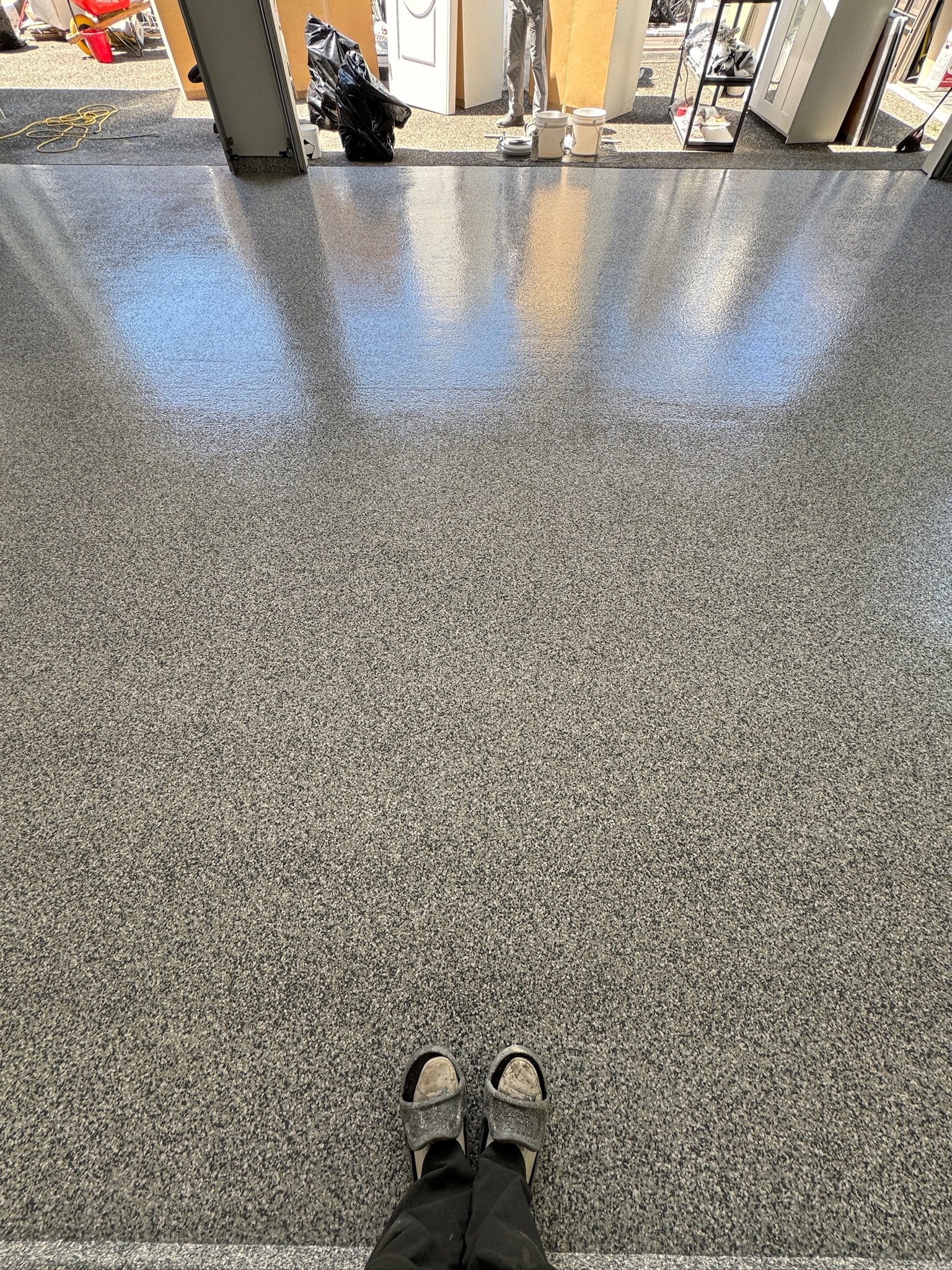
Commercial Epoxy Flooring Contractor: 5 Vetting Checks
The right commercial epoxy flooring contractor will specify the product system in writing, handle the surface prep themselves, and know how BC's humidity affects cure conditions. If a contractor can't give you those details upfront, keep looking.
- Substrate prep — shot blasting or diamond grinding — is the most important part of any epoxy job, and also where corners get cut most often
- In Metro Vancouver's humid climate, concrete moisture testing is essential before any coating goes down
- Not all epoxy systems suit all facility types — ask for the manufacturer name and product line, not just "epoxy"
- Get dry film thickness, cure times, and warranty scope in writing before signing anything
What Makes Commercial Epoxy Different from a Residential Coating?
Commercial environments put floors through far more punishment. Warehouses, food processing plants, auto service bays, and retail spaces deal with forklift traffic, chemical spills, heavy point loads, and constant use that residential settings rarely see.
The epoxy systems used in commercial settings are typically thicker, formulated for specific chemical or slip-resistance requirements, and applied by crews who understand the tolerances involved. A contractor who focuses primarily on residential work — like the systems covered on the garage epoxy flooring page — may not stock or have hands-on experience with industrial-grade products. It's worth confirming their commercial track record before you proceed.
For a full overview of coating types available across facility categories, the services page covers residential through industrial systems.
How Do You Evaluate a Commercial Epoxy Contractor's Experience?
Ask about past projects that match your facility type. A food plant floor is a fundamentally different job from a car dealership showroom — the chemical resistance requirements, drainage slope design, and surface texture standards are all different. A contractor who can speak to those differences without prompting is worth talking to.
Request references from commercial clients in similar industries, then actually call them. Ask how the floor has held up, whether the contractor hit the agreed timeline, and whether any warranty claims came up and how they were handled.
One practical signal: find out whether they handle their own surface prep or subcontract it. Prep — shot blasting, scarifying, or diamond grinding down to clean concrete — is where most failed epoxy floors trace back to. Contractors who control that phase tend to take more ownership of the finished result.
What Questions Should You Ask Before Signing a Contract?
Before you commit to any commercial flooring contractor, get clear written answers to these:
- What product system will you use? Ask for the manufacturer and product line specifically. "Epoxy" covers a wide range of quality levels and formulations.
- What's the dry film thickness? You should know what you're paying for and why that spec suits your facility's traffic and use.
- How will you prepare the concrete? Shot blasting is the standard for most commercial applications. If the prep description sounds minimal, that's a warning sign.
- What are the cure times and reopen-to-traffic windows? This matters if your operation can't afford extended downtime.
- What does the warranty cover — and what does it exclude? Delamination, topcoat wear, and color fade are different things. Know which your warranty actually addresses.
A contractor who can't answer these in writing, as part of a formal proposal, isn't ready for commercial work.
What Does Commercial Epoxy Flooring Typically Cost?
Commercial epoxy is priced by the square foot, and the range is wide. The coating system, the condition of your concrete slab, any repairs needed before coating, and logistical factors — like whether work needs to happen overnight or in phases to keep your facility running — all affect the final number.
A basic single-layer coating over a well-prepared slab costs less than a high-build broadcast system with a chemical-resistant topcoat. The system should be specified to the job, not picked to hit a price point.
Actual costs vary based on project scope, substrate condition, and site access — contact FraserPlus Epoxy for a personalized assessment. You can reach the team on the contact page.
Be cautious of quotes that seem unusually low. In commercial epoxy work, underpricing usually means something's being skipped — typically prep time, product quality, or film thickness.
Why Does BC's Climate Matter When Choosing a Flooring System?
Metro Vancouver and the Fraser Valley have a mild but consistently humid climate. High ambient humidity affects how epoxy cures, and concrete slabs near grade — especially in older buildings or recent construction — can have elevated moisture vapor emission rates (MVER) that cause adhesion failures if not addressed before coating.
A contractor with regular experience in the region should know to test concrete moisture before applying any system. Skipping that step is a common reason floors blister or delaminate within the first year of installation, even with a quality product.
For facilities further into the valley — around Langley or Abbotsford — seasonal temperature swings also affect product selection. Some epoxy formulations have minimum application temperatures that matter for winter installations in unheated or partially heated warehouses.
What Types of Commercial Facilities Commonly Use Epoxy Flooring?
Epoxy and resinous flooring systems are found across a wide range of commercial and industrial environments:
- Warehouses and distribution centres
- Auto dealerships and service bays
- Food and beverage processing facilities
- Commercial kitchens and restaurants
- Retail showrooms and stores
- Healthcare clinics and pharmaceutical labs
- Breweries and wineries
- Light manufacturing and assembly plants
Each setting has different requirements. A retail showroom floor is primarily about appearance and easy cleaning. A commercial kitchen floor needs to meet health authority standards for slip resistance and surface finish. A warehouse floor has to handle forklift traffic and potential chemical exposure. The system gets specified to the environment, not the other way around.
The commercial epoxy flooring page covers the systems used for different facility types across Metro Vancouver and the Fraser Valley.
Is Metallic Epoxy a Practical Option for Commercial Spaces?
Metallic epoxy creates a distinctive reflective surface with visual depth — no two floors look identical. It's popular in retail, hospitality, and reception areas where appearance is a priority alongside durability.
It's not the right system for every commercial application. In areas with heavy equipment, forklift traffic, or frequent chemical exposure, a broadcast quartz or mortar system is usually a more practical choice. But for spaces where aesthetics matter and traffic is moderate, metallic epoxy is a legitimate option worth discussing with your contractor.
More detail on where these systems are typically applied is on the metallic epoxy flooring page.
Frequently Asked Questions
How long does a commercial epoxy floor installation take?
Most commercial jobs take at least a few days: one day for surface prep, one or more for the coating system itself, and a cure period before the space goes back into service. Larger facilities or more complex systems take longer. Your contractor should give you a realistic timeline before work starts, including when foot traffic and equipment can return to the floor.
Can epoxy be applied over an existing floor coating?
Sometimes, but it depends on what's there and how well it's bonded to the concrete. In most commercial settings, existing coatings are removed during prep so the new system bonds directly to the substrate. Applying new epoxy over a failing or poorly adhered coating is one of the most common causes of early floor failure.
How do you maintain a commercial epoxy floor?
Epoxy floors are relatively low-maintenance compared to unsealed concrete or tile. Regular sweeping and mopping with a neutral cleaner handles most day-to-day upkeep. Avoid harsh solvents unless the product is specifically rated for them. High-traffic zones may eventually need a topcoat refresh, but the timeline depends on traffic volume and the original system's specs.
How do I get a quote for commercial epoxy flooring in Metro Vancouver or the Fraser Valley?
An on-site assessment gives the most accurate picture. Square footage and photos don't tell the full story — a contractor needs to see the substrate condition, identify any moisture issues, and understand your operational requirements before pricing the job. Contact FraserPlus Epoxy to arrange a site visit for your facility.
Follow FraserPlus Epoxy on Google — be the first to know about floor coatings, maintenance guides, and project ideas across Metro Vancouver.
Make us your preferred source on Google