
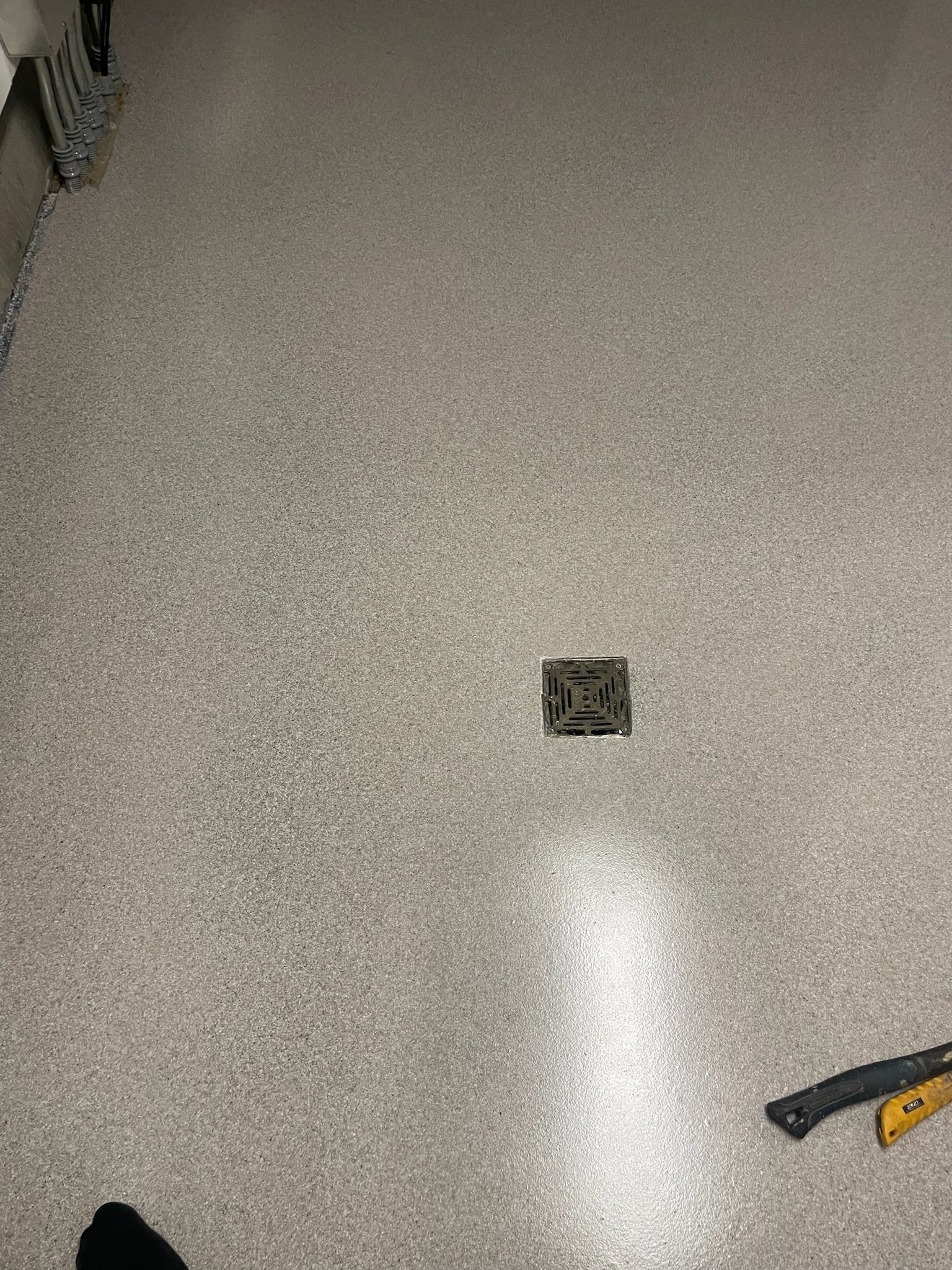
Commercial Epoxy Flooring Contractors in Metro Vancouver
For commercial spaces in Metro Vancouver and the Fraser Valley, the most important factor when hiring an epoxy flooring contractor isn't the lowest quote — it's how they handle surface preparation. That single step determines whether your floor lasts or fails early.
- Commercial epoxy coatings bond chemically to concrete, creating a hard, chemical-resistant surface suited for warehouses, auto shops, kitchens, retail spaces, and more.
- In BC, concrete slab moisture and seasonal temperature swings are key variables — a qualified contractor tests for both before specifying a system.
- Surface preparation is the leading factor in long-term performance. Contractors who skip or rush it are the most common cause of early delamination.
- Actual costs vary based on project scope, substrate condition, and site access — contact FraserPlus Epoxy for a personalized assessment.
What Does a Commercial Epoxy Flooring Contractor Actually Do?
A commercial epoxy contractor's job starts well before any product is opened. The first step is assessing the existing concrete — its condition, moisture content, surface profile, and any contamination like oil, grease, or old curing compounds. All of these affect how well a coating bonds.
After the assessment, the contractor prepares the surface. For commercial work, this typically means diamond grinding or shot-blasting the concrete to create a mechanical profile the epoxy can grip. The more thorough this step, the longer the floor performs.
Once the surface is ready, the contractor applies the system — which may include a primer coat, one or more body coats, broadcast aggregate like sand or quartz for slip resistance, and a topcoat. In high-traffic commercial environments, a polyurethane or polyaspartic topcoat is often added for extra chemical resistance and easier cleaning.
FraserPlus Epoxy offers a range of systems for commercial spaces across the Lower Mainland and Fraser Valley. Browse the full range on our services page.
Why Does Surface Preparation Determine Whether the Floor Lasts?
Most premature epoxy failures — peeling, bubbling, delamination — trace back to inadequate surface preparation. Epoxy doesn't stick to concrete the way paint does. It bonds chemically, and that bond requires a clean, open concrete surface with the right mechanical profile.
In a commercial setting, floors often carry years of contamination: oils, cleaning chemicals, rubber marks, or old coatings. A contractor who relies only on a light acid etch instead of mechanical grinding is limited in what they can actually bond to — and the floor will show it within a few years.
BC's climate adds another layer of complexity. Concrete slabs in the Lower Mainland often carry more moisture than in drier inland climates, and that moisture needs to be measured before any epoxy goes down. Applying standard epoxy over a wet slab can cause adhesion failure, which is costly to repair and disruptive to your operation.
What Types of Commercial Spaces Use Epoxy Flooring in BC?
Epoxy and resinous coatings work across a wide range of commercial environments. In Metro Vancouver and the Fraser Valley, you'll find them in:
- Warehouses and distribution centres — where forklifts and pallet jacks need a surface that won't crack or pit under load
- Auto dealerships, body shops, and service bays — where chemical resistance to oils, brake fluid, and cleaners is important
- Food manufacturing facilities and commercial kitchens — where smooth, non-porous surfaces support sanitation under BC health regulations
- Retail showrooms and medical clinics — where appearance and easy maintenance matter equally
- Parkades and loading docks — where concrete faces constant exposure to moisture, road salts, and vehicle traffic through Lower Mainland winters
If your business is in Langley, Surrey, or elsewhere in the Fraser Valley, you can learn more about what's typically suited for your facility on our commercial epoxy flooring page.
What Should You Look for When Comparing Contractors?
When you get quotes, you're comparing more than price. The gap between a well-installed epoxy floor and a poor one isn't usually visible on day one — it shows up over the next few years of use.
Here's what to pay attention to:
- Surface preparation approach: Ask what equipment they use — diamond grinders, shot-blasters, or both. Contractors limited to acid washing can't handle many commercial situations.
- Moisture testing: Do they test for moisture vapour emission? If not, they're guessing, which is a real risk in BC's climate.
- Product specifics: What epoxy system are they recommending, and why is it suited to your type of space and usage pattern?
- References and past work: Ask for references from commercial projects similar to yours — same industry, similar floor size, similar usage conditions.
- Warranty terms: What's covered, for how long, and what voids it? Read this carefully before signing anything.
How Does the Quoting and Project Process Typically Work?
Most commercial epoxy contractors start with a site visit. They'll look at the existing concrete, ask about your operations — traffic volume, chemical exposure, moisture sources — and take measurements. A thorough contractor will also test the slab for moisture and check for any existing coatings that need removal.
After the site visit, they'll specify a system and provide a quote. It helps to have the quote break down preparation work separately from the coating system itself — this makes it easier to compare quotes on equal footing, since one contractor may be quoting light prep while another is quoting full shot-blasting and a primer coat.
Once work starts, the schedule depends on the system chosen. Faster-cure options like polyaspartic can sometimes return a floor to service in under 24 hours; standard epoxy systems typically need longer. Your contractor should give you a clear timeline before work begins so you can plan your operations around it.
What Does Commercial Epoxy Flooring Cost in Metro Vancouver?
Cost varies depending on the size of the space, the condition of the existing concrete, the type of system, and how much surface preparation is needed. A floor that requires shot-blasting, crack repair, and multiple coats costs more than a clean slab that needs light grinding and a two-coat system.
In commercial projects, scope can also shift once work begins — for example, if grinding reveals damage that needs patching before coating. A detailed, itemized quote upfront gives you a clearer picture and helps avoid surprises.
Actual costs vary based on project scope, substrate condition, and site access — contact FraserPlus Epoxy for a personalized assessment.
What Questions Should You Ask Before Signing a Contract?
- What surface preparation method do you use, and why?
- Do you test for moisture vapour emission before applying any coating?
- What epoxy system are you recommending, and why is it suited to our type of facility?
- Can you provide references from commercial projects similar to ours?
- What does the warranty cover, and what voids it?
- How long will the space be out of service, and what do we need to do to prepare the area?
- Do you handle concrete repairs, or does that need to be arranged separately?
Frequently Asked Questions
How long does commercial epoxy flooring typically last?
A well-installed commercial epoxy floor in a properly maintained environment can last well over a decade. The biggest variables are the quality of surface preparation, the system chosen, the intensity of daily use, and how the floor is maintained. Heavy forklift traffic or aggressive chemical exposure will wear any coating faster than a lightly used showroom floor.
Can epoxy flooring be applied in an occupied commercial space?
Whether epoxy can be applied in an occupied space depends mainly on the products used and the ventilation available. Solvent-based epoxies require strong ventilation and aren't suited for occupied environments. Water-based or low-VOC systems are sometimes used in phased projects where part of the building stays in use, but full closure is usually more practical for commercial work. Your contractor should advise on the options based on your operational constraints.
What's the difference between epoxy and polyaspartic coatings?
Epoxy and polyaspartic are different chemistry types with different performance profiles. Polyaspartic systems cure much faster and tend to have better UV stability than standard epoxy. Epoxy is generally more forgiving to apply on large areas and allows more working time. Many commercial projects use both: an epoxy base coat for adhesion and body, with a polyaspartic topcoat for durability and UV resistance.
Does BC's climate affect which epoxy system is right for my facility?
Yes. The Lower Mainland's high humidity, mild but wet winters, and temperature swings all affect application conditions and long-term performance. Moisture in the concrete slab is a particular concern — epoxy applied over a high-moisture slab can delaminate. A contractor working in Metro Vancouver or the Fraser Valley should be familiar with these conditions and test accordingly before specifying any system.
Follow FraserPlus Epoxy on Google — be the first to know about floor coatings, maintenance guides, and project ideas across Metro Vancouver.
Make us your preferred source on Google