
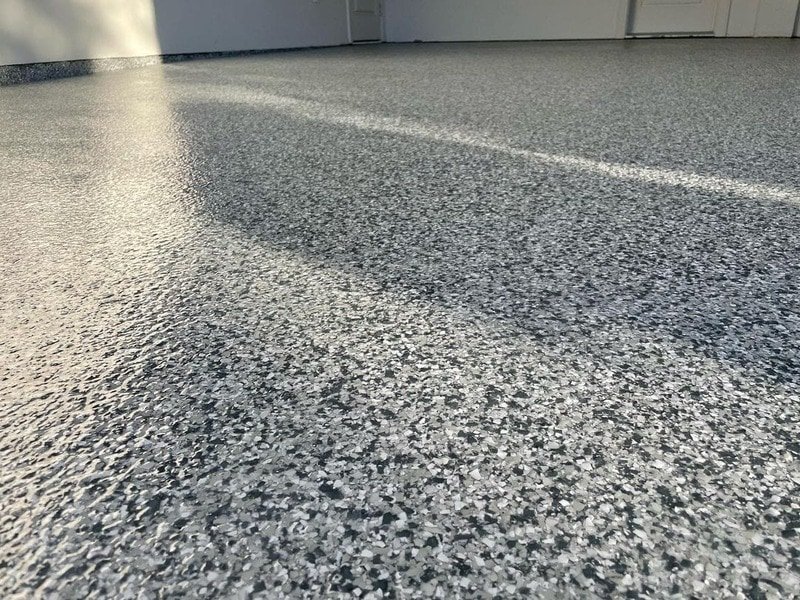
Commercial Epoxy Flooring Contractors: 7 Questions to Ask
- A good commercial epoxy flooring contractor tests the concrete first, grinds the surface mechanically, and puts scope, cure schedule and warranty terms in writing.
- Many coating failures trace back to moisture in the slab or poor surface prep, not the coating itself.
- Match the system to the space, since a warehouse, a commercial kitchen and a showroom need different products.
- Compare quotes line by line, because a low bid often leaves out prep work.
Searching for a commercial epoxy flooring contractor in Metro Vancouver usually starts with a quick local search. Nearby helps, since the crew has to visit your site and come back if a problem shows up. But proximity is only the starting point.
Epoxy is a coating, and a coating is only as good as the concrete under it and the prep work done before it. Here are seven questions that separate a solid bid from a risky one.
How will you test and prepare my concrete slab?
This is the most important question on the list. Epoxy bonds to the concrete surface, so a contaminated, weak or damp slab lets the coating fail no matter how good the product is.
A qualified contractor should explain a plan that covers:
- Moisture testing. Slabs can pass water vapour upward, and that vapour can push a coating off the floor. Common methods include calcium chloride testing (ASTM F1869) and in-situ relative humidity probes (ASTM F2170).
- Mechanical surface prep. Diamond grinding or shot blasting opens the concrete so the coating can grip. Acid etching alone rarely gives a commercial floor the surface profile it needs.
- Crack and joint repair. Cracks, spalls and damaged joints need proper repair before coating. Moving joints need a flexible filler and shouldn't simply be coated over.
- Contamination checks. Oil, grease and old sealers can block adhesion, so they need to be tested for and removed.
Metro Vancouver's wet climate is another reason to ask. Many slabs sit on grade in a region where the ground can hold moisture for much of the year, and older slabs poured without a vapour barrier are especially prone to vapour problems. A contractor who never mentions moisture testing is a red flag.
Which coating system do you recommend for my space, and why?
Epoxy covers a family of products. The right system depends on what happens on the floor every day.
- Warehouses and light industrial: forklift and pallet-jack traffic calls for a thicker, abrasion-resistant build, often with a durable topcoat.
- Restaurants and commercial kitchens: the floor has to handle spills, hot water and frequent washing, and it should be easy to sanitize.
- Retail, showrooms and offices: appearance matters more, so decorative finishes and metallic looks come into play.
- Vehicle shops and service bays: the coating needs to resist oil, brake fluid and hot-tire pickup.
Ask about the topcoat too. Standard epoxy can yellow in direct sunlight, so floors near large windows or loading doors often get a UV-stable topcoat, such as polyurethane or polyaspartic.
A contractor who recommends the same system for every building isn't matching the product to the job. Ask to see the manufacturer's technical data sheet for whatever they propose. For more on system types, see the commercial epoxy flooring service page.
How will the floor stay safe to walk on and easy to clean?
A glossy epoxy floor gets slippery when wet. In a space where staff or customers are on their feet, traction isn't optional.
Contractors usually add texture by broadcasting fine aggregate into the wet coating or by mixing an anti-slip additive into the topcoat. More texture grips better but is harder to clean, so it's a trade-off.
Ask which texture level they recommend for your space, and ask to see a sample. Confirm the cleaning routine too, since some chemicals can dull or damage certain coatings. If you run a food premises, check floor requirements with your local health authority before choosing a system.
How will the installation fit around my business hours?
Commercial floors can't sit idle for long. A good contractor plans the job around your operations, not the other way around. Ask about:
- Phasing. Can the work happen in sections, after hours or over a weekend so part of the space stays in use?
- Cure times. Foot traffic, light equipment and heavy loads each have their own waiting period. The manufacturer's data sheet sets these, and temperature and humidity change them.
- Ventilation and odour. Some products give off stronger fumes during install. Ask how the crew will manage air movement and protect neighbouring tenants or staff areas.
- Moving stock and equipment. Find out who clears the floor and who protects fixtures and walls.
Season matters here. Coatings cure slowly on a cold slab, and an unheated building in winter is a different job from a heated one. A written schedule should account for that.
What's in the quote, and what affects the price?
Two quotes for the same floor can differ a lot because they don't cover the same work. Compare them line by line, not just by the total.
These are general industry cost drivers, not FraserPlus pricing:
- Floor area and how many separate sections there are
- Condition of the concrete, including cracks, old coatings and moisture
- The system type and thickness, and whether it has a topcoat or decorative finish
- Traction requirements and any coved base along the walls
- Site access, working hours and how much has to be moved
Prep is where corners get cut, since it's the work you can't see once the coating is down. A quote that never mentions grinding, repairs or moisture testing should prompt questions.
Actual costs vary based on project scope, substrate condition, and site access — contact FraserPlus Epoxy for a personalized assessment.
What proof of qualifications can you show?
Anyone can list commercial epoxy on a website. Ask for evidence.
- Similar commercial work. Ask for references from businesses with comparable floors and traffic, then call them.
- Insurance and safety coverage. Ask for proof of liability insurance and a current WorkSafeBC clearance letter covering the crew that'll be on your site.
- Product training. Ask which manufacturers' products they install and whether the crew has been trained on them.
- A site visit. A contractor who quotes a commercial floor sight unseen hasn't checked the slab.
What happens if something goes wrong after the install?
Even well-installed floors need upkeep, and now and then a floor fails early. Get the answers before you sign.
- Written warranty. What does it cover, for how long, and what voids it? Warranties commonly exclude moisture problems and certain chemical or impact damage, so read the exclusions closely.
- Response process. Who do you call, and how quickly does someone come out to look?
- Maintenance. Ask for written care instructions, including approved cleaners and what to avoid.
- Repair and recoating. High-traffic areas eventually wear, so ask how spot repairs and future recoats are handled.
Does hiring a local contractor make a difference?
It doesn't guarantee quality, but it helps. A regional contractor knows the climate, can get to your site without much travel, and is easier to reach when you need a follow-up visit.
FraserPlus Epoxy serves Metro Vancouver and the Fraser Valley, including Surrey, and installs commercial epoxy floors. If you'd like to talk through your floor, contact FraserPlus Epoxy and bring your seven questions.
What else do people ask about commercial epoxy flooring?
How long does a commercial epoxy floor last?
Lifespan depends on traffic, surface prep, the system chosen and how well the floor is maintained. A well-prepared floor in a quiet office typically outlasts one in a busy loading area. Ask for warranty terms and maintenance requirements in writing.
Can epoxy go over an old coating or damaged concrete?
Sometimes, but not without testing. A peeling or contaminated coating usually has to be ground off, and damaged concrete needs repair first. A contractor should test adhesion before deciding.
Is epoxy the only option for a commercial floor?
No. Polished concrete and polyurethane or polyaspartic systems are other options. The right choice depends on moisture, chemical exposure, traffic and the look you want, and a contractor who offers several can compare them for you.
How do I find a reliable commercial epoxy flooring contractor in Metro Vancouver?
Start with references from similar businesses, proof of insurance and a WorkSafeBC clearance letter, then request a written quote that spells out prep, system, schedule and warranty. The seven questions above give you a checklist for comparing bids.
Follow FraserPlus Epoxy on Google — be the first to know about floor coatings, maintenance guides, and project ideas across Metro Vancouver.
Make us your preferred source on Google