
Hiring Local Commercial Epoxy Flooring
If you're searching for commercial epoxy flooring near me, you're likely trying to solve a practical flooring problem, not just compare finishes. Commercial concrete floors can take wear from foot traffic, carts, forklifts, moisture, cleaning chemicals, vehicle tires, and changing temperatures.
Epoxy and other resinous floor coatings can be a good fit for many commercial spaces in Metro Vancouver and the Fraser Valley, but the right system depends on the building, the concrete, and how the floor will be used.
What should you know before choosing commercial epoxy flooring near you?
- Commercial epoxy flooring works best when the coating system matches the use of the space, the concrete condition, and the cleaning routine.
- Surface preparation is one of the most important parts of the job because coatings need a sound, clean, profiled substrate.
- Local conditions in Metro Vancouver, the Fraser Valley, and coastal BC can affect moisture planning, cure conditions, and scheduling.
- For project-specific guidance, review FraserPlus Epoxy's commercial epoxy flooring services or request a site assessment through the contact page.
What is commercial epoxy flooring?
Commercial epoxy flooring is a resinous coating system applied over prepared concrete. It usually includes a primer or base coat, one or more body coats, and a finish coat selected for the intended use.
Epoxy is often used in commercial settings because it can create a hard-wearing surface that is easier to clean than bare concrete. Depending on the system, it can also help with dust control, light reflectivity, stain resistance, and visual consistency.
Epoxy is one category within a wider group of resinous flooring and concrete coating options. Some projects may also involve urethane topcoats, polyaspartic coatings, moisture-tolerant primers, decorative flakes, quartz broadcast, metallic finishes, or polished concrete.
Which businesses commonly consider epoxy floor coatings?
Commercial epoxy flooring is often considered for warehouses, workshops, showrooms, retail units, service bays, production rooms, storage areas, parkades, offices with exposed concrete, and back-of-house spaces. It can also be used in strata, light industrial, and mixed-use buildings where the floor needs to be practical and presentable.
The best fit depends on traffic, cleaning methods, exposure to liquids, and the level of slip resistance needed. A floor in a retail showroom has different demands than a floor in a mechanical room or loading area.
Businesses comparing options can also review broader floor coating services to understand how epoxy, polished concrete, metallic epoxy, and other coating systems differ.
How does local BC climate affect epoxy flooring projects?
Metro Vancouver and the Fraser Valley have a wet coastal climate for much of the year. That doesn't prevent epoxy flooring work, but it does make moisture assessment and job planning important.
Concrete can hold moisture, and slabs can be affected by ground conditions, building envelope issues, washing routines, or vehicle traffic bringing in rain and road film. Before coating, the contractor should consider whether the slab is dry enough and whether a moisture-related product is needed.
Temperature and humidity can also affect curing and recoat windows. In garages, warehouses, and commercial bays, scheduling may need to account for door openings, ventilation, and the way the space is used during the project.
What should a contractor inspect before quoting?
A commercial epoxy flooring quote should be based on more than square footage. The contractor should review the concrete condition, existing coatings, cracks, joints, contamination, moisture concerns, drainage, access, and expected traffic.
Old paint, sealers, oil, adhesive residue, laitance, and soft concrete can all affect bonding. If these issues aren't addressed during preparation, the coating may not perform as expected.
For occupied businesses, access matters as well. A contractor may need to plan around operating hours, tenant access, parking, loading zones, dust control, odor sensitivity, and cure time before the floor can return to service.
Why is surface preparation so important?
Epoxy doesn't perform well when applied over weak, dirty, or poorly prepared concrete. Proper preparation gives the coating a better chance to bond to the slab.
Commercial preparation often involves mechanical methods such as grinding or shot blasting, depending on the coating system and existing floor condition. The goal is to remove bond breakers and create the right surface profile for the chosen material.
Crack repair, joint treatment, patching, and cleaning may also be part of the work. These steps don't make every slab perfect, but they help create a more dependable base for the coating system.
What epoxy system is right for a commercial space?
There isn't one universal epoxy floor for every commercial project. The right system depends on what the space needs to handle.
A light-duty showroom may need a clean, attractive finish with moderate wear resistance. A service area may need better traction, chemical resistance, and a topcoat suited to frequent cleaning. A warehouse may need a system that tolerates cart traffic, tire contact, and abrasion.
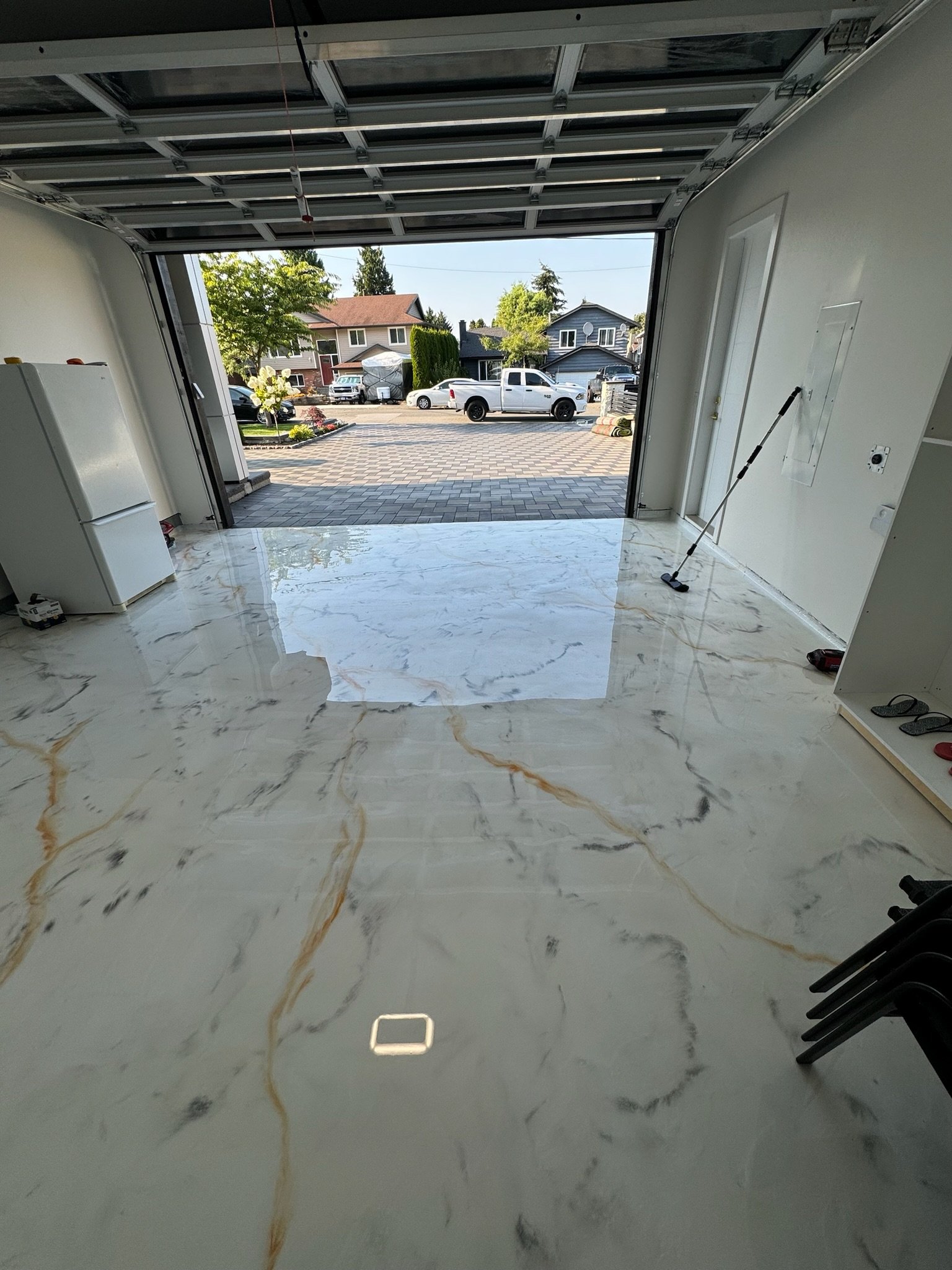
Decorative systems can include flakes, quartz, or metallic effects. For businesses that want a more design-focused look, metallic epoxy flooring may be an option, though it should still be chosen based on use, maintenance expectations, and the condition of the slab.
How should slip resistance be handled?
Slip resistance should be discussed before installation, especially in entries, wash areas, service bays, commercial kitchens, warehouses, and any space where water or other liquids may be present.
Texture can be added with aggregate, flake broadcast, quartz, or finish-coat selection. More texture can improve grip, but it can also make the floor a bit harder to clean. The right balance depends on the workplace and cleaning routine.
For commercial buildings, safety requirements may also relate to lease terms, insurer expectations, occupational safety rules, or building use. A flooring contractor can discuss coating texture, but project owners should confirm any site-specific compliance requirements with the proper professional or authority.
Can epoxy be installed over damaged concrete?
Sometimes, but the damage needs to be reviewed first. Epoxy is a coating system, not a structural repair for failing concrete.
Minor surface defects, small cracks, and localized spalls may be repairable before coating. Larger movement cracks, moisture problems, hollow areas, or heavily contaminated slabs may need more investigation.
If the concrete is actively moving, wet, soft, or contaminated, coating over it without addressing the cause can lead to future issues. A practical assessment should identify what can be repaired and what risks remain.
How much does commercial epoxy flooring cost?
Commercial epoxy flooring costs are usually shaped by the project size, slab condition, preparation method, coating system, access, texture, repairs, and scheduling requirements. A simple coating over clean concrete is not the same as a multi-layer system over damaged or contaminated concrete.
General industry pricing can vary widely because commercial sites differ so much. Actual costs vary based on project scope, substrate condition, and site access — contact FraserPlus Epoxy for a personalized assessment.
When comparing quotes, look beyond the final number. Ask what preparation is included, what coating system is being used, how repairs are handled, what the return-to-service plan looks like, and what maintenance is recommended.
How long does installation take?
Installation time depends on the floor size, preparation needs, repairs, coating system, curing conditions, and how soon the space needs to be back in service. Some projects can be planned in phases so a business can keep part of the space operating.
Weather and building conditions can affect cure timing in BC. Humidity, temperature, ventilation, and slab moisture can all matter.
For commercial sites, it helps to discuss downtime early. That includes when equipment must be moved, when staff can re-enter, when light traffic is acceptable, and when heavier use can resume.
What maintenance does a commercial epoxy floor need?
Epoxy floors are generally easier to clean than bare concrete, but they still need regular maintenance. Dirt, grit, and chemicals should be removed before they wear the surface or leave residue.
Common maintenance includes sweeping, dust mopping, wet cleaning with suitable cleaners, and avoiding harsh products that aren't compatible with the coating. Areas with vehicle traffic may need extra attention because tires can track in debris, salts, and oils.
Commercial owners should ask for care guidance after installation. A good cleaning routine helps protect the finish and keeps the floor safer for staff and visitors.
What should you ask when searching for a local contractor?
When searching for commercial epoxy flooring near you, ask practical questions about site assessment, preparation, coating selection, scheduling, and aftercare. The answers should be clear and specific to your space.
Useful questions include: What condition is the concrete in? What preparation method is planned? What coating system is being recommended? How will cracks or joints be handled? What level of texture is appropriate? How soon can the space return to use?
Local knowledge also matters. A contractor working across Metro Vancouver and the Fraser Valley should be used to wet weather planning, mixed-use buildings, commercial access limits, and the demands of garages, shops, warehouses, and strata properties. If your project is in Surrey, you can also review the local service area page for Surrey epoxy flooring.
Is commercial epoxy flooring the right choice for every floor?
No. Epoxy is useful in many commercial spaces, but it isn't the answer for every slab or every business.
Some spaces may be better suited to polished concrete, a different resinous system, a heavier-duty coating build, or targeted concrete repair before coating. In other cases, existing site conditions may need to be corrected before any coating is installed.
The best next step is a site-specific assessment. That gives the contractor a chance to review the slab, learn how the space is used, and recommend a coating approach that fits the building instead of guessing from a photo or a rough floor area.
What should you expect from FraserPlus Epoxy?
FraserPlus Epoxy serves commercial and residential flooring clients across Metro Vancouver and the Fraser Valley. Services include garage floor epoxy, commercial epoxy, metallic epoxy, polished concrete, and floor coatings.
For a commercial project, the discussion should start with the site conditions and the way the floor needs to perform. From there, FraserPlus Epoxy can help review coating options, preparation needs, scheduling factors, and next steps.
If you're comparing commercial epoxy flooring near you, use the consultation to get clear answers about your slab, your business use, and the most practical coating system for the space.
FAQ
Can epoxy flooring be used in wet commercial areas?
Epoxy and resinous coatings can be used in some areas exposed to moisture, but the system must be selected carefully. Slip resistance, drainage, cleaning routines, and substrate moisture all need to be considered.
Is epoxy flooring suitable for warehouses?
It can be, depending on traffic, equipment, slab condition, and cleaning needs. Warehouses may need a coating system designed for abrasion, impact, tire contact, and practical maintenance.
Can a business stay open during installation?
Sometimes a project can be phased, but it depends on the layout, coating system, odor sensitivity, cure timing, and access needs. This should be discussed before work starts.
What's the first step for a commercial epoxy quote?
The first step is a site-specific assessment. The contractor should review the concrete, existing coatings, moisture concerns, repairs, traffic, and scheduling needs before recommending a system.
Follow FraserPlus Epoxy on Google — be the first to know about floor coatings, maintenance guides, and project ideas across Metro Vancouver.
Make us your preferred source on Google