
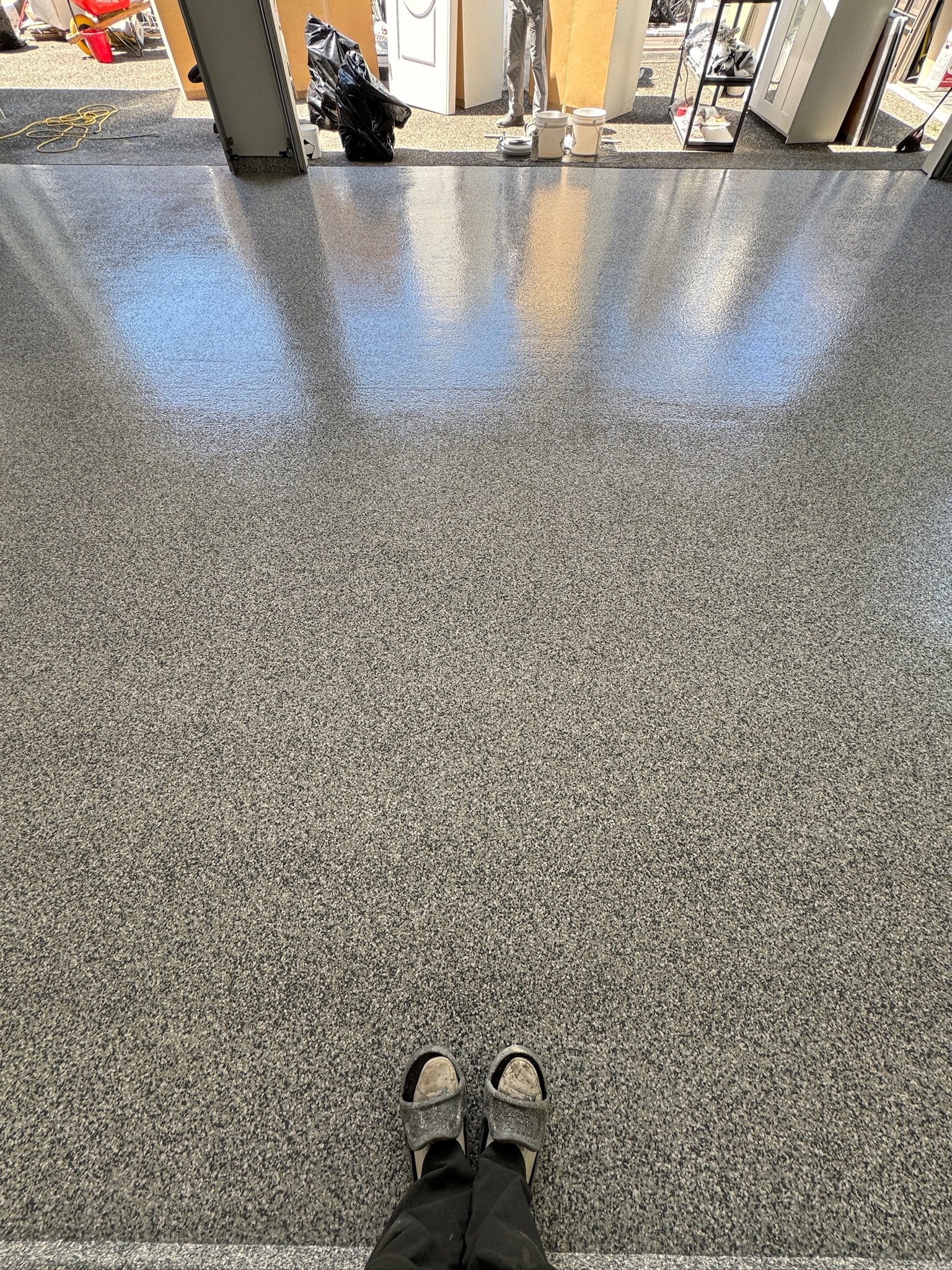
Commercial Floor Coatings Langley: What to Ask First
Concrete floors in a warehouse, retail unit, or production space take a beating every day. Forklifts, pallet jacks, foot traffic, spilled chemicals, and constant cleaning all wear down bare concrete faster than most owners expect. A commercial floor coating system is the layer that stands between that daily wear and the slab underneath.
- Commercial coatings protect concrete from abrasion, chemical spills, and moisture damage.
- Epoxy, polyaspartic, and polyurethane systems each suit different traffic loads and chemical exposure.
- Langley's wet winters and seasonal humidity swings make proper substrate prep and moisture testing especially important.
- Costs vary by substrate condition, coating type, and square footage — there's no single number that applies to every space.
What Counts as a Commercial Floor Coating?
A commercial floor coating is a resinous system applied over prepared concrete to create a harder, more chemical-resistant, and easier-to-clean surface. Most systems combine a primer, a body coat (often epoxy or polyaspartic resin), and a topcoat for abrasion resistance and UV stability.
These systems differ from residential garage coatings mainly in film thickness, chemical resistance, and load rating. A warehouse floor handling forklift traffic and occasional chemical drums needs a different spec than a garage epoxy floor under a family car.
Why Does Langley's Climate Matter for Floor Coatings?
Metro Vancouver and the Fraser Valley get a lot of rain, and Langley is no exception. Concrete slabs in this region can carry residual moisture from the ground below, especially in older buildings without a proper vapour barrier.
Moisture moving up through a slab is one of the most common causes of coating failure — bubbling, delamination, or a hazy finish. That's why a moisture vapour emission test (or at minimum a calcium chloride or relative humidity test) is a standard step before any commercial coating goes down in this climate, not an optional extra.
Seasonal humidity swings also affect cure times. A coating that sets in a few hours in a dry summer week may need longer in a damp, cooler stretch. A contractor familiar with local conditions will adjust the schedule rather than rush the cure.
Floor drains, trench drains, and proper slope also matter for commercial spaces that deal with washdown or spills, since standing water left on a coated floor for extended periods can affect some systems over time. A contractor can factor drainage and slope into the coating plan before application, rather than treating it as an afterthought once the floor is already down.
What Types of Commercial Floor Coatings Are Available?
There isn't one "commercial coating" — the right system depends on traffic, chemical exposure, and how the space is used.
Epoxy Systems
Epoxy is the most common base layer for commercial floors because it bonds well to properly prepared concrete and resists a wide range of chemicals and oils. Straight epoxy floors are common in warehouses, manufacturing spaces, and back-of-house retail areas. See our commercial epoxy flooring page for how this applies to different facility types.
Polyaspartic and Polyurethane Topcoats
Polyaspartic and polyurethane coatings cure faster than standard epoxy and hold up better to UV exposure, which matters for loading docks or areas near large windows or bay doors. They're often used as a topcoat over an epoxy base coat to add abrasion and chemical resistance.
Metallic and Decorative Epoxy
Showrooms, lobbies, and customer-facing retail spaces sometimes call for a decorative finish rather than a purely functional one. Metallic epoxy creates a dimensional, marbled look while keeping the same protective base as a standard epoxy system. Our metallic epoxy flooring page has more on how that finish is built up.
Polished Concrete
For spaces that want a durable, low-maintenance floor without a resin coating at all, polished concrete grinds and densifies the existing slab. It's a different approach with different maintenance needs than a coated system, and the right choice depends on the space's traffic and aesthetic goals.
How Long Should a Commercial Coating Last Before It Needs Attention?
Longevity depends heavily on substrate prep, coating thickness, and how the space is used. A properly prepared and installed system in a light-traffic office or showroom will generally outlast one in a heavy-traffic warehouse with forklift and pallet-jack activity.
Chemical exposure, UV exposure near loading docks, and cleaning methods (harsh solvents versus neutral cleaners) all affect how a coating ages. Regular inspection for chips, wear patterns near high-traffic zones, and any signs of moisture-related bubbling helps catch problems before they spread across the whole floor.
What Happens During a Commercial Floor Coating Installation?
Installation quality depends more on preparation than on the coating product itself. A rushed prep job undermines even a premium coating system.
- Assessment and testing: the contractor evaluates the existing slab, checks for cracks or contamination, and tests for moisture.
- Surface preparation: mechanical grinding or shot-blasting removes old coatings, laitance, and contaminants, and opens the concrete's pores so the coating can bond.
- Crack and joint repair: cracks, spalls, and control joints get filled or addressed before any coating goes down.
- Primer and base coat application: the primer seals the prepared concrete, followed by the body coat that provides most of the film thickness.
- Topcoat and cure: a topcoat adds abrasion and chemical resistance, then the floor needs time to cure before foot or vehicle traffic resumes.
For a commercial space, scheduling around business hours or planned shutdowns matters as much as the coating spec itself. A contractor working in occupied facilities should be able to phase the work in sections so operations don't fully stop.
How Do You Maintain a Commercial Floor Coating Once It's Installed?
Routine maintenance extends the working life of any commercial coating. Regular sweeping and neutral-pH cleaning remove grit that would otherwise scratch the topcoat over time.
Harsh solvents, abrasive pads, and unrated cleaning chemicals can dull or degrade some coating systems faster than normal wear would. Checking with the installer about which cleaning products are compatible with the specific coating helps avoid early wear.
High-traffic aisles, forklift turning zones, and entryways typically show wear first. Spot-checking these areas periodically makes it easier to catch a worn topcoat before it exposes the base coat underneath.
How Much Do Commercial Floor Coatings Cost?
Commercial floor coating costs vary widely across the industry based on substrate condition, square footage, coating type, and how much surface prep and repair the existing slab needs. A floor with extensive crack repair or moisture mitigation will cost more per square foot than one that's already in good condition. Actual costs vary based on project scope, substrate condition, and site access — contact FraserPlus Epoxy for a personalized assessment.
What Should You Ask a Commercial Flooring Contractor Before Hiring?
- What surface preparation method will you use, and why?
- Will you test for moisture before applying any coating?
- What's the expected cure time before the floor can handle full traffic?
- Can the work be phased to keep parts of the facility operating?
- What warranty or service coverage applies to the completed system?
A contractor who can answer these clearly, without vague reassurances, is usually one who has done this kind of work in similar Fraser Valley or Metro Vancouver facilities before.
Frequently Asked Questions
Does a commercial floor coating need to cure before the space reopens?
Yes. Cure time depends on the coating system and site conditions, and rushing traffic onto an uncured floor can cause tracking, dents, or premature wear.
Can floor coatings be applied over an existing coating?
Sometimes, but it depends on the condition and adhesion of the existing coating. In many cases the old coating needs to be mechanically removed first so the new system bonds properly.
Are commercial coatings slip-resistant?
Slip resistance depends on the topcoat and any anti-slip additive broadcast into the finish. This is worth discussing up front if the space handles wet processes or outdoor-facing entryways.
Do commercial coatings work in cold-storage or refrigerated spaces?
Some coating systems are formulated for thermal cycling and cold-storage use, but not every system is rated for it. Confirm the intended use with your contractor before selecting a system.
Looking for a closer look at what a commercial coating system would take in your Langley facility? Contact FraserPlus Epoxy for an on-site assessment, or browse our full flooring services for other Metro Vancouver and Fraser Valley locations we serve, including Langley.
Follow FraserPlus Epoxy on Google — be the first to know about floor coatings, maintenance guides, and project ideas across Metro Vancouver.
Make us your preferred source on Google