
FraserPlus Epoxy Flooring: What to Know Before You Hire
If you've searched for "Fraser Plus Epoxy flooring" or landed on fraserplusepoxy.com trying to figure out what this contractor offers, this article breaks it down. FraserPlus Epoxy serves Metro Vancouver and the Fraser Valley, installing epoxy and resinous floor systems for garages, commercial spaces, and decorative residential projects.
TLDR
- FraserPlus Epoxy installs garage floor coatings, commercial epoxy, metallic epoxy, and polished concrete across Metro Vancouver and the Fraser Valley.
- Proper substrate preparation — not the brand of coating — is the main factor in how long a resinous floor lasts.
- BC's damp climate and freeze-thaw conditions make moisture testing and mechanical surface profiling essential before any coating goes down.
- A site visit is the only reliable way to get an accurate quote — contact FraserPlus directly to get started.
What services does FraserPlus Epoxy offer?
FraserPlus Epoxy focuses on resinous flooring — surfaces built from liquid coatings that cure into a hard, bonded layer on top of concrete. Their work spans residential and commercial projects, covering the main coating categories most Metro Vancouver and Fraser Valley homeowners and business owners ask about.
The core offerings include garage floor epoxy, commercial epoxy for retail, warehouse, or industrial spaces, metallic epoxy for decorative applications, and polished concrete for a low-maintenance, refined look. Each system uses different chemistry and application steps, so the right choice depends on the space and its intended use. You can see the full breakdown on the services page.
Why does substrate preparation matter more than the coating product itself?
Here's what separates experienced epoxy contractors from inexperienced ones: they focus more on the concrete than on the coating. Epoxy needs a clean, profiled, and moisture-controlled surface to bond correctly. Without proper prep, the floor can bubble, peel, or delaminate — sometimes within months of installation.
BC concrete presents specific challenges. Garages and commercial slabs in the Lower Mainland and Fraser Valley are often exposed to moisture infiltration, especially in older pours or slabs without adequate vapour barriers. A thorough contractor will test for moisture vapour transmission before recommending a coating system and will use mechanical grinding or shot blasting — not acid etching alone — to open up the concrete surface properly.
This prep phase takes time. It's also the phase that determines everything about how the finished floor holds up.
Is epoxy flooring a good choice for a BC garage?
Yes — with the right system. BC garages face challenges that don't come up as often in drier climates. Wet boots and tires, road salt and de-icing compounds tracked in from winter roads, and the slow freeze-thaw movement that can stress a concrete slab over time all put flooring systems under real pressure.
A properly installed epoxy floor handles these conditions well. It's chemically resistant, much easier to clean than bare concrete, and holds up against the oil and fluid drips that come with regular vehicle use. The key phrase is "properly installed" — the coating thickness, the topcoat type, and the prep work all affect long-term performance.
For more on what residential garage projects typically involve, see the garage epoxy flooring service page.
What's the difference between garage epoxy, metallic epoxy, and polished concrete?
These three systems often get lumped together in search results, but they're genuinely different products with different applications.
Garage floor epoxy is typically a two-part system — a base coat and a clear topcoat, often with decorative flake or chip broadcast in during installation to add texture and visual interest. It's the practical, durable choice for a functional residential or light commercial floor.
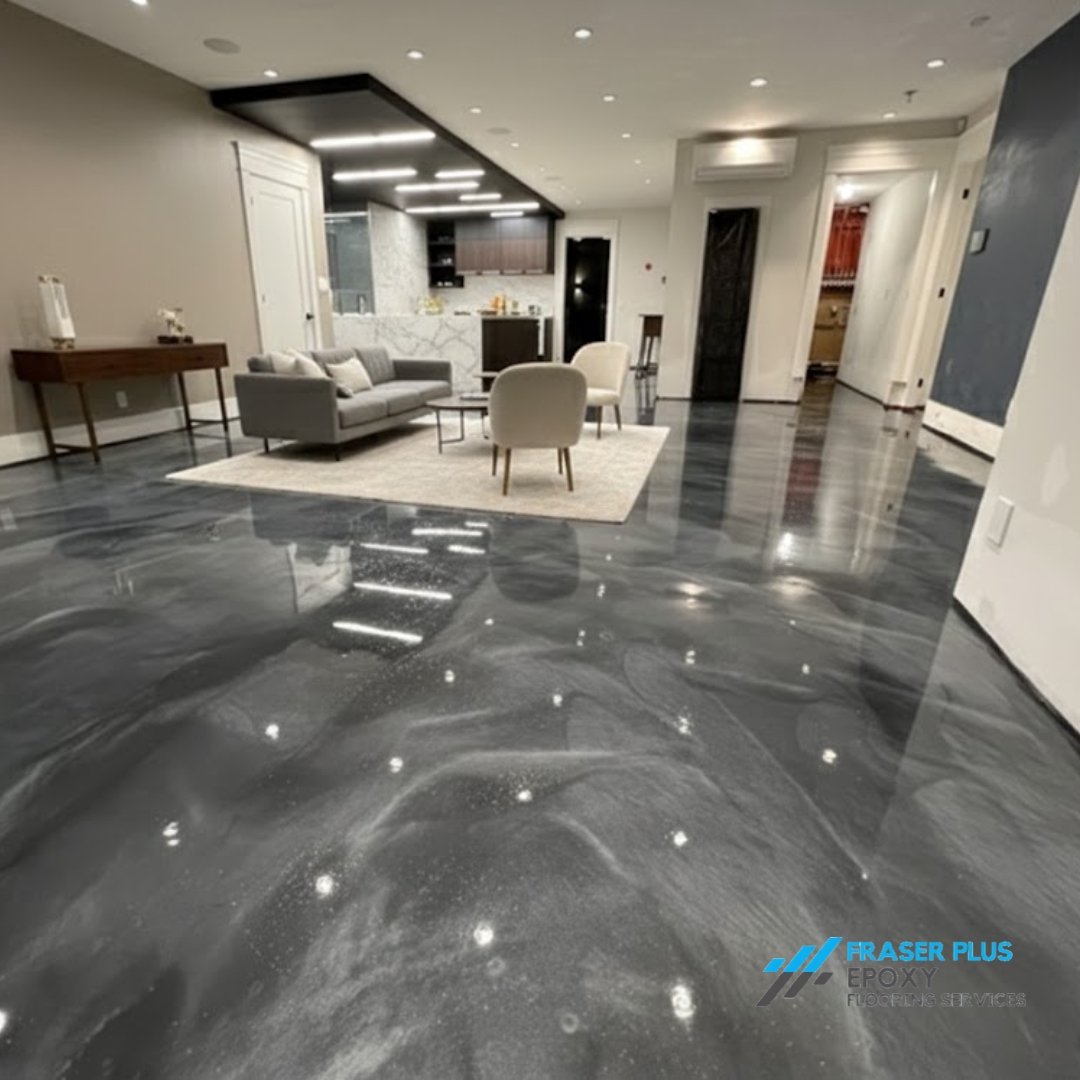
Metallic epoxy uses metallic pigments mixed into the coating to create flowing, three-dimensional visual effects. No two metallic floors look exactly the same. It's more labour-intensive to install and is usually chosen for showroom spaces, high-end residential garages, or retail floors where the floor itself is a design feature. Details on this system are on the metallic epoxy flooring page. Metallic systems typically cost more than a standard flake application — actual costs vary based on project scope, substrate condition, and site access. Contact FraserPlus Epoxy for a personalized assessment.
Polished concrete takes a different approach entirely. Instead of applying a coating on top of the concrete, it uses diamond grinding tools to mechanically refine the surface to a high sheen, then densifies and seals the concrete itself. It's common in commercial and industrial settings because it's extremely durable and doesn't involve an applied layer that can eventually wear through or chip.
How long does an epoxy flooring installation take?
Timeline depends on project size, the coating system chosen, and how much prep the concrete needs. Most residential garage installations run across multiple days. Surface grinding and prep typically happen on day one. The base coat and any decorative broadcast go down on day two. Final topcoats or sealers come last, and each layer needs adequate cure time before the next one goes on.
Rushing the cure between coats is one of the most common causes of early adhesion failure. A contractor quoting a single-day garage floor installation may be skipping steps or using a simplified system that performs differently from a proper multi-coat application.
Commercial projects with larger square footage or multiple coating systems naturally require more scheduling time and site coordination.
What questions should I ask before hiring an epoxy contractor in the Lower Mainland?
Before any contractor shows up to quote your project, these questions are worth asking:
- How do you test for moisture? The answer should reference an actual test method — a calcium chloride test or a relative humidity probe — not just a visual inspection of the surface.
- What do you use to profile the concrete? Mechanical grinding or shot blasting is standard for most epoxy systems. Acid etching alone is considered insufficient by most professional installers.
- What product system are you installing? A qualified contractor can tell you the brand, the system specs, and why it's appropriate for your specific floor and use case.
- What does the warranty cover, and who backs it? Product warranties from the coating manufacturer are separate from workmanship warranties from the contractor. Ask about both before signing.
Contractors who are confident in their work expect these questions and answer them clearly. Vague answers to any of the above are worth paying attention to.
How do I get started with FraserPlus Epoxy?
The most reliable starting point is a site visit. Quoting a floor remotely — without actually seeing the slab — leads to inaccurate numbers because prep requirements vary so much from one project to the next. Concrete age, moisture levels, previous coatings, surface damage, and square footage all affect the final scope of work.
FraserPlus Epoxy serves Metro Vancouver and the Fraser Valley. To book a visit and start the quote process, head to the contact page.
Frequently asked questions
Does epoxy flooring hold up in BC's wet climate?
Yes. Epoxy and resinous floors are moisture-resistant once fully cured and perform well in wet, high-traffic conditions. The installation process requires appropriate temperature and humidity conditions, which is why scheduling and site prep matter — a good contractor won't cut that corner.
Can epoxy be applied over existing paint or old floor coatings?
In most cases, no. Existing coatings need to be fully removed before a new epoxy system goes down. Applying fresh epoxy over old paint or a failing coating traps the adhesion problem underneath and leads to premature failure — usually peeling or bubbling within a short time.
How long does an epoxy floor last?
Lifespan depends on the system installed, the traffic and use the floor sees, and how well it's maintained. A properly installed residential garage floor that's cleaned regularly and not exposed to sharp impact or heavy dragging can perform well for many years. High-traffic commercial floors typically see faster surface wear and may need topcoat refresh sooner.
Is metallic epoxy durable enough for an active garage?
Yes, metallic epoxy systems are durable when properly installed with a quality clear topcoat. They're a popular choice in residential garages where the owner wants a floor that looks distinctive and still holds up to regular vehicle use. The higher cost compared to a standard flake system is the main consideration — actual costs vary based on project size, substrate condition, and site access. Contact FraserPlus Epoxy for a personalized assessment.
Follow FraserPlus Epoxy on Google — be the first to know about floor coatings, maintenance guides, and project ideas across Metro Vancouver.
Make us your preferred source on Google