
FraserPlus Epoxy Flooring: Metro Vancouver and Fraser Valley
FraserPlus Epoxy is a resinous flooring contractor serving Metro Vancouver and the Fraser Valley. If you've searched for fraser plus epoxy flooring or landed on fraserplusepoxy.com, you're likely weighing whether an epoxy or concrete coating makes sense for your garage, warehouse, showroom, or commercial space.
This article covers what FraserPlus Epoxy offers, how these systems perform in BC's climate, and what to expect before, during, and after installation.
TLDR
- FraserPlus Epoxy serves Metro Vancouver and the Fraser Valley with garage, commercial, metallic epoxy, and polished concrete services
- BC's wet winters, humidity, and road salt make a quality floor coating a practical investment for both garage and commercial floors
- Surface preparation — not just the coating itself — is the biggest factor in how well an epoxy floor holds up over time
- Visit the contact page to book a site assessment and get an accurate quote for your project
What Does FraserPlus Epoxy Flooring Actually Do?
Epoxy flooring bonds a resinous coating directly to a prepared concrete substrate. The result is a hard, chemical-resistant surface that's easier to maintain and significantly more durable than bare concrete.
FraserPlus handles both residential and commercial projects — from homeowner garages to warehouses, retail spaces, and food service environments where floors take serious daily use. Their services page covers a range of coating systems, each suited to different performance requirements.
One thing worth knowing: the term "epoxy flooring" is used loosely in the industry. Different products vary significantly in thickness, chemistry, and durability. What looks like a similar finish on the surface can perform very differently depending on what went into the installation.
What Types of Floors Does FraserPlus Epoxy Install?
Garage Epoxy Flooring
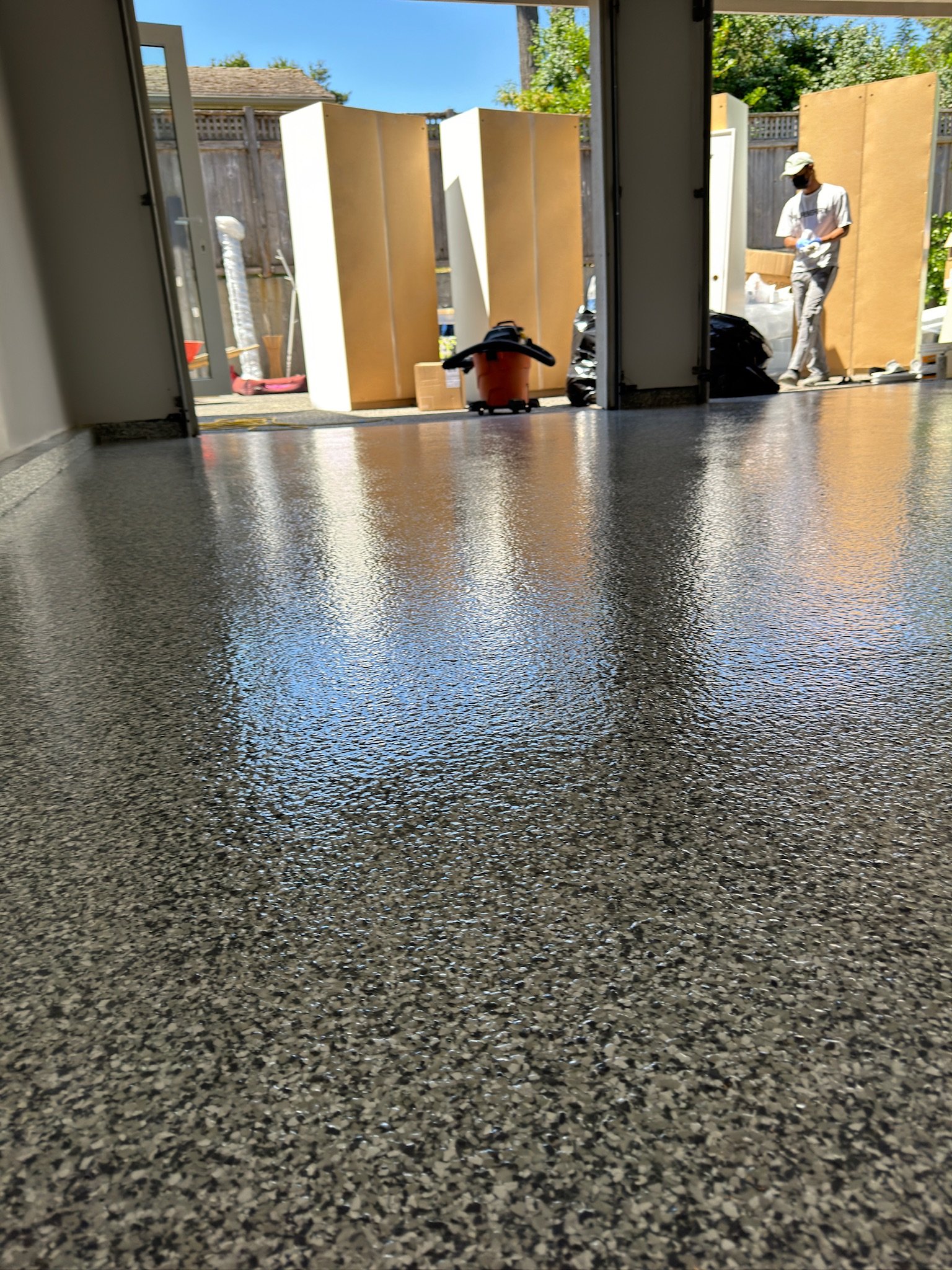
The most common residential application is the garage floor. A properly installed garage epoxy coating resists hot tire pick-up, oil stains, and chemical splash from vehicle fluids. It also makes cleaning up the grime that accumulates in a working garage much more manageable.
In Metro Vancouver and the Fraser Valley, garages see a lot of moisture tracked in from wet winters. Road brine and salt from treated roads in colder months add to the load on the concrete. An epoxy coating creates a barrier that keeps those chemicals on the surface rather than letting them work into the slab.
Commercial Epoxy Flooring
Commercial epoxy flooring is built for heavier traffic and stricter performance requirements. The specifications differ significantly by use case — a food processing facility needs a floor that meets sanitation standards, a car dealership showroom wants a high-gloss finish, and a warehouse needs something that handles forklifts without cracking or delaminating.
Thickness matters a lot in commercial applications. Thicker, multi-layer systems handle impact and abrasion better than thin decorative coatings. The right system depends on what the floor actually has to withstand day to day.
Metallic Epoxy Flooring
Metallic epoxy flooring uses metallic pigments suspended in a resin to create a distinctive marbled or flowing appearance. No two floors look exactly alike — the way the pigments move during application creates a one-of-a-kind visual effect.
It's a popular choice for showrooms, reception areas, and residential spaces where the floor is part of the design rather than just a functional surface. The underlying coating is still a resinous system with real performance properties, not purely cosmetic.
Polished Concrete
Polished concrete doesn't add a coating — instead, it refines the existing slab through a grinding, honing, and densification process. The concrete becomes smoother and harder over successive passes, reaching a matte or reflective finish depending on the grit level used.
It's a low-maintenance option that performs well in commercial and industrial settings where coating adhesion or potential peeling over time is a concern.
Why Do BC Garage and Commercial Floors Benefit from Epoxy?
Metro Vancouver and the Fraser Valley have a climate that's harder on concrete than it might look. The region gets heavy rain through fall and winter, persistently high humidity, and occasional freeze-thaw cycles — particularly in valley communities where temperatures can dip below freezing.
Bare concrete is porous. It absorbs moisture, vehicle fluids, and road chemicals over time. In a wet climate, that absorption can cause surface spalling and deterioration. A properly bonded floor coating creates a barrier that prevents absorption and protects the slab underneath.
Road salt is a specific concern for garage floors in the region. Vehicles driven on BC's winter roads pick up brine and de-icing chemicals that get deposited on garage floors and parking decks. Over time, those salts can penetrate bare concrete and cause damage from within. A quality coating keeps them at the surface where they can be mopped off.
For commercial spaces, there's also the practical question of maintaining a clean, compliant environment. Epoxy and resinous floors are much easier to clean than bare concrete, which matters in food service settings and healthcare facilities where surface hygiene is a regulatory consideration.
What Does the Installation Process Actually Look Like?
Surface preparation is the most critical part of any epoxy installation. No coating will bond reliably to contaminated, structurally weak, or improperly profiled concrete.
For a typical concrete slab, prep involves mechanical grinding or shot blasting to open the surface profile and remove any existing coatings, oils, or curing compounds. Cracks and damaged areas are repaired and patched. The slab has to be clean, structurally sound, and at the right moisture level before any resin goes down.
Moisture is a particular consideration in BC. Concrete slabs — especially older garage floors in the region — can carry significant moisture vapour. High moisture levels can cause adhesion failures and blistering in epoxy coatings. A proper installation includes moisture testing before work begins.
After prep, the application sequence varies by system: primer, base coat, any decorative elements like colour flakes or metallic pigments, and one or more clear topcoats. Cure time depends on the product and ambient temperature. In cooler BC conditions — fall or winter — some systems need additional cure time before foot or vehicle traffic can resume.
A typical residential garage takes one to three days to complete, depending on the system and the condition of the existing slab. Larger commercial installations take longer and may require phased work to keep parts of a facility operational.
How Long Does Epoxy Flooring Hold Up?
Longevity depends on several factors: the coating system, the prep quality, the amount and type of traffic, and how well the floor is maintained. There's no single number that covers every situation.
Commercial-grade systems installed on properly prepared substrates in moderate-traffic environments generally hold up well for many years. Thinner decorative residential coatings in garages with heavy daily use tend to show wear sooner. Keeping an epoxy floor clean — avoiding abrasive scrubbers and wiping up chemical spills promptly — extends its life considerably.
UV stability is worth considering for spaces with significant natural light. Standard epoxy resins can yellow or amber over time when exposed to UV. Polyaspartic and polyurethane topcoats are more UV-stable options for sunlit areas like residential garages with south-facing doors.
Which Areas Does FraserPlus Epoxy Serve?
FraserPlus Epoxy operates across Metro Vancouver and the Fraser Valley. That includes Surrey, Burnaby, Langley, Coquitlam, Richmond, New Westminster, and communities east through the Fraser Valley toward Abbotsford and Chilliwack.
If you're not sure whether your location falls within their service area, the best approach is to reach out through the contact page — it's the quickest way to confirm coverage and start a conversation about your project.
Frequently Asked Questions
What's the difference between epoxy flooring and floor paint?
Floor paint is a thin, single-component product that sits on the surface of the concrete. Epoxy is a two-component system that chemically bonds to the slab and cures into a much harder, thicker layer. Floor paint tends to peel and chip under vehicle traffic; a properly installed epoxy system is significantly more durable and stays bonded to the substrate.
Can epoxy be installed over cracked concrete?
Minor cracks can usually be repaired during the prep process. Large structural cracks, active movement cracks, or widespread spalling may need more significant remediation before a coating can be applied reliably. A site assessment will identify what the slab needs before any coating work begins.
How much does epoxy flooring cost?
Costs depend on the system selected, the size of the area, the condition of the existing slab, and site-specific factors like access and any existing coatings that need removal. Actual costs vary based on project scope, substrate condition, and site access — contact FraserPlus Epoxy for a personalized assessment.
Is epoxy flooring slippery when wet?
A standard smooth epoxy finish can be slippery when wet. Anti-slip additives — typically fine aggregate or aluminum oxide — can be incorporated into the topcoat to increase traction. In commercial, food service, and industrial settings, slip resistance ratings are often a safety or code requirement, not just a preference.
Follow FraserPlus Epoxy on Google — be the first to know about floor coatings, maintenance guides, and project ideas across Metro Vancouver.
Make us your preferred source on Google