
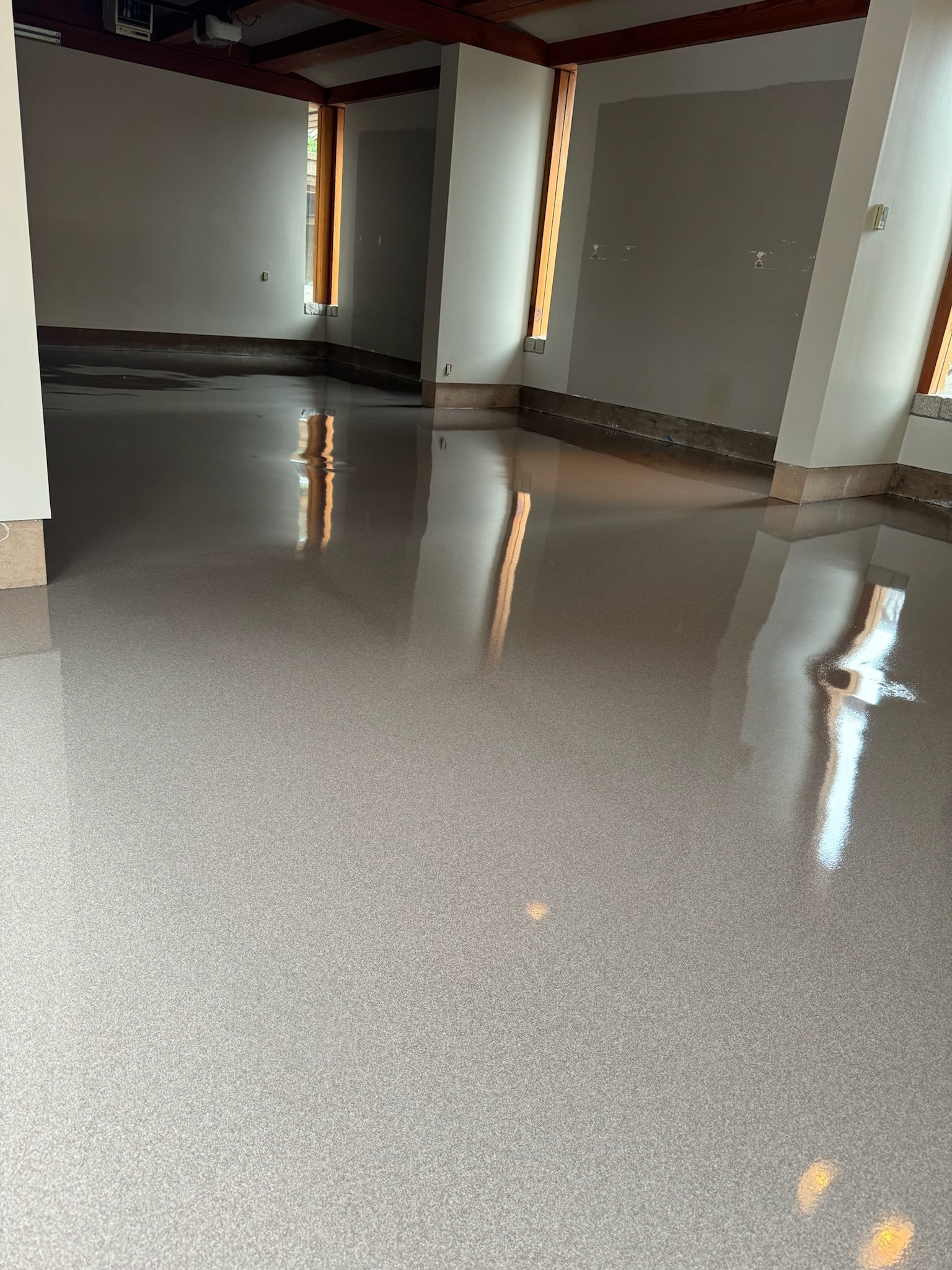
FraserPlus Epoxy Flooring: BC Services & What to Expect
Quick Summary
- FraserPlus Epoxy installs garage, commercial, metallic, and polished concrete floor systems across Metro Vancouver and the Fraser Valley.
- BC's wet climate and temperature swings make moisture testing and proper substrate prep essential steps in any quality epoxy installation.
- The right floor system depends on traffic load, slab condition, and your finish goals — not aesthetics alone.
- Get a site assessment before choosing a coating type; conditions vary significantly between garages, warehouses, and retail spaces.
What Does FraserPlus Epoxy Flooring Actually Do?
FraserPlus Epoxy is a resinous flooring contractor serving Metro Vancouver and the Fraser Valley, including communities across Surrey, Langley, Burnaby, Coquitlam, and Richmond. They install epoxy coatings and concrete floor systems for residential garages, commercial spaces, and light industrial buildings.
Their scope covers the full range of resinous flooring: standard broadcast epoxy for garages, high-build commercial coatings, decorative metallic systems, and ground-and-polished concrete. You can see the complete range on their services page.
What Types of Epoxy Flooring Does FraserPlus Install?
Garage Epoxy Flooring
Garage floors take real punishment — road salt tracked in from BC highways, oil and fluid drips, tire scuffing, and the freeze-thaw cycles that come with Lower Mainland winters. A properly installed garage epoxy system seals the concrete against moisture infiltration and makes cleanup much easier than bare concrete. Learn more about garage epoxy flooring options.
Commercial Epoxy Flooring
Commercial and light industrial spaces need floors built for heavy use — forklift traffic, pallet drops, chemical exposure, and hours of foot traffic every day. Commercial epoxy systems are installed thicker than residential coatings and often include anti-slip broadcast aggregates for workplace safety. See the full range of commercial epoxy flooring systems.
Metallic Epoxy Flooring
Metallic epoxy uses pigmented resins that swirl and shift during installation, creating finishes that can't be exactly replicated. No two metallic floors look identical. They're popular in retail spaces, showrooms, and residential interiors where appearance is as important as performance. Explore metallic epoxy flooring if you're after a decorative finish.
Polished Concrete
Polished concrete involves progressively grinding the existing slab through finer and finer grits until the surface reaches the desired sheen level — from a low satin to a high-gloss mirror finish. It's a practical option for large commercial or industrial footprints and is increasingly common in open-concept residential builds and retail spaces across the Fraser Valley.
Why Does BC's Climate Complicate Epoxy Flooring?
The Lower Mainland gets a lot of rain. Metro Vancouver and the Fraser Valley receive substantial annual precipitation, and that moisture doesn't stay at the surface. Concrete slabs — especially in older garages and below-grade spaces — absorb ground moisture from below. If a slab isn't properly tested and prepared before coating, trapped moisture vapor can cause adhesion failures, bubbling, and peeling.
Temperature also plays a role. Epoxy resins cure within specific temperature windows. Applying coatings in cold conditions (which is common in the Fraser Valley from October through March) or in high heat (a south-facing Surrey garage in July can get very warm) affects how the material flows and bonds. A contractor familiar with Lower Mainland conditions accounts for this before mixing a single component.
What Does the Epoxy Flooring Installation Process Look Like?
Understanding the process helps you recognize quality workmanship — and spot shortcuts when they happen.
Surface Preparation
This is the most critical step. The concrete is shot-blasted, diamond-ground, or scarified to open the surface profile and remove contaminants including old sealers, oils, and curing compounds. No coating bonds reliably to a glossy or sealed slab.
Moisture Testing
A reputable installer tests for moisture vapor transmission before applying any coating. This matters especially in BC, where below-slab moisture is common. Skipping this step is one of the leading causes of peeling and delamination.
Crack and Spall Repair
Existing cracks, divots, and surface damage are filled with compatible repair mortars before coating begins. This step affects both appearance and how the finished system holds up over time.
Primer Application
A penetrating epoxy primer bonds to the prepared concrete and creates the adhesion layer for everything that follows. Some primers also act as a vapor barrier on slabs with borderline moisture readings.
Broadcast or Base Coat
Depending on the system, a colored flake broadcast, metallic pigment blend, or solid-color base coat is applied. Commercial systems typically include an anti-slip aggregate at this stage.
Clear Topcoat
A polyurethane or polyaspartic topcoat is applied as the final layer. This determines sheen level — from matte to high-gloss — and provides the wear resistance that protects the system day to day.
How Much Does Epoxy Flooring Cost in Metro Vancouver?
Epoxy flooring costs vary considerably based on the system chosen, the size and condition of the slab, and site-specific factors like existing damage and access. A simple single-car garage coat is priced very differently from a metallic showroom floor or a large commercial install.
As general industry context: thin roller-applied floor paints are the cheapest entry point but also the least durable option. Broadcast epoxy systems cost more upfront but hold up significantly better under normal residential use. Commercial-grade systems carry higher material and labor costs because they're engineered for traffic loads that would destroy a residential coating.
Actual costs vary based on project scope, substrate condition, and site access — contact FraserPlus Epoxy for a personalized assessment.
What Should You Ask an Epoxy Contractor Before You Hire?
Before hiring any flooring contractor in the Lower Mainland, a few specific questions can help you tell a quality installation apart from a low-bid shortcut:
- Do you shot-blast or grind the concrete? This tells you about their prep standard. Shot-blasting is generally preferred for broadcast systems; diamond grinding is the minimum baseline.
- Do you test for moisture vapor? In BC, this isn't optional. If a contractor skips it, that's a red flag.
- What's the return-to-traffic time? Polyaspartic topcoats cure faster than standard polyurethane. Knowing the product tells you a lot about the system being used.
- What happens if something fails? Understanding the workmanship process before you sign matters more than the headline number of years promised.
- Can I see photos of previous work? Any contractor with real experience has a portfolio. Ask to see installs similar to your project type.
Where Does FraserPlus Serve in the Lower Mainland?
FraserPlus serves Metro Vancouver and the broader Fraser Valley. Whether you're in Surrey, Burnaby, Langley, Coquitlam, Richmond, or further east in the valley, they install epoxy and concrete coating systems for residential and commercial clients across the region.
If you're not sure whether your location or project type falls within their service area, the best step is to reach out directly for a site assessment.
Frequently Asked Questions
How long does epoxy flooring last?
A properly installed epoxy system in a residential garage typically lasts many years under normal use before needing a topcoat refresh or full recoat. Commercial systems installed to spec can last longer, depending on traffic intensity and how the floor is maintained. Longevity depends most heavily on prep quality, the coating system selected, and day-to-day care.
Can epoxy flooring be installed in cold weather?
Most standard epoxy resins require temperatures above a minimum threshold during application and curing — typically around 10°C or higher. BC winters, especially in inland Fraser Valley areas, regularly push below that threshold. Contractors familiar with the region either time installs around weather windows or use polyaspartic systems, which tolerate a wider temperature range and cure faster than traditional epoxy.
Is epoxy flooring slippery when wet?
A plain gloss epoxy topcoat can be slippery when wet. This is why commercial installs almost always include an anti-slip aggregate — aluminum oxide or quartz sand — broadcast into the topcoat before it cures. Residential garage systems can include the same aggregate. It's worth specifying this upfront if the floor will see wet foot traffic or vehicles dripping rain and snow.
What's the difference between epoxy and polyaspartic?
Epoxy typically refers to the base coat and mid-coat layers that bond directly to the concrete. Polyaspartic is a fast-curing topcoat chemistry usually applied over an epoxy base. Polyaspartic cures much faster — often allowing same-day return to light foot traffic — and holds up better against UV yellowing than epoxy topcoats alone. Many quality systems use both: an epoxy base for adhesion and build, and a polyaspartic finish for wear resistance and color stability.
Follow FraserPlus Epoxy on Google — be the first to know about floor coatings, maintenance guides, and project ideas across Metro Vancouver.
Make us your preferred source on Google