
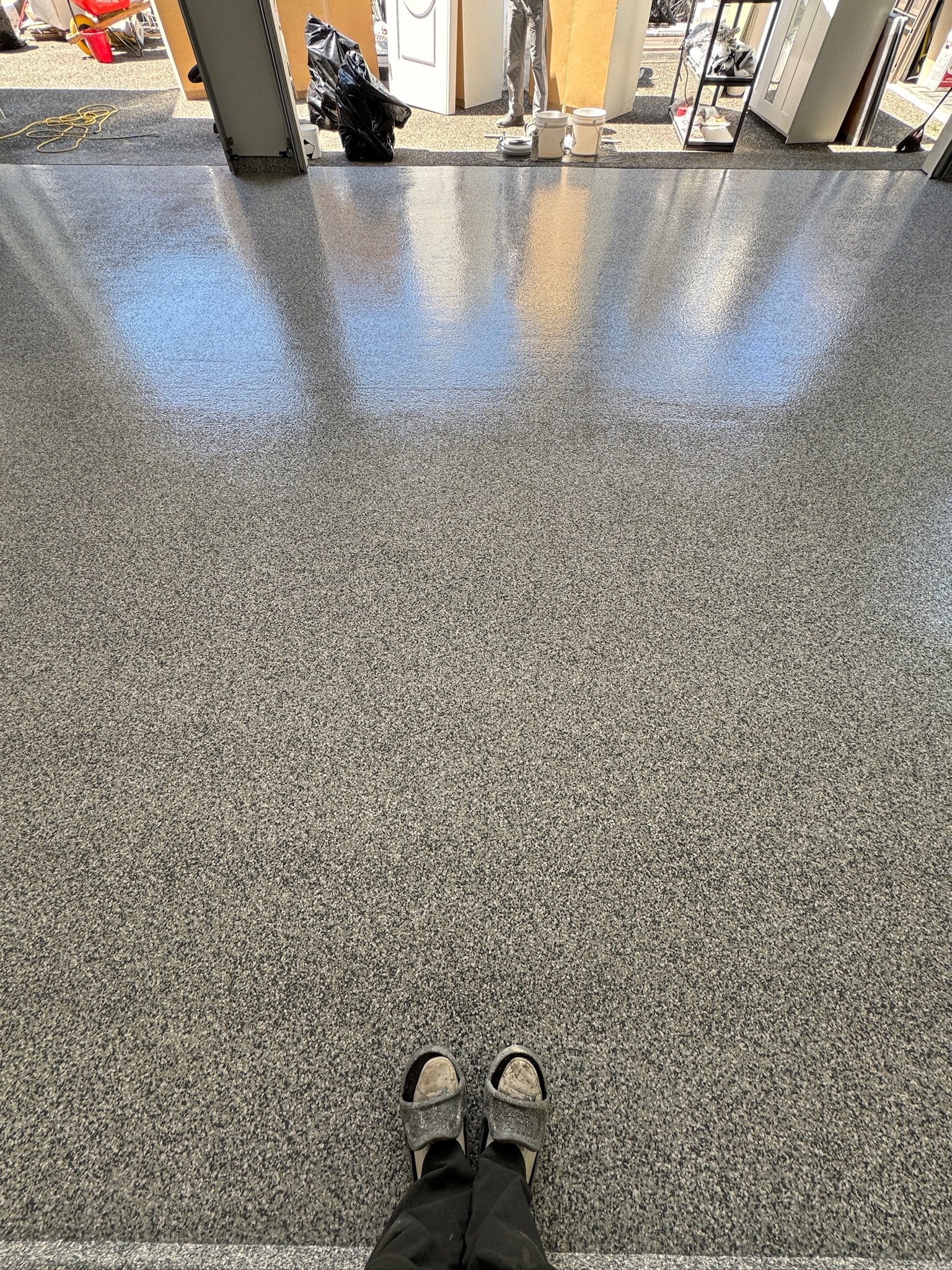
FraserPlus Epoxy Flooring: Services & What to Expect
TLDR
- FraserPlus Epoxy serves Metro Vancouver and the Fraser Valley with garage floor epoxy, commercial epoxy, metallic epoxy, and polished concrete installations.
- BC's wet winters, freeze-thaw cycles, and high slab moisture make professional substrate prep and moisture testing essential before any coating goes down.
- Different systems — solid epoxy, metallic, polyaspartic, polished concrete — suit different budgets, uses, and aesthetics.
- Costs depend on square footage, substrate condition, and the coating system chosen. Contact FraserPlus Epoxy directly for a site-specific quote.
If you've been searching for "fraser plus epoxy flooring" or browsed fraserplusepoxy.com, you're likely looking for a contractor who can coat a garage, warehouse, or commercial space in the Lower Mainland or Fraser Valley. This article explains what FraserPlus Epoxy does, how epoxy and resinous flooring systems work, and what to ask before any project starts.
What Does FraserPlus Epoxy Do?
FraserPlus Epoxy is a resinous flooring contractor serving Metro Vancouver communities — including Surrey, Burnaby, Langley, Coquitlam, and Richmond — as well as the broader Fraser Valley. The company installs epoxy, polyaspartic, and polished concrete floor systems for residential garages, commercial spaces, retail floors, and light-industrial facilities.
They handle the full job: surface preparation, any necessary concrete repairs, primer application, the base coat, decorative flake or metallic broadcast if applicable, and a clear topcoat sealer. You can see their full range at the services page.
Why Do BC Garages and Commercial Floors Need Coatings?
Bare concrete is porous. In Metro Vancouver's wet climate — heavy rainfall from October through April, and freeze-thaw cycles in the Fraser Valley and the eastern suburbs — bare garage floors absorb moisture, oils, road salt, and de-icing chemicals. Over time, that breaks down the surface and creates dusting, spalling, and staining that's hard to reverse.
An epoxy or polyaspartic topcoat seals the slab, adds chemical resistance, and makes the floor far easier to clean. That matters whether you're parking two vehicles, running a home workshop, or operating a commercial facility where staff and equipment cross the floor daily.
BC garages also tend to face higher humidity than many other parts of Canada. That makes moisture testing before installation especially important — a coating applied over a damp slab will eventually delaminate, regardless of how good the product is.
What Flooring Systems Does FraserPlus Epoxy Offer?
Epoxy and resinous flooring isn't one product — it's a category. The right system depends on your use case, substrate condition, and how much visual finish you want.
Garage Floor Epoxy
The most common residential application. A two-part epoxy is mixed on-site and applied to a mechanically prepared slab. Most garage systems include a colour chip or flake broadcast for slip resistance and aesthetics, followed by a clear polyaspartic or urethane topcoat for UV stability and long-term durability.
Polyaspartic topcoats have become the industry standard for garages because they cure faster than traditional epoxy, resist UV yellowing, and handle hot tire pick-up better than older systems. You can read more about garage epoxy flooring options on the FraserPlus site.
Commercial Epoxy Flooring
Commercial and light-industrial spaces need coatings that handle heavier traffic, forklift wheels, chemical spills, and slip-resistance requirements. Self-levelling epoxy systems are common here — they create a smooth, continuous surface without the seams or joints of tile. Commercial epoxy flooring installations typically specify a higher film thickness than a standard residential garage coat.
Metallic Epoxy Flooring
Metallic epoxy uses pigmented metallic powders suspended in the epoxy resin to create a three-dimensional, marbled visual effect. No two floors look identical. It's popular in showrooms, retail spaces, restaurant fronts, and residential interiors where appearance is as important as durability. You can explore metallic epoxy flooring details and visual examples on the FraserPlus site.
Polished Concrete
Rather than applying a topcoat, polished concrete uses diamond grinding tools and chemical densifiers to harden and shine the concrete itself. The result is a matte-to-high-gloss surface that doesn't peel or chip because there's no separate coating to fail. It suits retail, office, and residential applications and is generally lower maintenance over the long term.
How Does the Installation Process Actually Work?
Professional epoxy installation follows a consistent sequence, and every step matters. A shortcut at any stage shortens the floor's lifespan.
Surface preparation. This is the most labour-intensive phase. Concrete is ground or shot-blasted to open the pores and give the epoxy mechanical adhesion. Old coatings, paint, adhesive residue, and contamination are removed. Any cracks or spalled areas are repaired with appropriate fillers before the first coat touches the floor.
Moisture testing. A moisture vapour emission test checks the slab for moisture drive. In BC, particularly on slabs without proper vapour barriers below, moisture levels can be high enough to require a moisture-mitigating primer before any colour coat goes down.
Primer coat. A penetrating epoxy primer bonds to the prepared concrete and provides the foundation for subsequent coats.
Base coat and broadcast. The main epoxy or polyaspartic body coat is applied. In chip or flake systems, decorative flakes are broadcast into the wet coat. Metallic systems use a different approach — the metallic pigment is manipulated while the resin is still workable to create the signature movement effect.
Topcoat. A clear urethane or polyaspartic sealer protects the colour coat and sets the final sheen level — satin, semi-gloss, or high-gloss.
Cure time. Most floors are walkable within 24 hours but aren't ready for vehicle traffic for several more days, depending on the product and ambient temperature. BC temperatures in winter can slow cure times, so experienced contractors adjust their product choices for the season.
What Should You Ask Before Hiring an Epoxy Flooring Contractor?
Not all epoxy installations are equal. Before signing a contract with any contractor, here are the questions worth asking:
- How do you prepare the surface? The answer should involve mechanical grinding or shot blasting. Acid etching alone is generally considered insufficient for a long-lasting professional coating.
- Do you test for moisture? If they skip this step, the coating is at risk of delamination — especially in BC's climate.
- What products do you use? Professional-grade 100% solids epoxies and polyaspartic topcoats outperform water-based or hardware-store alternatives on longevity.
- What's included in the quote? Confirm whether crack repair, primer coats, and topcoats are included or billed separately.
- What's the return-to-use timeline? Plan around it — especially for a garage or commercial space where downtime has a real cost.
If you're in the Lower Mainland or Fraser Valley, you can reach FraserPlus Epoxy directly through their contact page to discuss your project and get a site-specific quote.
What Does Epoxy Flooring Cost in Metro Vancouver?
Epoxy flooring costs vary widely based on square footage, the complexity of the coating system, current substrate condition, and site access. A basic single-car garage with minimal repairs sits at a very different price point than a large commercial floor requiring extensive prep and a heavy-duty coating system.
Professional epoxy and polyaspartic systems reflect the cost of commercial-grade materials, surface preparation equipment, and skilled labour. DIY kits from hardware stores are available, but they typically use lower-solids products that don't match the durability of a professional installation.
Actual costs vary based on project scope, substrate condition, and site access — contact FraserPlus Epoxy for a personalized assessment.
Frequently Asked Questions
How long does epoxy flooring last?
The lifespan of a resinous floor coating depends on the quality of the installation, the product system used, and how the floor is maintained. Professionally installed polyaspartic and epoxy systems in residential garages can last many years with normal care. Heavy commercial or industrial use shortens that window without periodic topcoat reapplication.
Can epoxy be applied over an existing coated floor?
It depends on the condition and adhesion of the existing coating. A contractor will typically do an adhesion test and assess whether the old coating needs full removal or whether a new system can bond over it. Applying over a failing or poorly bonded existing coat generally causes the new coat to fail as well.
Is epoxy flooring slippery when wet?
A smooth, high-gloss epoxy surface can be slippery when wet. Most professional installations in garages and commercial spaces include a chip or flake broadcast, or an anti-slip aggregate added to the topcoat, to provide texture. If slip resistance is a priority, ask your contractor to specify the anti-slip additive level before the topcoat is applied.
Does epoxy work on basement floors in BC?
Epoxy and polyaspartic coatings can work on basement concrete, but moisture management is critical. BC basements — especially in older construction without modern vapour barriers — often have elevated moisture vapour emission from the slab. A thorough moisture test and the right primer system are essential before any coating goes down.
Follow FraserPlus Epoxy on Google — be the first to know about floor coatings, maintenance guides, and project ideas across Metro Vancouver.
Make us your preferred source on Google