
Hiring Commercial Epoxy Flooring Contractors: What to Ask
Commercial epoxy flooring contractors near me is one of the most common searches for facility managers, warehouse operators, and retail or industrial property owners trying to fix a concrete floor that's chipping, staining, or no longer meeting safety expectations. Picking the right contractor matters as much as picking the right coating system a well-installed floor can handle years of daily traffic, while a rushed job tends to peel, bubble, or crack within months.
This guide covers what to look for in a commercial epoxy flooring contractor, the main system types used in commercial settings, general cost factors, and the questions worth asking before signing a proposal.
Quick Answer: What Matters Most When Hiring
- Look for a contractor who inspects and tests the concrete substrate before quoting, not one who prices off square footage alone.
- Ask about moisture vapor testing humidity and slab moisture are common concerns across Metro Vancouver and the Fraser Valley.
- Commercial jobs need a system rated for the actual traffic type: foot traffic, rolling carts, forklifts, or chemical exposure each call for different coating thicknesses.
- A written scope of work, cure-time schedule, and downtime plan should be part of any serious proposal.
What Should You Look for in Commercial Epoxy Flooring Contractors Near Me?
A commercial epoxy job is different from a homeowner sealing a garage floor on a weekend. Commercial spaces usually involve larger square footage, tighter timelines around business hours, and floors that need to perform under sustained daily loads. Before hiring, it's worth confirming a few basics:
- Substrate assessment. A contractor should physically inspect the concrete checking for cracks, prior coatings, oil staining, and surface moisture before recommending a system.
- Surface preparation method. Mechanical diamond grinding or shot blasting is the industry-standard way to open the concrete pore structure so epoxy actually bonds, rather than sitting on top of the slab.
- Clear scope of work. A proposal should spell out the number of coats, coating thickness, cure times, and what happens if the concrete needs repair before coating begins.
- Business-hour planning. Ask how the work will be phased if the space can't be fully shut down many commercial jobs are done in sections or overnight.
FraserPlus Epoxy's commercial epoxy flooring page outlines the general process used for warehouses, retail floors, and industrial spaces across the region.
What Types of Commercial Epoxy Flooring Systems Are Available?
Not every commercial floor needs the same system. The right choice depends on traffic type, chemical exposure, and how the space is used day to day.
- Standard epoxy coatings a solid-color or two-tone coating suited to offices, showrooms, and light-traffic retail floors.
- Metallic epoxy systems a decorative, high-build coating that creates a marbled or three-dimensional look, often chosen for showrooms, lobbies, and retail spaces where appearance matters as much as durability. FraserPlus Epoxy's metallic epoxy flooring page has more detail on where this system tends to work well.
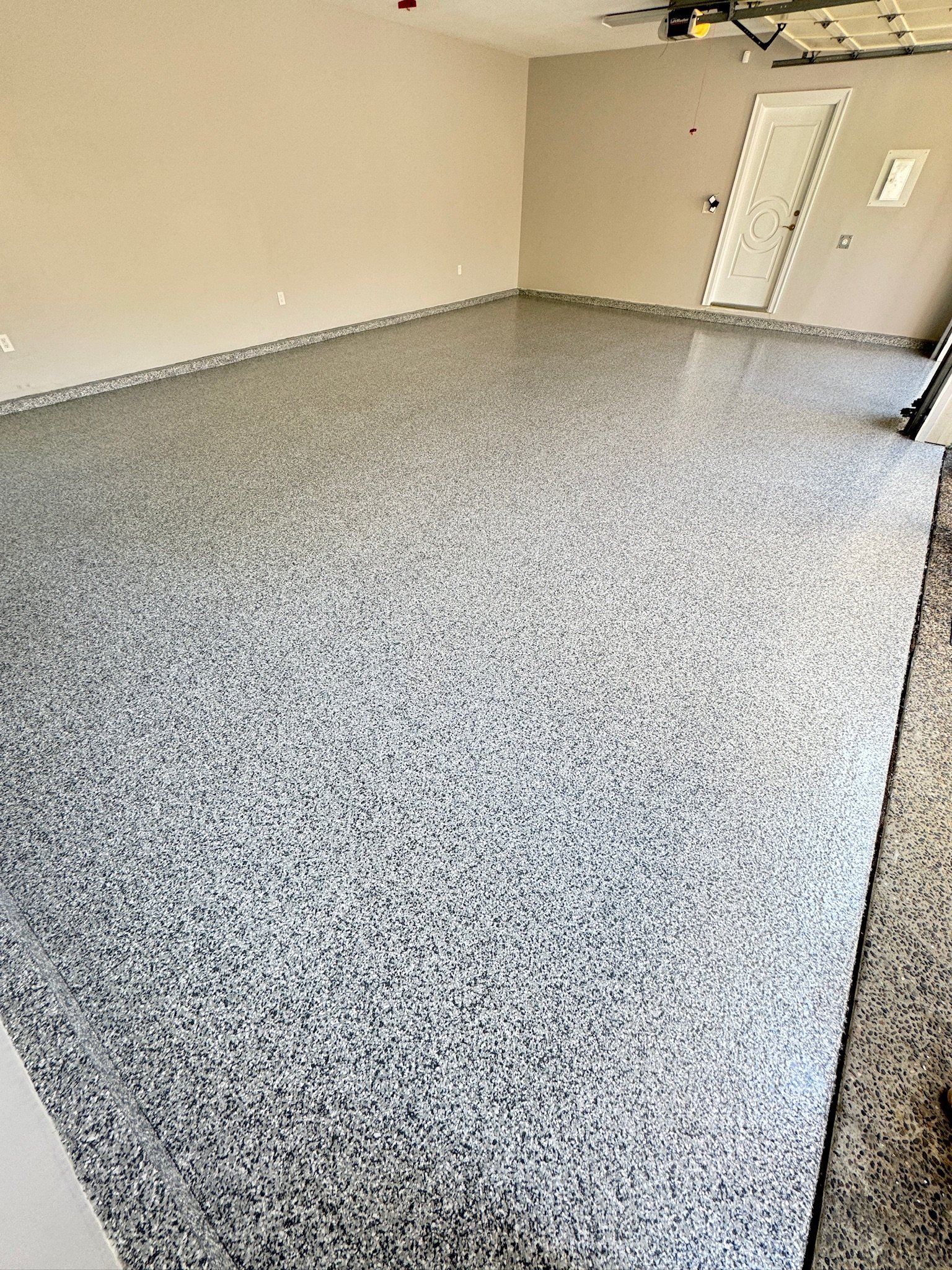
- Broadcast quartz or flake systems a textured, slip-resistant finish common in food service areas, locker rooms, and spaces that need grip underfoot.
- Heavy-duty or chemical-resistant systems thicker builds designed for manufacturing floors, loading docks, and areas exposed to oils, solvents, or de-icing salt tracked in from parking lots.
A contractor worth hiring will ask about your specific traffic and exposure before recommending one of these, rather than defaulting to a single standard package for every job.
How Long Does a Commercial Epoxy Flooring Project Take?
Timelines vary by square footage, the condition of the existing concrete, and how many coats the system requires, so it's not something a contractor should guess at without seeing the space. In general, surface preparation grinding, patching, moisture mitigation if needed takes longer than the coating application itself, and each coat needs adequate cure time before the next layer or before foot traffic returns. Full cure to handle heavy equipment or forklift traffic typically takes longer than the point at which the floor is safe to walk on ask your contractor for both numbers, not just one.
Because commercial spaces often can't sit empty for days, many projects are scheduled in phases overnight, over a weekend, or section by section so part of the building stays operational while another section cures.
What Does Commercial Epoxy Flooring Cost?
Cost depends on square footage, the condition of the substrate, how many coats and what type of system is specified, and how much surface prep or concrete repair is needed before coating can start. A floor with existing cracks, prior failed coatings, or moisture issues will generally cost more to prepare properly than a clean, newly poured slab.
Actual costs vary based on project scope, substrate condition, and site access contact FraserPlus Epoxy for a personalized assessment.
Why Does Metro Vancouver and Fraser Valley Climate Matter for Epoxy Floors?
Coastal BC's humidity and seasonal rain affect how concrete slabs behave, especially in ground-level warehouses, garages, and older commercial buildings without a proper vapor barrier underneath. Moisture trapped below a slab can push up through the concrete over time and cause a coating to bubble or delaminate if it wasn't addressed before installation which is why moisture testing is a standard step for a properly run commercial job in this region, not an optional extra.
Businesses in Surrey, Burnaby, Langley, Coquitlam, and Richmond all deal with similar coastal conditions, so the prep process tends to look similar across the region even when the buildings themselves are quite different. FraserPlus Epoxy serves commercial and industrial clients throughout Surrey and the surrounding Fraser Valley and Metro Vancouver area.
How Is Commercial Epoxy Different from Garage Epoxy?
Homeowners searching for garage floor coatings and business owners searching for commercial epoxy flooring contractors near me are usually solving different problems. A residential garage floor typically deals with car traffic, occasional oil drips, and foot traffic see FraserPlus Epoxy's garage epoxy flooring page for that side of things. Commercial floors are built for sustained daily loads: pallet jacks, forklifts, rolling carts, chemical exposure, and in some cases food-safety or slip-resistance requirements that a garage floor never has to meet. The prep work, coating thickness, and system choice all shift once the use case moves from a single vehicle to a working facility.
What Questions Should You Ask Before Hiring a Contractor?
- Will you inspect and test the concrete before quoting, or is this a price-per-square-foot estimate sight unseen?
- What surface preparation method do you use, and why?
- What system are you recommending for our specific traffic and exposure, and why that one over the alternatives?
- What is the walk-on cure time versus the full cure time for heavy equipment?
- Can the work be phased so our space stays partially operational?
- What does the written proposal include coats, thickness, prep steps, and what happens if the concrete needs repair?
A contractor who answers these clearly and in writing, rather than with a vague verbal estimate, is generally the safer choice for a commercial project. FraserPlus Epoxy's full list of flooring services covers garage, commercial, metallic, and polished concrete work across the region.
Frequently Asked Questions
How long does commercial epoxy flooring last?
Lifespan depends on the system chosen, how well the substrate was prepared, and the traffic the floor sees day to day. A properly prepared and installed system generally holds up well for years under normal commercial use, though heavy forklift or chemical exposure areas may need recoating sooner than light-traffic office space.
Can epoxy be installed over an existing concrete floor with cracks or old coatings?
In most cases, yes but the old coating or damaged concrete usually needs to be ground off or repaired first. A contractor should assess this during the site visit rather than assuming the existing surface is ready to coat over.
Does a commercial epoxy floor need to be replaced when it's time to work on it again?
Not usually. Most systems can be recoated or refreshed once the top layer wears down, as long as the underlying concrete and original prep are still sound.
How do I know if my building's concrete has a moisture problem?
A contractor can run a moisture vapor test on the slab before recommending a system. This is a standard step for ground-level commercial buildings in coastal BC and shouldn't be skipped just to save time on the quote.
Follow FraserPlus Epoxy on Google — be the first to know about floor coatings, maintenance guides, and project ideas across Metro Vancouver.
Make us your preferred source on Google