
5 Questions to Ask Before Hiring an Epoxy Company
Searching for an "epoxy company near me" brings up a long list of contractors — some local specialists, some general tradespeople who've added floor coatings as a side service. The difference matters, especially when the surface you're coating is a garage floor, a commercial kitchen, or a showroom that needs to hold up for years.
TLDR
- Concrete preparation is the single biggest factor in how long an epoxy coating lasts — ask every contractor about it upfront.
- Always ask about surface profiling method, product type, and what the warranty actually covers.
- Metro Vancouver and Fraser Valley winters create real moisture and temperature challenges that affect coating choice and cure times.
- The cheapest quote often reflects thinner products and less prep — weigh long-term lifespan against upfront cost.
What Kinds of Floors Does an Epoxy Company Work On?
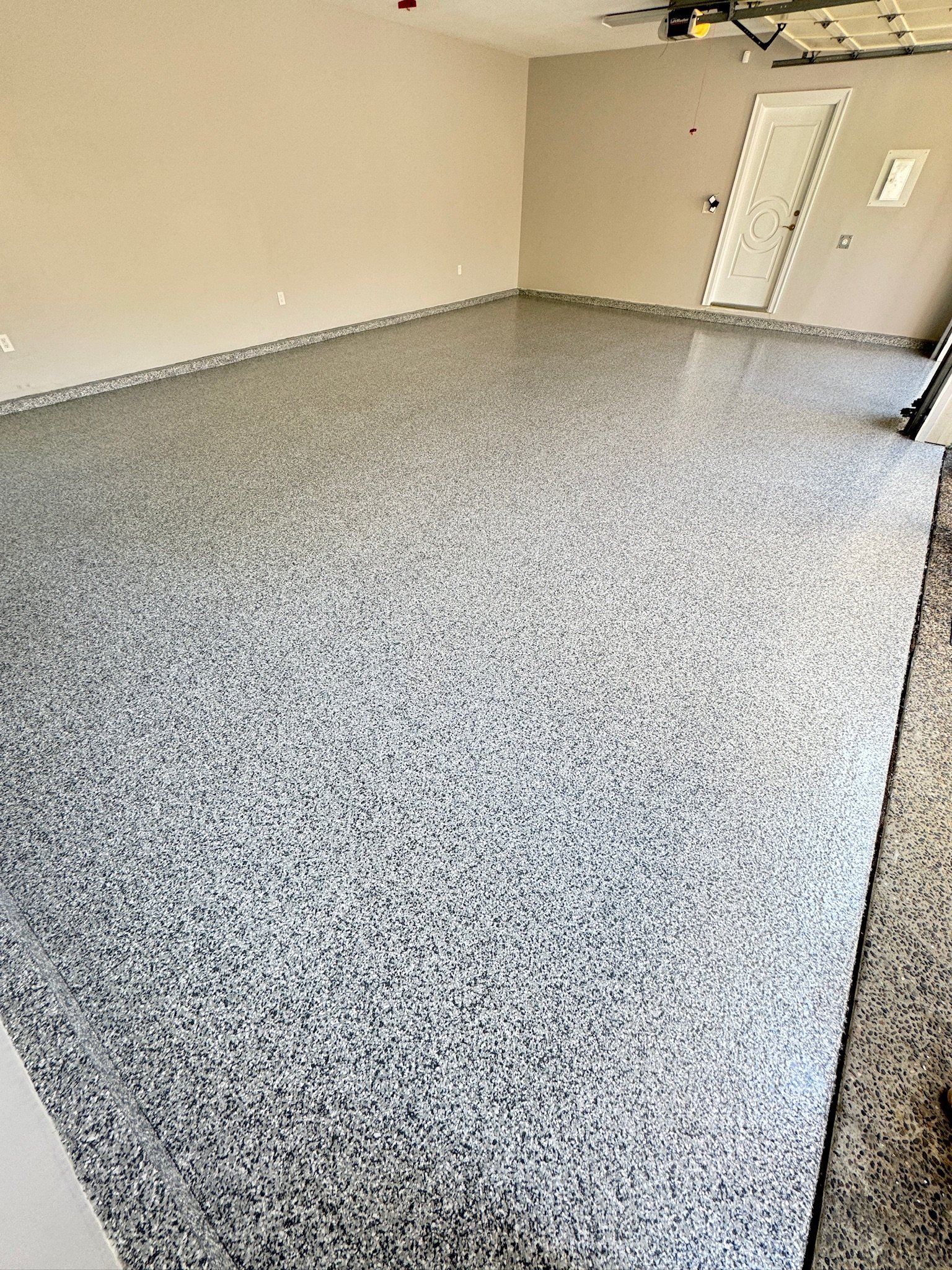
Epoxy and resinous coatings cover a wider range of surfaces than most people expect. The most common residential application is the garage floor — a bare concrete slab exposed to oil, tracked-in road salt, and vehicle traffic year-round.
On the commercial side, flooring contractors work on warehouse floors, retail spaces, restaurant kitchens, medical facilities, and light industrial plants. Each environment has different demands: food-safe surfaces need specific product chemistries, industrial floors need higher impact resistance, and decorative spaces often call for finishes like metallic epoxy.
Polished concrete is another option many companies offer. It involves mechanically grinding and densifying the slab rather than coating it — the result is a low-maintenance floor that suits open retail and commercial spaces. You can see the full range of what's available on the services page.
Why Does the Contractor You Choose Actually Matter?
Epoxy is a forgiving product when applied over a properly prepared surface. It's unforgiving when it isn't. Peeling, bubbling, and delamination almost always trace back to a surface that wasn't profiled correctly, or to moisture that wasn't tested and managed before product went down.
Reputable epoxy flooring companies invest in professional-grade diamond grinding equipment that mechanically opens the pores of the concrete before any coating is applied. Contractors who rely on acid etching alone — a faster but less reliable method — tend to produce floors that don't last as long under real-world conditions.
The difference doesn't always show up in photos or quotes. It tends to show up 12 to 18 months after installation, when one floor still looks sharp and another is starting to peel at the edges.
What Should You Ask Before Hiring an Epoxy Company Near You?
A few direct questions before signing anything will tell you a lot about what you're actually getting.
- How do you prepare the surface? A good answer mentions mechanical grinding or shot blasting. Vague talk about "cleaning" or "etching" is worth pressing on.
- What product system are you using? The industry uses terms like 100% solids epoxy, water-based epoxy, and polyaspartic. Each has different performance characteristics, cure times, and price points — knowing what's going on your floor helps you compare quotes fairly.
- Do you test for moisture? Concrete slabs — especially in BC's wetter climate — can carry moisture vapor that causes coatings to separate from the surface. Skipping this step is a real corner to cut.
- What does your warranty cover? Find out whether it covers product failure, installation failure, or both — and what you need to do to keep it valid.
- Can you show me examples of similar projects? Photos of comparable work give you a realistic sense of what finished quality looks like.
How Does BC's Climate Affect Your Floor Coating?
Metro Vancouver and the Fraser Valley sit in a mild but genuinely wet climate. Winters bring regular rain, occasional freezing temperatures, and elevated humidity — conditions that affect both the installation process and long-term coating performance.
During cooler months, concrete slab temperatures can drop below the minimum threshold some epoxy products need to cure correctly. Professional contractors check slab temperature before applying product, choose formulations suited to cooler conditions, or schedule work on days when conditions meet spec.
Road salt is also a real factor in Lower Mainland garages. Vehicles track in de-icing salt through the winter, and that salt is corrosive to bare concrete over time. A well-installed epoxy coating protects the slab underneath — but only when the surface preparation was done correctly first.
If you're based in Surrey, Burnaby, Langley, or elsewhere in the region, ask any contractor you're considering how they handle the moisture and temperature variables common across BC's Lower Mainland.
What's the Difference Between Residential and Commercial Epoxy Work?
Scale and specification are the main differences. A residential garage is typically a single-coat or multi-coat system applied to a straightforward slab — most residential jobs take one to two days on-site.
Commercial epoxy flooring is more involved. The square footage is larger, there's often equipment and fixtures to work around, and the performance requirement is higher. A warehouse floor that supports forklift traffic needs a thicker system than a home garage. A commercial kitchen may need chemical resistance and a non-slip surface that a standard formulation doesn't provide.
Commercial jobs also tend to have tighter scheduling constraints. A restaurant can only close for so long, and a retail space can't stay offline for a week. Contractors who specialize in commercial work are used to phased installation and off-hours scheduling to keep businesses running.
How Long Does Epoxy Flooring Installation Take?
For most residential garages, installation happens over two days. Day one typically covers surface preparation and a base coat; day two handles the topcoat and any decorative broadcast — flake or metallic pigment. After that, the floor needs additional time before it can handle vehicle traffic.
Larger commercial installations scale with the size of the space. Some projects require phased sections to keep part of the facility operational during the job. Polyaspartic topcoats — which cure much faster than standard epoxy — are often used on commercial work where turnaround time is critical.
Temperature and humidity affect cure time. A cold garage in January takes longer than the same product applied in a warm, controlled environment in summer. Your contractor should give you timelines based on actual site conditions, not a best-case estimate.
What Does Epoxy Flooring Generally Cost?
Pricing varies based on project size, the condition of the existing concrete, the product system being applied, and site-specific access factors. A small residential garage costs less than a large industrial floor — that's consistent across the industry.
Within any project size, the spread in quotes usually reflects differences in product quality, prep depth, and coat count. A contractor using a high-solids commercial-grade system with full mechanical preparation will quote more than one using a thinner product over a minimal etch. Those floors perform differently over time.
Actual costs vary based on project scope, substrate condition, and site access — contact FraserPlus Epoxy for a personalized assessment.
FAQ
How do I know if my concrete is in good enough condition for epoxy?
Most slabs can be coated successfully, but surface condition affects what prep is needed and which products will perform well over time. Cracks, spalling, and existing coatings all need to be addressed before a new system goes down. A professional site visit — often offered at no charge — is the most reliable way to assess your slab before committing to a product.
Can epoxy be applied over existing paint or coatings?
Applying new epoxy over an old coating is generally not recommended. The product needs to bond directly to the concrete, and a prior coating between the two creates a weak point. Most contractors grind off existing coatings during surface prep so the new system gets a clean, mechanical bond to the slab.
How long does an epoxy garage floor last?
Lifespan depends on prep quality, the product system used, and how the floor gets used day-to-day. Well-installed systems in residential garages can last many years under normal conditions. Commercial floors in heavy-traffic environments may wear sooner. The topcoat selection — some are significantly more abrasion-resistant than others — also plays a meaningful role in how the surface holds up.
Is epoxy slippery when wet?
A standard gloss epoxy finish can be slippery when wet. Most contractors offer slip-resistant additives — typically silica sand or aluminum oxide — that are broadcast into the topcoat to improve traction. For commercial kitchens, medical facilities, and other spaces where wet floors are common, a non-slip finish should be specified upfront rather than added as an afterthought.
Follow FraserPlus Epoxy on Google — be the first to know about floor coatings, maintenance guides, and project ideas across Metro Vancouver.
Make us your preferred source on Google