
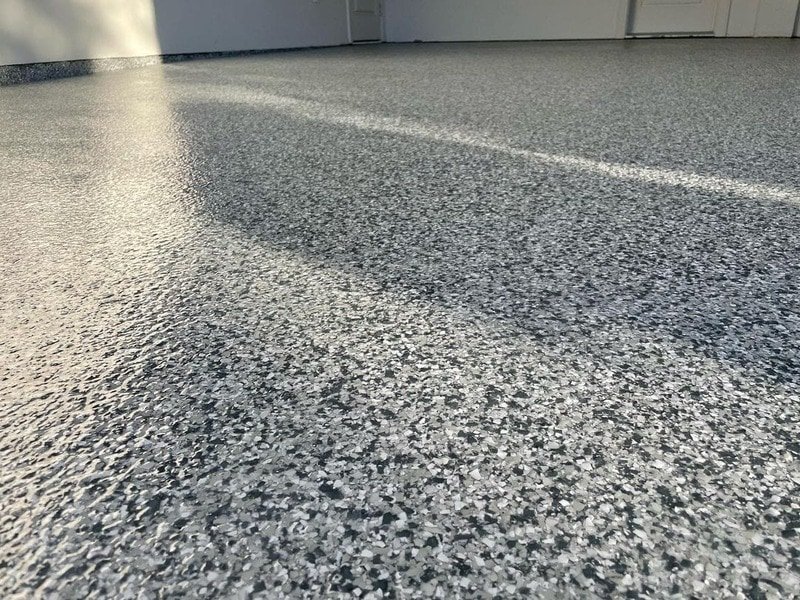
Questions to Ask Commercial Epoxy Flooring Contractors
Commercial epoxy flooring contractors handle floors built for forklifts, pallet jacks, chemical exposure, and constant foot traffic — a different job than a homeowner's garage floor. Here's what separates a contractor ready for that work from one who isn't, and what it takes in Metro Vancouver and the Fraser Valley.
- Commercial epoxy floors hold up under heavy traffic when the substrate is prepped and tested properly first.
- Metro Vancouver and Fraser Valley job sites deal with humidity that affects curing and adhesion.
- Ask about moisture testing, cure schedules, and after-hours or phased scheduling.
- Get scope, coating type, and prep method in writing before comparing price.
What Does a Commercial Epoxy Flooring Contractor Actually Do?
A commercial epoxy flooring contractor assesses your existing slab, preps the surface, and applies a coating system built for your traffic type. That's different from a homeowner asking for garage epoxy flooring, where traffic loads and chemical exposure are usually lighter.
The general process includes an on-site assessment, moisture and adhesion testing, and mechanical surface preparation — typically grinding or shot blasting rather than acid etching for commercial work. From there, a contractor applies a primer coat, one or more base coats, and a topcoat matched to the space's use, such as chemical resistance for a shop floor, slip resistance for a food-service area, or a broadcast system for heavier abrasion.
Cure time between coats and before the floor goes back into service depends on the product system, ambient temperature, and humidity. A contractor should walk you through that schedule before work starts, not after.
Some coating systems are lower-odor than others, which matters most in occupied retail or office space during application. Ask a contractor which product line they specify and whether the space needs to be vacated during and after the pour.
Why Does Surface Prep Matter So Much on a Commercial Floor?
Concrete is porous, and old sealers, oil stains, or moisture trapped below the slab can all cause an epoxy coating to peel or bubble later. Mechanical prep — grinding or shot blasting the surface to open the pores and remove contamination — gives the coating something to grip.
Moisture vapor testing matters too, especially on slab-on-grade floors common in warehouses and light-industrial buildings across the region. A contractor who skips this step is guessing, not measuring.
If a contractor's quote doesn't mention surface prep or testing at all, that's worth asking about directly before you sign anything.
How Does Metro Vancouver's Climate Affect a Commercial Epoxy Installation?
Coastal BC's damp winters and humid summer stretches change how concrete cures and how epoxy sets. Ambient humidity and temperature affect open time, recoat windows, and how quickly a floor can be walked on or put back into service.
Buildings without climate control — a distribution center or a workshop with the bay doors open, for example — need a contractor who adjusts the coating schedule for outdoor conditions, not just indoor ones. This matters in industrial pockets across Surrey, Coquitlam, Langley, and other Fraser Valley municipalities where large-format industrial space is common.
Ask a prospective contractor how they plan around weather and building conditions specific to your site, not just their general process.
What Should You Ask Before Hiring a Commercial Epoxy Flooring Contractor?
A short list of questions separates a contractor who has done commercial work from one who mostly handles residential garages:
- What surface prep method will you use, and why that one for my slab?
- Will you test for moisture and adhesion before starting?
- What's the realistic cure and return-to-service timeline for my space?
- Can work happen in phases, overnight, or on weekends to limit downtime?
- What coating system are you specifying, and why does it fit my traffic type?
Ask for the scope in writing. A vague one-line quote makes it hard to compare contractors fairly, and it's the most common source of disputes once a job is underway.
What Factors Affect the Cost of Commercial Epoxy Flooring?
Square footage, existing slab condition, the coating system specified, and how much surface repair is needed before coating all affect the final cost of a commercial epoxy project. A floor with existing damage, oil saturation, or drainage issues typically needs more prep work than a clean, newer slab.
Site access and timeline matter too — a project that has to happen in off-hours or in phases around an operating business generally takes longer than a full shutdown install.
Actual costs vary based on project scope, substrate condition, and site access — contact FraserPlus Epoxy for a personalized assessment.
How Long Does a Commercial Epoxy Installation Take?
Timeline depends on square footage, how much prep and repair the existing slab needs, and the specific coating system's cure requirements. A straightforward recoat on a small area moves faster than a full grind-and-recoat on a large warehouse floor with existing damage.
Ask a contractor for a realistic day-by-day schedule, including when each coat can be walked on and when the space can go back into full use. That schedule should account for your business's actual operating hours, not just ideal conditions.
What Maintenance Does a Commercial Epoxy Floor Need After Installation?
Compared to bare or sealed concrete, epoxy-coated floors are generally easier to keep clean because the coating fills surface pores and reduces dust. Routine sweeping and mopping with a cleaner compatible with the coating system is usually enough for day-to-day upkeep.
High-traffic lanes — forklift paths, entryways, loading areas — tend to show wear before the rest of the floor. A contractor can typically recoat those sections without redoing the entire floor, though the right approach depends on the coating system and how it was installed.
Garage, Commercial, or Metallic — Which Epoxy System Fits Your Business?
Not every space needs the same system. Garage epoxy flooring is usually built around vehicle traffic and occasional chemical exposure, while commercial epoxy flooring is specified for heavier, more constant traffic — retail, warehouse, or light-industrial use.
Metallic epoxy is a decorative system some retail and showroom spaces choose for its visual finish, though it isn't typically the first choice for high-abrasion industrial floors.
What Should You Look for in a Local Commercial Epoxy Flooring Contractor?
Beyond price, look for a contractor who explains their prep method, tests for moisture, gives a written scope, and can talk through a realistic schedule for your building. Local familiarity with Metro Vancouver and Fraser Valley slab conditions and climate helps, since a coating schedule that works in a dry, controlled climate doesn't always translate directly to a coastal BC job site.
Photos of past commercial work, even without named clients, can help you gauge whether a contractor's finish quality matches what you're picturing for your space.
Review the full range of epoxy and resinous flooring services available for commercial, industrial, and retail spaces before narrowing down your shortlist.
If you're comparing contractors for a commercial project in Metro Vancouver or the Fraser Valley, contact FraserPlus Epoxy to walk through your site's specific needs.
FAQ
How do I know if a contractor is actually qualified for commercial work?
Ask about their surface prep method, whether they test for moisture and adhesion, and whether they can provide a written scope for a project similar in size and use to yours. A contractor comfortable answering technical questions in detail is generally a good sign.
Can a commercial epoxy floor be installed without shutting the business down completely?
Often, yes — many commercial epoxy projects are phased or scheduled around off-hours, though this depends on the size of the space, the coating system, and how much prep work is needed. Ask a contractor to walk through a phased plan for your specific site.
How long does commercial epoxy flooring typically last?
Durability depends on the coating system, substrate prep quality, and how much traffic and chemical exposure the floor sees day to day. Heavier-use systems designed for industrial traffic generally hold up longer than lighter systems applied to the same conditions, and high-wear areas can usually be recoated without replacing the whole floor.
Is metallic epoxy a good fit for a retail or commercial space?
It can be, particularly for showrooms, lobbies, or retail floors where appearance matters as much as durability. For high-abrasion industrial areas, a standard commercial coating system is usually the more practical choice.
Follow FraserPlus Epoxy on Google — be the first to know about floor coatings, maintenance guides, and project ideas across Metro Vancouver.
Make us your preferred source on Google