
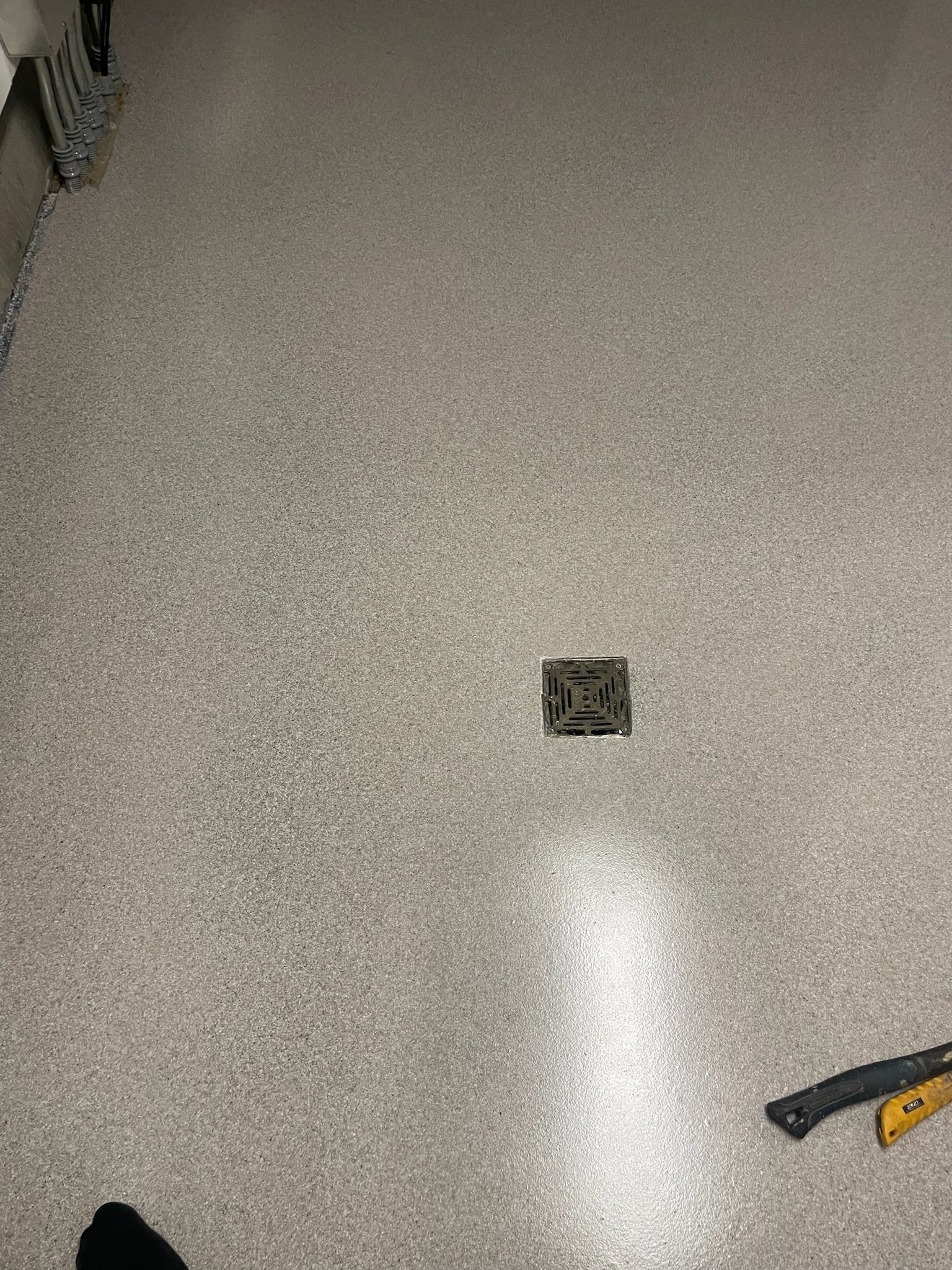
Vetting Commercial Epoxy Flooring Contractors in BC
Quick takeaways
- Commercial epoxy is a long-term investment — substrate preparation and installer experience matter more than price alone.
- BC's wet climate and humidity affect how epoxy cures, making local expertise important.
- Always ask for a site inspection, product specs, and a written warranty before you commit.
- Get at least two or three quotes so you can compare scope, not just price.
What Does a Commercial Epoxy Flooring Contractor Actually Do?
A commercial epoxy flooring contractor supplies and installs resinous flooring systems — coatings made from epoxy, polyurethane, polyaspartic, or other resin-based materials that bond directly to a concrete substrate. The work is more involved than it looks.
Proper installation starts with surface preparation: grinding or shot-blasting the existing concrete to open its profile, removing contaminants, filling cracks and joints, and moisture-testing the slab. Skipping or rushing these steps is the most common reason epoxy coatings fail early.
Why Does "Near Me" Matter for Commercial Epoxy?
Finding a contractor local to Metro Vancouver and the Fraser Valley isn't just about convenience. Local contractors understand regional conditions — BC's rainy seasons, the humidity swings between the coast and inland Fraser Valley, and the freeze-thaw cycles that stress concrete in areas like Langley and Coquitlam.
Moisture vapor transmission is one of the biggest failure points for epoxy in BC. A contractor who's worked extensively in this climate knows to test for moisture before committing to a coating system, and knows which products perform well in our conditions.
Response time also matters. If an issue comes up after installation — a bubble, a delaminated section — a local contractor can return to site quickly rather than you waiting weeks for someone based out of province.
What Types of Commercial Epoxy Systems Are Available?
Not all commercial epoxy is the same. Systems vary based on the environment, traffic level, and the finish the space requires.
Standard two-coat epoxy (a primer coat plus a build coat) is the baseline for light commercial and industrial applications — warehouses, production spaces, retail storage areas. It's functional and durable in the right environment.
High-build epoxy systems add thickness for heavy-traffic or impact-prone areas. These are common in manufacturing facilities, auto service bays, and food processing spaces where the floor takes a real beating.
Polyaspartic and polyurethane topcoats are often applied over an epoxy base to add UV stability, chemical resistance, and faster cure times — useful when you can't afford a long production shutdown.
Metallic epoxy is the high-aesthetic option for showrooms, retail spaces, and hospitality environments. Metallic epoxy systems create a reflective, three-dimensional finish that's also highly durable when properly installed.
If you're comparing systems for a facility in Surrey or the Fraser Valley, the commercial epoxy flooring services page outlines what's typically suited to different building types and use cases.
How Do You Evaluate a Commercial Epoxy Contractor Before Hiring?
Start with the basics: does the contractor carry liability insurance and WorkSafeBC coverage? In British Columbia, any contractor sending workers to a commercial site should be registered with WorkSafeBC. Ask for proof upfront — it protects you if something goes wrong on site.
Ask about product sourcing. Professional-grade epoxy products differ significantly from what's available at hardware stores. Ask the contractor what brands and systems they install, and whether those products are designed for commercial use. A reputable contractor won't hesitate to share product spec sheets.
Ask about surface preparation equipment. Professional contractors grind or shot-blast the concrete — they own or rent that equipment. If a contractor only mentions acid etching as prep, that's worth probing further.
Ask for references from similar projects. A contractor with experience in grocery stores and light manufacturing has different practical knowledge than one focused on residential garages. Match their experience to your application.
What Questions Should You Ask When Getting a Quote?
Getting multiple quotes is standard practice, but comparing them requires knowing what's included. Ask each contractor:
- What surface preparation method will they use, and what equipment?
- Will they perform a moisture vapor emission test before starting?
- How many coats, and what product system?
- What's the expected cure time before light foot traffic? Before heavy equipment?
- What's the warranty, and what does it cover?
Don't assume all quotes cover the same scope. A lower price might mean fewer prep steps, thinner coats, or no protective topcoat. A written scope of work lets you compare fairly across contractors.
Costs for commercial epoxy vary considerably depending on square footage, substrate condition, the system specified, and site access constraints. Actual costs vary based on project scope, substrate condition, and site access — contact FraserPlus Epoxy for a personalized assessment.
What Are the Most Common Epoxy Failure Points?
Epoxy that peels, bubbles, or delaminates is almost always a substrate preparation problem — not a product problem. The concrete wasn't profiled deeply enough, contained residual moisture, or had a contaminant like oil or a previous coating that blocked adhesion.
Pooling or an uneven finish usually means the product was applied too thick or in conditions outside the manufacturer's recommended temperature and humidity window. Good contractors monitor these conditions and won't start if the environment isn't right.
UV yellowing happens when standard epoxy is used in areas with direct sunlight. Spaces with skylights or large windows need a UV-stable topcoat or a polyaspartic system. An experienced contractor will flag this risk during the site inspection and specify accordingly.
What's the Difference Between Commercial and Residential Epoxy Work?
The mechanics are the same, but the scale and constraints differ. Commercial projects typically involve larger square footage, tighter timelines, and more demanding performance requirements — chemical exposure, heavy forklifts, or regulated hygiene standards in food facilities.
A contractor experienced in both can advise whether your space calls for a commercial-grade system or whether a lighter application is appropriate. A small professional office without heavy traffic has different needs than a food processing plant.
For residential applications like garage floors in Burnaby, Richmond, or the Fraser Valley, the garage epoxy flooring page covers what homeowners typically need to know before starting a project.
What Should You Expect During and After Installation?
Plan for the floor to be out of service for the duration of prep, application, and cure. Cure times depend on the system specified and ambient conditions — cooler temperatures slow the process. Your contractor should give you a realistic return-to-service timeline, not just a best-case number.
Surface prep is the loudest and dustiest phase. Professional contractors use dust-shrouded grinders and vacuums to minimize airborne particles, but some disruption is unavoidable. Discuss this in advance if your business will be operating nearby during the work.
After installation, get all warranty documentation in writing and confirm the manufacturer's warranty terms alongside the contractor's labor warranty. Both matter if something needs to be addressed later.
How Do You Find Reputable Commercial Epoxy Contractors Near You?
Ask your network first. Property managers, facility managers, and business owners who've had epoxy work done are a reliable referral source. Local commercial renovation contractors often work alongside flooring specialists and can point you toward experienced installers in the area.
Online reviews are useful but need some judgment. Look for detailed reviews that describe the process, not just short praise. Contractors who respond professionally to both positive and critical feedback tend to handle problems better when they arise.
If you're ready to get a project scoped, you can reach out to FraserPlus Epoxy to discuss your space, timeline, and the right system for your application.
Frequently Asked Questions
What types of businesses typically use commercial epoxy flooring?
Commercial epoxy is used across a wide range of facilities — warehouses, manufacturing plants, auto dealerships, food processing spaces, retail stores, medical clinics, and commercial kitchens, among others. The right system depends on the environment and traffic demands of each facility.
How long does a commercial epoxy floor last?
Epoxy floors can last many years in the right conditions, but lifespan depends on the system installed, the level of traffic and chemical exposure, and whether the substrate was properly prepared. High-traffic or chemically demanding environments often benefit from more durable topcoat systems.
Can epoxy be applied over existing concrete without removing old coatings?
In most cases, yes — but the existing surface needs to be assessed first. If there's a previous coating, moisture issues, or significant damage, those need to be addressed before a new system goes down. A proper site inspection will identify any remediation needed upfront.
Does BC's climate affect commercial epoxy installations?
Yes. Humidity, temperature, and moisture vapor from the concrete slab all affect how epoxy cures and bonds. Contractors familiar with Metro Vancouver and Fraser Valley conditions account for these factors when specifying a product system and scheduling the installation window.
Follow FraserPlus Epoxy on Google — be the first to know about floor coatings, maintenance guides, and project ideas across Metro Vancouver.
Make us your preferred source on Google