
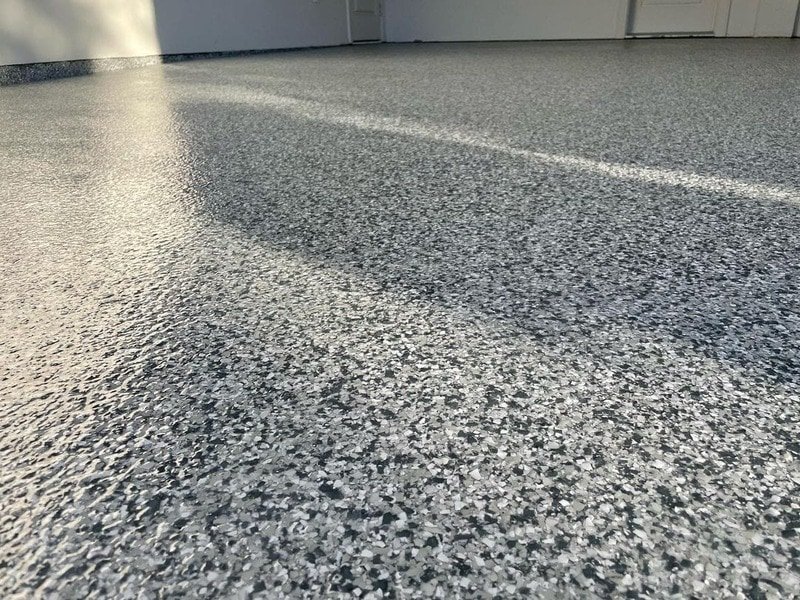
Vetting Commercial Epoxy Flooring Contractors in BC
- Commercial epoxy flooring contractors handle surface prep, moisture testing, and multi-coat installation for warehouses, retail, restaurants, and industrial spaces.
- Metro Vancouver and the Fraser Valley's damp climate makes moisture testing and proper cure time especially important before and during installation.
- Before hiring, ask about surface prep methods, moisture testing, project timeline, and how the crew handles site access in an active business.
- Costs vary by square footage, slab condition, and the coating system chosen — an on-site walkthrough gives a far more accurate number than a phone estimate.
What Do Commercial Epoxy Flooring Contractors Actually Do?
Commercial epoxy flooring contractors prepare concrete substrates and apply resinous coating systems designed for higher foot and vehicle traffic than a typical residential floor. That work usually starts with an assessment of the existing slab: its age, any cracks or previous coatings, and how much moisture is moving through it.
From there, a contractor typically grinds or shot-blasts the surface to open the concrete's pores, repairs cracks and joints, and applies a primer coat before building up the epoxy or resinous system in layers. For commercial spaces, that system often needs to handle forklift traffic, chemical exposure, or constant foot traffic without breaking down. You can see the range of systems FraserPlus offers on the commercial epoxy flooring page.
Some commercial projects also call for specialty details like anti-slip additives in high-moisture areas, chemical-resistant topcoats near equipment or wash-down zones, or color-coded striping to mark walkways and safety zones. A contractor should ask about how the space is actually used before recommending a system, rather than applying the same coating to every project.
Why Does Local Climate Matter for Commercial Epoxy Installations?
Metro Vancouver and the Fraser Valley get a lot of rain and humidity, especially in the fall and winter months. That matters for epoxy flooring because concrete slabs can hold moisture long after they look and feel dry on the surface.
Moisture trapped under an epoxy coating can cause bubbling, delamination, or discoloration later on. A contractor who tests the slab's moisture content before starting, rather than skipping straight to coating, is protecting the investment your business is making in the floor.
Temperature swings matter too. Epoxy and polyaspartic coatings cure within a specific temperature and humidity range. A contractor working in an unheated warehouse in January needs a plan for controlling site conditions so the coating cures the way the manufacturer intends.
Good ventilation and, in some cases, temporary dehumidification during installation help keep humidity and temperature within the range the coating manufacturer specifies. Skipping this step in a rush to finish a project can shorten how long the finished floor lasts.
How Do You Find a Commercial Epoxy Flooring Contractor in Your Area?
Start with contractors who list commercial and industrial work specifically, not just residential garage floors. Commercial jobs involve different traffic loads, different chemical exposure, and often tighter timelines because a business needs to reopen or resume operations quickly.
Ask to see photos or descriptions of past commercial projects similar in size and use to yours — a restaurant kitchen has different needs than a warehouse or a retail showroom. A contractor serving Surrey and the surrounding Fraser Valley should be familiar with the mix of older industrial buildings and newer commercial construction common in the region.
What Should You Ask Before Hiring a Commercial Epoxy Flooring Contractor?
A short list of questions can save you from surprises mid-project:
- How do you test the slab for moisture before starting?
- What surface preparation method will you use — grinding, shot-blasting, or another approach — and why?
- How many coats are included, and what's the expected cure time before the floor can handle foot and vehicle traffic?
- Can the work be phased or done after hours to limit disruption to my business?
- What happens if the crew finds cracks, previous coatings, or other issues once they start prep?
A contractor who answers these clearly, without vague reassurances, is usually one who has done this kind of project before.
How Is Commercial Epoxy Different From Garage or Residential Epoxy?
Residential garage floors and commercial floors both start with concrete, but the demands are different. A garage floor mainly deals with vehicle tires, occasional chemical spills, and foot traffic. You can read more about that side of the work on the garage epoxy flooring page.
Commercial and industrial floors often need to handle constant forklift or cart traffic, exposure to specific chemicals depending on the business, and stricter timelines since downtime costs money. That usually means a thicker or more specialized coating system, and sometimes anti-slip additives or specific color coding for safety zones.
What Types of Commercial Spaces Use Epoxy or Resinous Flooring?
Epoxy and resinous coatings show up across a wide range of commercial and industrial settings: warehouses and distribution centers, manufacturing floors, auto service bays, restaurant kitchens, and retail showrooms.
Retail and showroom spaces sometimes choose a decorative option like metallic epoxy for a distinct look on the sales floor — you can see examples on the metallic epoxy flooring page. Warehouses and industrial spaces more often prioritize durability and chemical resistance over appearance.
Polished concrete is another option some commercial clients consider alongside epoxy, particularly where a lower-maintenance, no-recoat surface fits the space better than a coated system.
What Does Commercial Epoxy Flooring Typically Cost?
Cost depends on several factors: the square footage involved, how much surface preparation the existing slab needs, the number of coats, and whether the project requires specialty features like anti-slip additives or line striping.
A slab with old coatings to remove or significant cracking will generally cost more to prepare than a newer, clean slab. Site access matters too — a ground-floor warehouse with wide doors is a simpler job logistically than a multi-story building with limited access.
The type of system also plays a role. A basic two-coat epoxy system is generally less involved than a multi-layer system built for heavy chemical or impact resistance, though the right choice depends on how the space will actually be used.
Actual costs vary based on project scope, substrate condition, and site access — contact FraserPlus Epoxy for a personalized assessment.
What Should You Look for in a Contractor Serving Surrey, Burnaby, Langley, Coquitlam, or Richmond?
Contractors working across Metro Vancouver and the Fraser Valley need to plan around municipal permitting and building code requirements that can vary slightly between cities. Ask whether the contractor is familiar with the specific municipality your building is in.
It also helps to ask how the contractor handles scheduling around business hours, since many commercial epoxy projects happen during a planned shutdown, overnight, or over a weekend to limit lost operating time. You can discuss your project and timeline through the contact page.
Frequently Asked Questions
How long does commercial epoxy flooring take to install and cure?
Timelines depend on the size of the space, the condition of the existing slab, and the coating system used. Cure times before light foot traffic and before full vehicle or equipment traffic are usually different, so ask your contractor for both numbers as part of the project plan.
Can epoxy flooring be installed while a business stays open?
Sometimes, if the work can be phased by section or scheduled after hours. Fumes, dust, and cure time all need to be managed carefully around anyone still working or shopping in the space, so this is worth discussing directly with your contractor before scheduling.
Is epoxy flooring suitable for spaces with forklift or heavy equipment traffic?
Many commercial and industrial epoxy systems are designed for heavier traffic than residential floors, but the right system depends on the specific load, chemical exposure, and traffic pattern in your space. A contractor should ask about your equipment and use case before recommending a system.
What's the difference between epoxy and polished concrete for a commercial space?
Epoxy involves applying a coating system on top of the concrete, which allows for color, texture, and decorative options like metallic finishes. Polished concrete mechanically grinds and polishes the existing slab itself, without adding a coating layer. Each has different maintenance and appearance tradeoffs worth discussing for your specific space.
Follow FraserPlus Epoxy on Google — be the first to know about floor coatings, maintenance guides, and project ideas across Metro Vancouver.
Make us your preferred source on Google